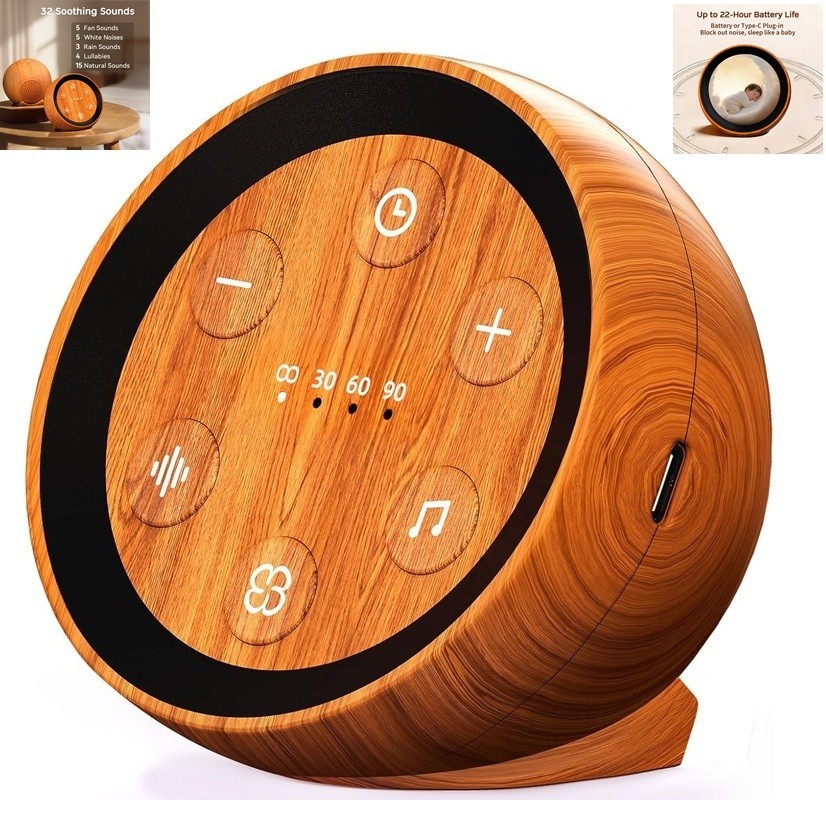

Photos from current listings. Actual item, color, and included accessories may vary.
Brown Noise Machine Buying Guide
A brown noise machine is a dedicated sound generator that emphasizes lower-frequency energy than white or pink noise, producing a deep, rumbling wash that masks household sounds for sleep. The core trade-off is between true low-frequency reproduction (larger driver, sealed cabinet) and compact portability, plus whether the noise is generated by a dedicated DSP or streamed from a phone. Buy a unit with a real woofer or sealed acoustic chamber if low-frequency depth matters; skip ultra-thin USB pucks that roll off below 100 Hz.


At a glance
- Category
- Baby Sleep & Soothing
- Data updated
- Nov 15, 2026
Current offers
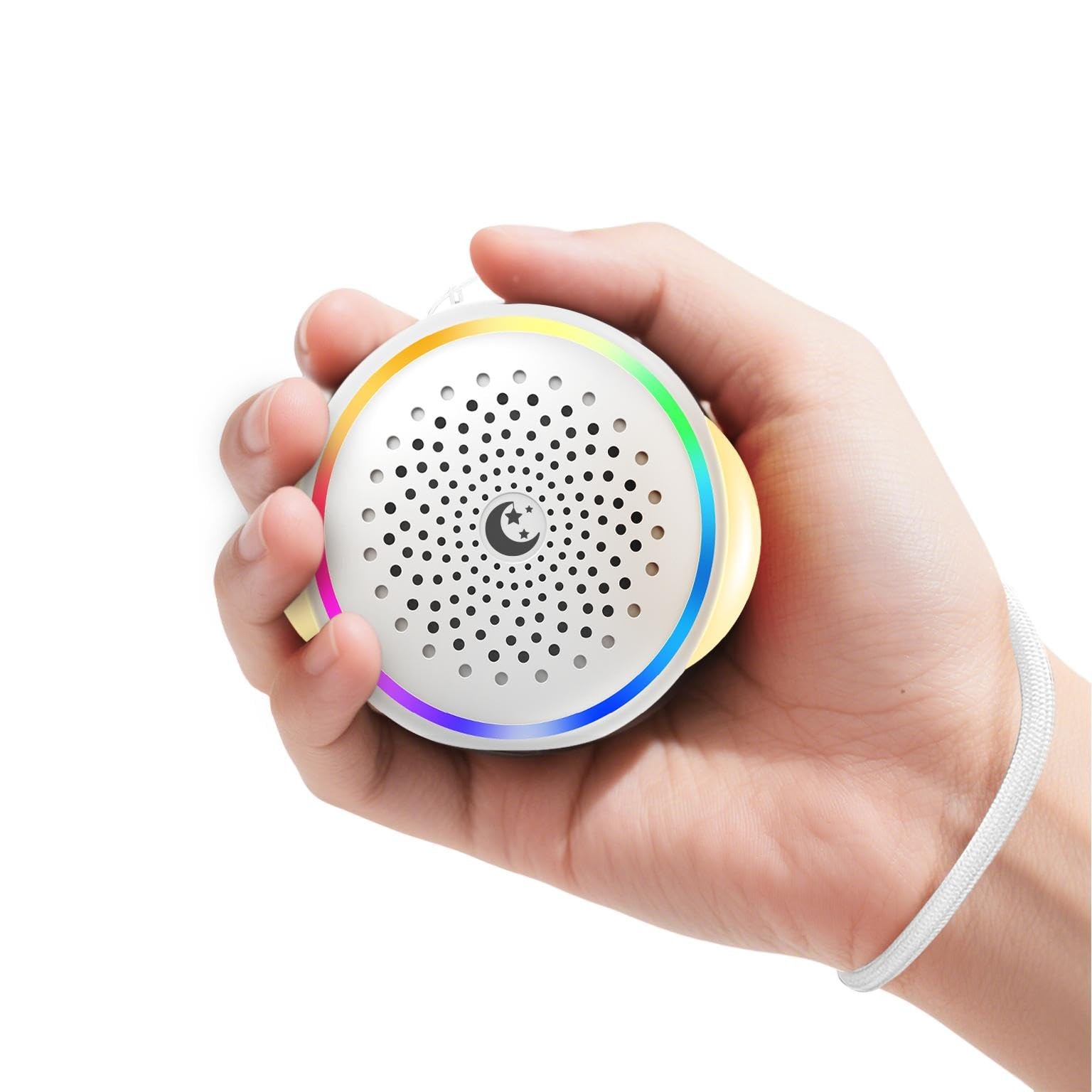
Highlights
- Brown noise rolls off at -6 dB per octave versus white noise's flat response, so bass extension depends on driver size: 2-inch or larger full-range drivers reproduce sub-200 Hz energy, while 1-inch pucks cut off around 150-200 Hz.
- Sound engines split into two architectures: hard-coded DSP chips (fixed looping noise, zero latency, no app needed) versus Bluetooth/app-streamed noise (unlimited variants but risk dropout and phone dependency).
- Timer tiers are discrete hardware features—4/8/12-hour stepped timers, continuous-on, and auto-off after 30-60 minutes—and cheaper units often advertise '4 timers' that are just preset sleep durations, not programmable.
- Acoustic masking effectiveness is rated by sound pressure level at 1 meter; bedside units typically deliver 45-65 dB max, and continuous loop quality matters more than peak volume because any audible seam or click wakes light sleepers.
Best use cases
- Nursery and co-sleeping: pick a plug-in unit with continuous-on mode, a physical volume dial that goes below 40 dB, and no auto-off—skip battery-only models that die mid-night and app-dependent units that need a phone nearby.
- Adult bedroom sound masking for traffic or snoring: choose a sealed-cabinet unit with a 2-inch+ driver and stepped timer (30/60/90 min or 8-hour), and skip tiny USB-powered pucks with 1-inch drivers that sound thin and hissy.
- Travel and stroller use: select a rechargeable clip-on with at least 20-hour battery and a locking volume wheel; skip full-size plug-in machines with detachable power cords that are awkward in a diaper bag.
- Open-plan office or shared room privacy: pick a dual-driver unit with independent brown/white/pink selection and 60+ dB output to cover speech frequencies; skip single-sound 'brown-only' units that offer no masking flexibility.
Buying tips
- Match timer hardware to routine: choose stepped hardware timers (15/30/60/120 min plus continuous) if you need flexible wind-down; fixed 4/8/12-hour presets suit all-night masking but force you to restart manually for naps.
- Demand a real acoustic spec: a 2-inch or larger driver and sealed enclosure reach 100 Hz and below; 1-inch drivers in thin plastic shells typically cut off near 150-200 Hz and sound like hiss rather than rumble.
- Prioritize loop integrity over sound count: a unit with 3-5 seamless, click-free loops beats a 32-sound machine whose brown noise restarts with an audible bump every cycle—check for gapless DSP playback.
- For nursery safety, choose corded units with a cord shorter than 3 feet or a wall-mount cleat, and place the machine at least 3 feet from the crib; battery units eliminate cord risk entirely for infants.
Specs
| Noise Engine | DSP chip vs app/Bluetooth stream |
|---|---|
| Driver Size | 2 in+ sealed vs 1 in puck |
| Power | AC plug-in vs USB-C rechargeable |
| Timer Mode | Stepped/continuous vs fixed presets |
Related searches
What to check before buying
- Measure the nightstand or shelf footprint: compact units run roughly 3-5 inches wide, while dual-driver machines need 6-8 inches of depth and 2-3 inches of rear clearance for bass ports.
- Confirm the power standard: plug-in units for US outlets need 100-240V AC adapters with a 5V or 12V DC barrel output; rechargeable units should use USB-C for travel compatibility.
- Check volume-floor capability: for a shared nursery, the lowest setting must drop near 35-40 dB at 1 meter so the machine doesn't add noise—verify a physical dial, not just app slider steps.
- Verify mounting and cord plan: wall-mount or shelf placement keeps the unit out of crib reach; if using a timer, confirm it retains settings after a power outage or has a battery backup.
FAQ
Data sources: eBay / Amazon listings and product attribute feeds Data updated Nov 15, 2026.
Some links on this page are affiliate links. If you buy after clicking one, we may earn a commission at no extra cost to you. This does not change which products appear here or their order. Affiliate disclosure.