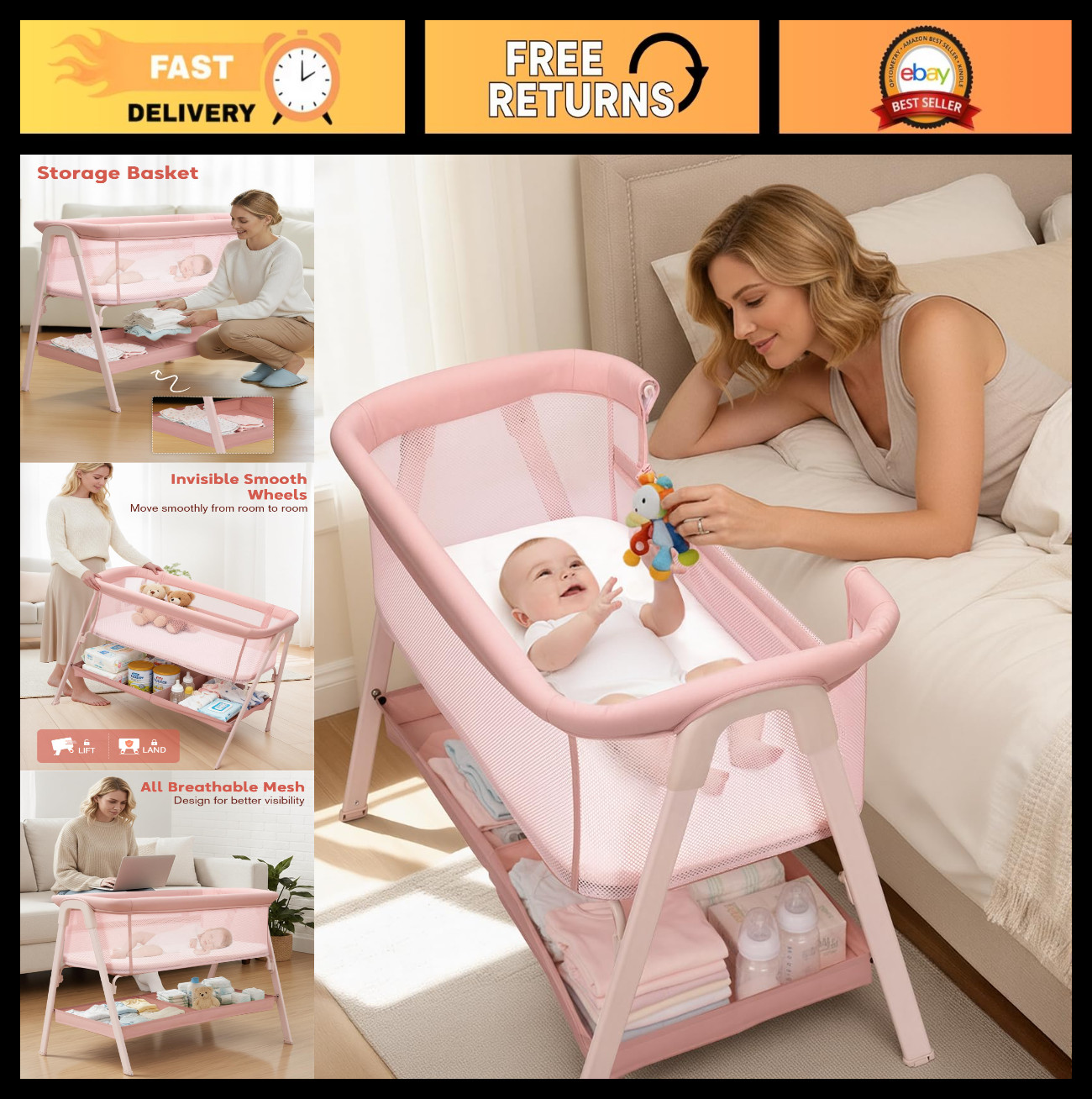

Photos from current listings. Actual item, color, and included accessories may vary.
Co Sleeper Crib Buying Guide
A co-sleeper crib (bedside bassinet) is a small infant sleep space that attaches or sits flush against the parents' bed so you can tend to night feeds without getting up. The core trade-off is between a rigid, safety-certified frame with a firm flat mattress and a soft, portable, or hammock-style sleeper that is convenient but risky for unsupervised sleep. Choose a model that meets JPMA/ASTM F2906 bedside-sleeper standards with a firm mattress and secure bed-attachment strap; skip any soft-sided or inclined sleeper for overnight sleep.


At a glance
- Category
- Baby Sleep & Soothing
- Data updated
- Nov 16, 2026
Current offers
Highlights
- Safety certification: look for ASTM F2906 (bedside sleepers) and JPMA certification; these mandate firm mattresses, secure attachment, and no hazardous gaps.
- Attachment method: a strap or bracket that anchors the crib to the adult bed frame prevents separation gaps; cantilever or free-standing wheels alone are not secure.
- Height adjustability: most models offer 6–9 height positions to align the crib mattress top with the adult mattress top (within 1 inch) for safe access.
- Mattress firmness: a 1-inch thick, firm, flat foam or coir mattress is required; soft or inclined surfaces increase suffocation risk and violate safe-sleep guidelines.
Best use cases
- Best fit: a bedside co-sleeper with a rigid frame, firm mattress, and bed-anchoring strap for parents who want night feeds without bed-sharing—pick a height-adjustable model if your bed is taller than 24 inches.
- Wrong fit: a portable, soft-sided, or hammock-style bassinet for overnight sleep; these lack structural rigidity and fail ASTM F2906, so use them only for supervised lounging.
- Best fit: a co-sleeper with a drop-side or zip-down panel for C-section recovery or limited mobility—ensure the panel locks securely when raised.
- Wrong fit: a full-size crib or playard if you have a small bedroom and want bedside access; a co-sleeper crib is smaller (approx. 34–38 inches long) and designed to attach to the bed.
Buying tips
- Match crib height to your bed: measure from floor to top of your adult mattress; choose a co-sleeper with a height range that includes that measurement minus 1 inch (mattress tops should align).
- Check the attachment strap length: it must reach around your bed frame or mattress; most straps accommodate up to a queen or king bed, but platform beds without a lip may need a bracket.
- Verify mattress firmness and fit: the mattress must be firm, flat, and fit snugly with no gaps larger than 1 inch around the edges; replace any soft or folded mattress.
- Prefer a model with a breathable mesh side panel for airflow and visibility; solid fabric sides can trap heat and reduce air circulation.
Specs
| Safety Standard | ASTM F2906 + JPMA certified |
|---|---|
| Attachment Type | Bed strap vs bracket vs free-standing |
| Height Adjustment | 6–9 positions, 13–24 in range |
| Mattress Type | Firm flat foam/coir, 1 in thick |
Related searches
What to check before buying
- Measure your adult bed height (floor to mattress top) and confirm the co-sleeper's adjustable height range covers it within 1 inch.
- Measure the gap between your bed and the wall or furniture; the co-sleeper needs a stable, flat surface and clearance to attach the strap.
- Check your bed frame type: a strap works best with a visible rail or mattress lip; platform beds or adjustable bases may require a bracket or a free-standing bassinet instead.
- Confirm the product includes a firm, flat mattress and a fitted sheet; avoid adding aftermarket soft bedding, pillows, or bumpers.
FAQ
Data sources: eBay / Amazon listings and product attribute feeds Data updated Nov 16, 2026.
Some links on this page are affiliate links. If you buy after clicking one, we may earn a commission at no extra cost to you. This does not change which products appear here or their order. Affiliate disclosure.