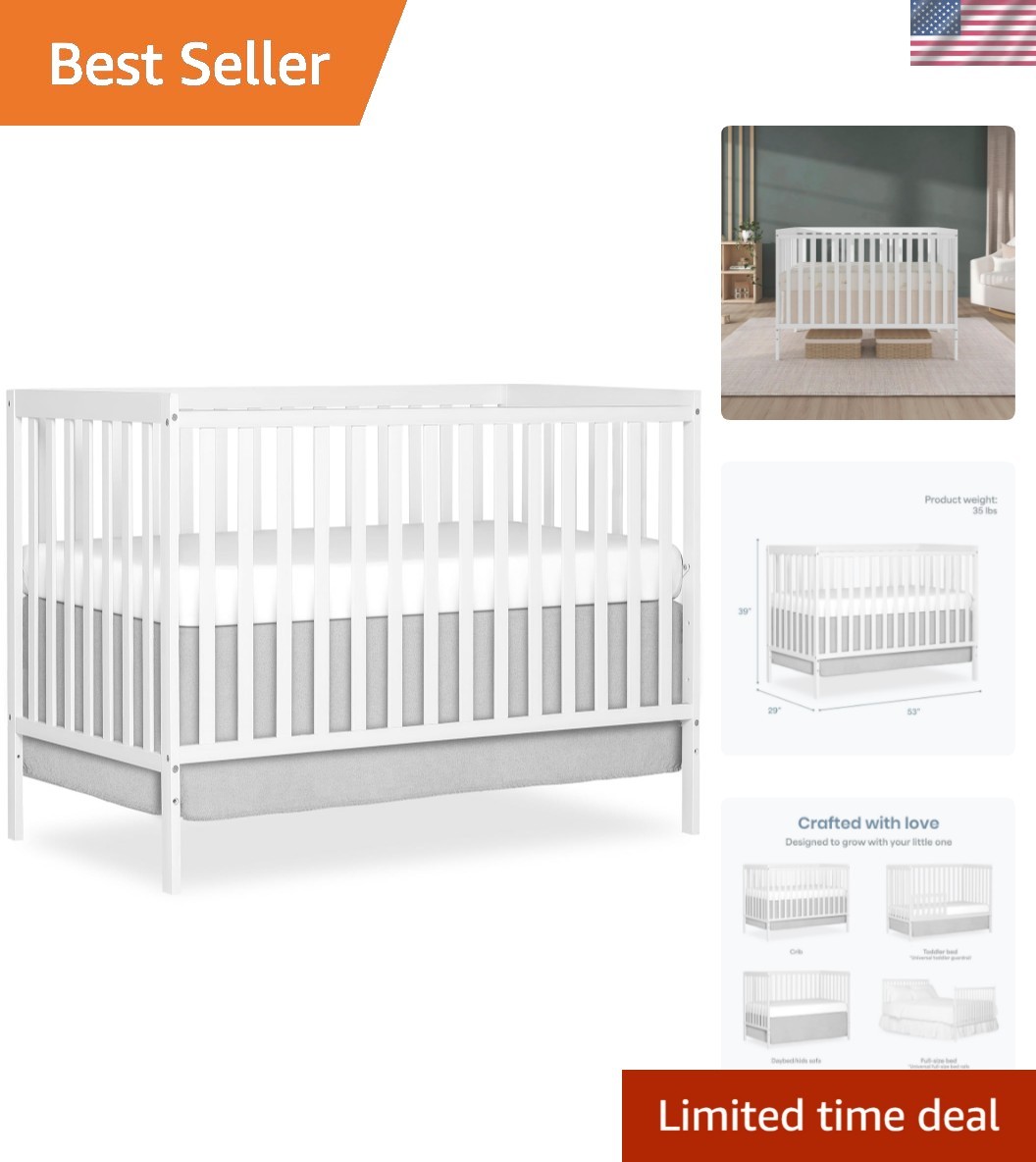

Photos from current listings. Actual item, color, and included accessories may vary.
Convertible Crib Buying Guide
A convertible crib is a full-size infant bed engineered to reconfigure through toddler, daybed, and sometimes full-bed stages via removable rails and guard panels. The core trade-off is between solid-wood durability with standardized mattress support and particleboard or MDF construction that may not survive multiple conversions. Choose a solid-wood crib with a 4-in-1 or 5-in-1 conversion kit and fixed or adjustable metal mattress support; skip composite-board models with non-standard rail hardware if you intend to use all stages.


At a glance
- Category
- Baby Sleep & Soothing
- Data updated
- Nov 18, 2026
Current offers
Highlights
- Full-size cribs use a standard 28 × 52 in mattress; convertible rails must match this footprint, not a mini-crib 24 × 38 in size.
- Solid hardwood (pine, maple, beech) cribs resist rail-joint loosening through repeated toddler and full-bed conversions better than MDF or particleboard.
- 5-in-1 tiers add a full-bed conversion kit (wood side rails and slat panels) that typically must be purchased with the crib or from the same model line.
- Adjustable mattress support with at least three height positions is essential; fixed-height cribs force early transition when the child can pull up.
Best use cases
- Best fit: 4-in-1 solid-wood crib with toddler rail and daybed conversion for a nursery planned for one child through age 5; skip 5-in-1 if you will not use the full-bed stage.
- Best fit: 5-in-1 crib with included full-bed conversion kit for families who want a full-size bed later without buying a separate frame; verify the kit is model-specific.
- Wrong fit: mini-crib or non-convertible crib if you need long-term value; mini-cribs use 24 × 38 in mattresses and rarely offer toddler or full-bed rails.
- Wrong fit: particleboard crib with proprietary rail brackets if you plan to convert multiple times; replacement hardware is often unavailable after the model is discontinued.
Buying tips
- Measure the mattress: a full-size convertible crib accepts exactly 28 × 52 in; confirm the crib's interior dimensions before buying any mattress.
- Choose solid wood or hardwood plywood over MDF/particleboard; look for mortise-and-tenon or steel bolt joints, not cam-lock fasteners, at rail connections.
- Confirm the conversion kit is included or sold by the same manufacturer for that exact model—generic full-bed rails will not align with the crib's post spacing.
- Check mattress support height positions: three or more adjustable levels let you lower the mattress as the child sits, pulls up, and stands.
Specs
| Conversion Stages | 4-in-1 vs 5-in-1 (full-bed kit) |
|---|---|
| Mattress Size | Full-size 28 × 52 in (standard) |
| Primary Material | Solid hardwood vs MDF/particleboard |
| Support Heights | 3+ adjustable positions (fixed = skip) |
Related searches
What to check before buying
- Room and doorway: assembled full-size crib footprint is roughly 30 × 54 in; verify it fits through the nursery door and leaves clearance for a rocking chair.
- Mattress match: buy a 28 × 52 in crib mattress with a firm, flat surface; a loose-fitting mattress creates a gap hazard.
- Floor and wall: anchor the crib to the wall with the included anti-tip strap, especially in hardwood-floor rooms where the crib can slide.
- Conversion parts: confirm the toddler rail, daybed rail, and full-bed kit are either in the box or available as a model-specific add-on before purchase.
FAQ
Data sources: eBay / Amazon listings and product attribute feeds Data updated Nov 18, 2026.
Some links on this page are affiliate links. If you buy after clicking one, we may earn a commission at no extra cost to you. This does not change which products appear here or their order. Affiliate disclosure.