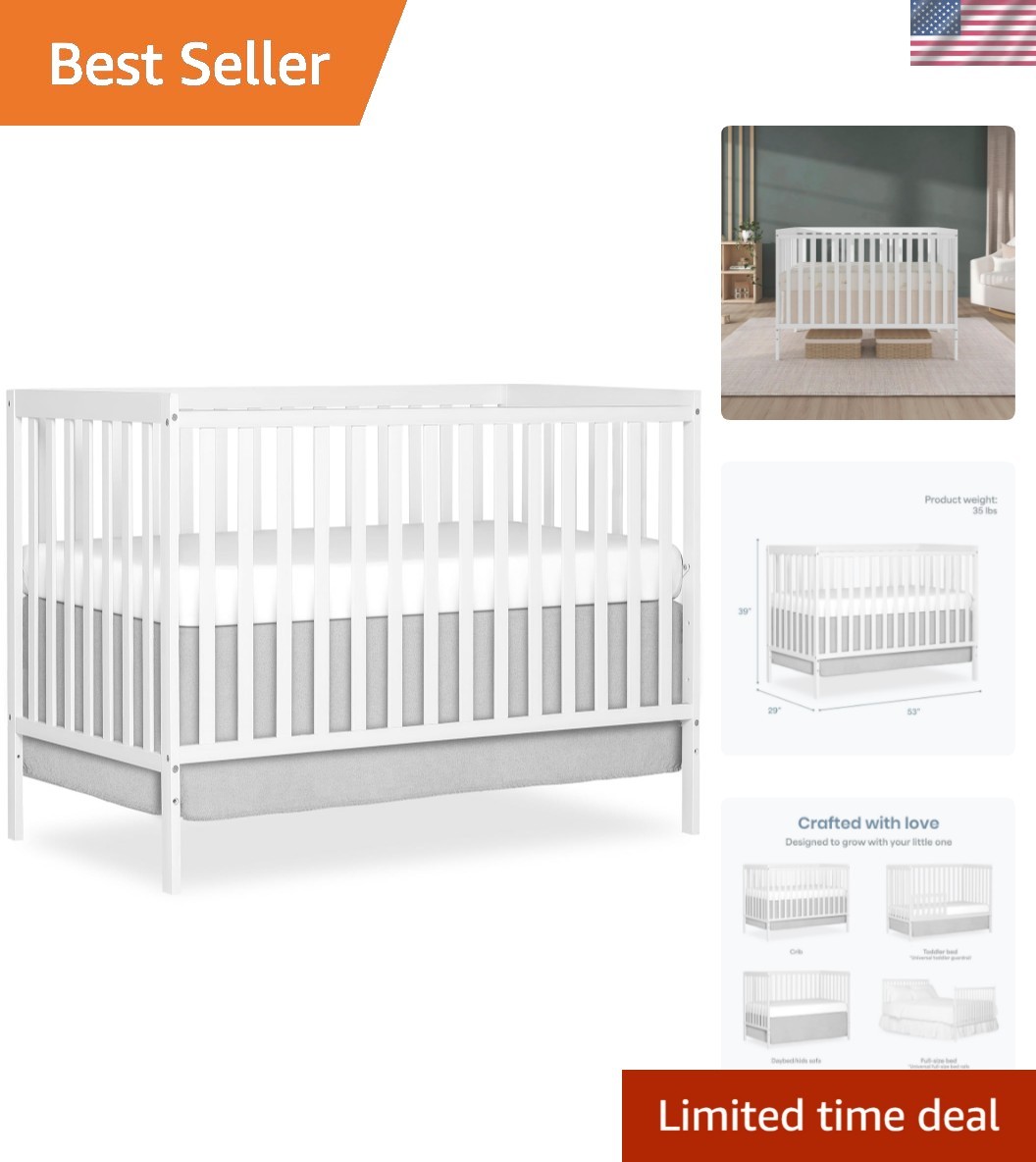

Photos from current listings. Actual item, color, and included accessories may vary.
Convertible Mini Crib Buying Guide
A convertible mini crib is a compact sleep platform that transitions from infant crib to toddler bed and sometimes to a full-size bed via conversion kits. The core trade-off is footprint versus longevity: mini cribs save space but often limit you to a toddler stage, while full-size convertible cribs cost more floor area but extend usable life. The decision rule is simple—buy only if the frame explicitly lists all included conversion rails and matches your room's minimum clearance; skip any model that hides kit costs or omits toddler rails.


At a glance
- Category
- Baby Sleep & Soothing
- Data updated
- Nov 18, 2026
Current offers
Highlights
- Mini cribs use a 24" x 38" mattress vs full-size 28" x 52", saving about 15 square feet of floor space but capping bed length at toddler stage.
- 5-in-1 and 4-in-1 labels mean included toddler rail plus optional daybed/full-bed kits—the kit hardware is often sold separately and costs extra.
- Solid wood or hardwood frames with metal mattress supports outlast particleboard/MDF builds, which sag and strip screw threads after repeated conversions.
- Greenglass GOLS or Greenguard Gold certification indicates low VOC emissions; JPMA certification confirms the crib meets mandatory CPSC safety standards.
Best use cases
- Best fit: small nurseries under 100 sq ft—pick a mini crib with included toddler rail and a 24" x 38" mattress; skip full-size convertible cribs that consume 28" x 52" of floor.
- Best fit: families planning a second child within 2 years—choose a full-size 5-in-1 with solid wood frame and included toddler rail; skip mini cribs that lack a full-bed conversion kit.
- Wrong fit: households that move frequently—skip any convertible crib requiring disassembly into a full bed; pick a mini crib with foldable or compact design instead.
- Wrong fit: buyers wanting a lifetime bed—skip mini cribs entirely; a full-size convertible crib with daybed and full-bed rails is the only path to adult-length use.
Buying tips
- Measure your room: a mini crib needs at least 30" x 44" clearance; a full-size convertible needs 34" x 58"—add 12" on the drop-side for access.
- Confirm the mattress size before purchase: mini cribs require 24" x 38" x 5" mattresses; full-size cribs use 28" x 52" x 6"—mismatched sizes create dangerous gaps.
- Check the conversion kit contents: a true 5-in-1 includes toddler rail, daybed rail, and full-bed rails; if only toddler rail is listed, budget for separate full-bed kit.
- Verify safety certification: look for JPMA seal and CPSC 16 CFR 1219/1220 compliance; Greenguard Gold adds low-emission assurance for nurseries.
Specs
| Crib Mattress Size | Mini 24x38 in / Full 28x52 in |
|---|---|
| Conversion Stages | 2-in-1 to 5-in-1 (toddler/full) |
| Frame Material | Solid wood / hardwood vs MDF |
| Safety Certification | JPMA + CPSC 16 CFR 1219/1220 |
Related searches
What to check before buying
- Room clearance: measure doorways and stairwells—assembled mini cribs are about 26" x 40", full-size about 30" x 54"; confirm the box fits your delivery path.
- Mattress compatibility: buy the matching mini or full-size mattress at the same time; standard crib sheets do not fit mini cribs.
- Floor and climate: solid wood frames handle humidity better than MDF; avoid particleboard in damp basements or near heating vents.
- Companion parts: confirm the toddler rail and full-bed kit are in stock or included—without them the crib stops at infant stage.
FAQ
Data sources: eBay / Amazon listings and product attribute feeds Data updated Nov 18, 2026.
Some links on this page are affiliate links. If you buy after clicking one, we may earn a commission at no extra cost to you. This does not change which products appear here or their order. Affiliate disclosure.