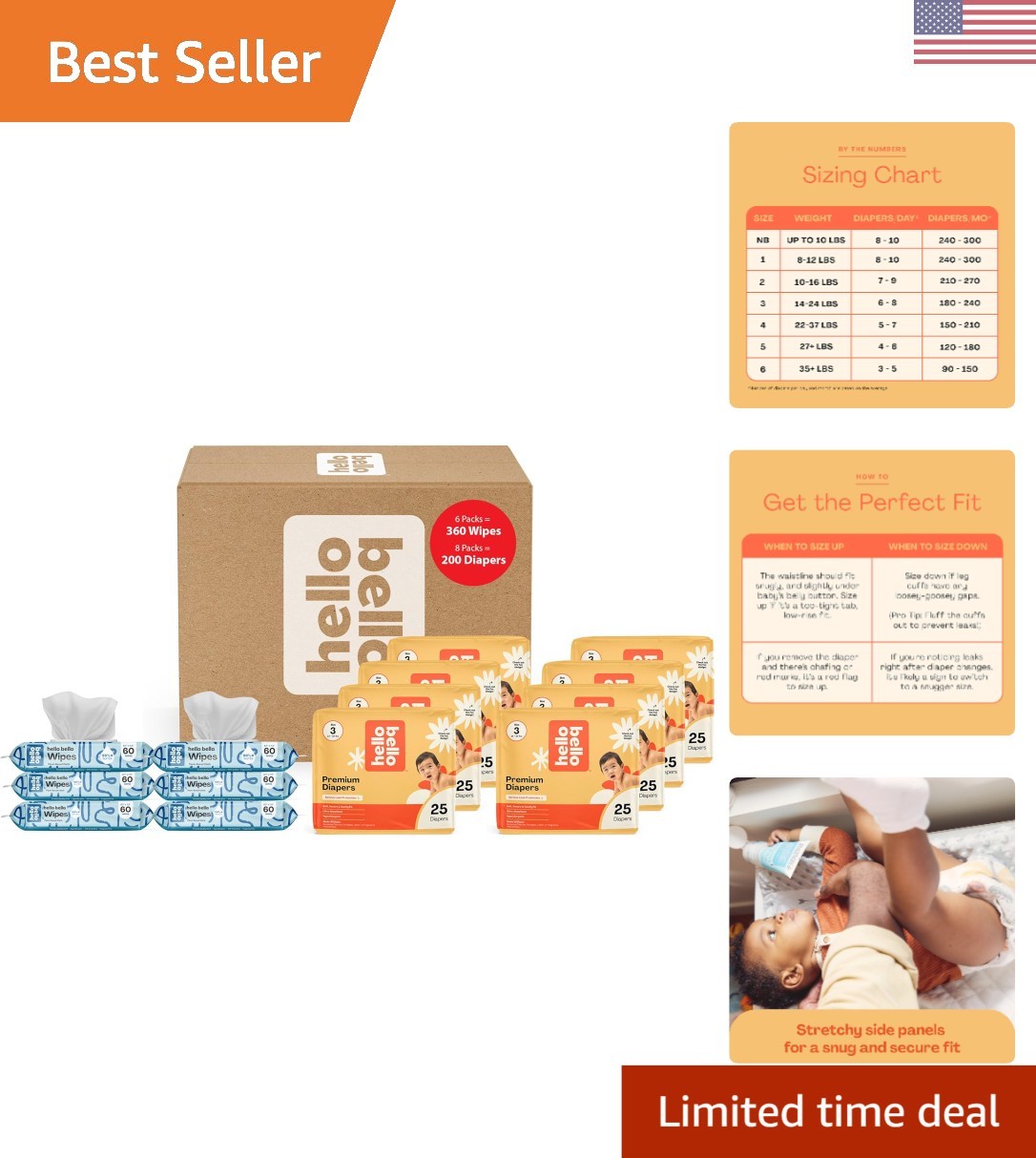

Photos from current listings. Actual item, color, and included accessories may vary.
Eco Friendly Diaper Buying Guide
Eco-friendly diapers replace petroleum-based plastics and chlorine-bleached pulp with plant-based cores, bamboo or cotton topsheets, and certified compostable or biodegradable backsheets. The core trade-off is absorbency speed and leak protection versus material purity and end-of-life compostability — plant-fiber cores typically absorb slightly slower than SAP-heavy conventional diapers. The clear decision rule: choose diapers with third-party compostability certification (OK Compost HOME, BPI) and a declared plant-fiber percentage above 70% for genuine eco value; skip products that only claim 'eco-friendly' without material grades or certification.


At a glance
- Category
- Diapers & Wipes
- Data updated
- Nov 17, 2026
Current offers
Highlights
- Plant-based SAP (sodium polyacrylate) from corn or wheat replaces up to 40% of petroleum SAP in leading eco cores, matching absorbency but slowing acquisition speed by 10–20%.
- OK Compost HOME and BPI certifications require 90% disintegration within 12 weeks in home compost — diapers without these certificates are not home-compostable regardless of 'plant-based' claims.
- Chlorine-free (TCF/ECF) pulp and bamboo viscose topsheets eliminate dioxin residue; FSC-certified pulp ensures no old-growth deforestation in the absorbent core.
- Backsheet breathability above 2,000 g/m²/day (MVTR) reduces diaper rash risk; compostable PLA/PLA-blend backsheets typically sit at 1,500–3,000 g/m²/day versus polyethylene at 500–1,000.
Best use cases
- Best fit: daily daytime use for families with municipal or home composting access — pick OK Compost HOME certified diapers with 70%+ plant-fiber content and pair with a breathable compostable backsheet.
- Best fit: sensitive-skin babies prone to rash — choose TCF pulp, chlorine-free, fragrance-free diapers with bamboo or cotton topsheets and MVTR above 2,000 g/m²/day.
- Wrong fit: overnight or heavy-wetter use — eco plant-fiber cores often need a booster pad or a hybrid cloth-diaper system; skip ultra-thin compostable diapers for 10+ hour stretches.
- Wrong fit: households without industrial or home compost — 'biodegradable' diapers in landfill behave like conventional diapers; choose cloth diaper covers with compostable inserts instead.
Buying tips
- Size by weight, not age: Size 3 covers roughly 16–28 lb; eco diapers often run half a size small, so size up if the baby is within 2 lb of the upper limit.
- Demand a declared plant-fiber percentage — 70%+ plant-based core and FSC-certified pulp are the thresholds separating true eco diapers from greenwashed conventional ones.
- Check certification logos on-pack: OK Compost HOME (home compost), BPI (industrial compost), and FSC (pulp) are the only credible third-party marks; 'eco-friendly' alone is unregulated.
- For cloth-hybrid systems, match insert absorbency to 8–10 oz per change for daytime and 12–15 oz for overnight; bamboo inserts absorb more slowly than microfiber but hold more total liquid.
Specs
| Core Material | Plant-based SAP 30-40% / FSC pulp |
|---|---|
| Compost Certification | OK Compost HOME / BPI / None |
| Backsheet Type | PLA compostable / PE / Cloth |
| Pulp Bleaching | TCF / ECF chlorine-free |
Related searches
What to check before buying
- Weigh the baby and measure waist/thigh circumference — eco diaper sizing runs small, so confirm the weight band covers at least 2 lb above current weight.
- Confirm local waste stream: kerbside industrial compost accepts BPI-certified diapers; home compost requires OK Compost HOME certification and 12-week turnaround.
- Verify backsheet breathability (MVTR) and fragrance-free labeling if the baby has eczema or prior rash history.
- For cloth hybrids, check washer/dryer compatibility and whether inserts are bamboo (slower absorb, higher capacity) or microfiber (fast absorb, compression leaks).
FAQ
Data sources: eBay / Amazon listings and product attribute feeds Data updated Nov 17, 2026.
Some links on this page are affiliate links. If you buy after clicking one, we may earn a commission at no extra cost to you. This does not change which products appear here or their order. Affiliate disclosure.