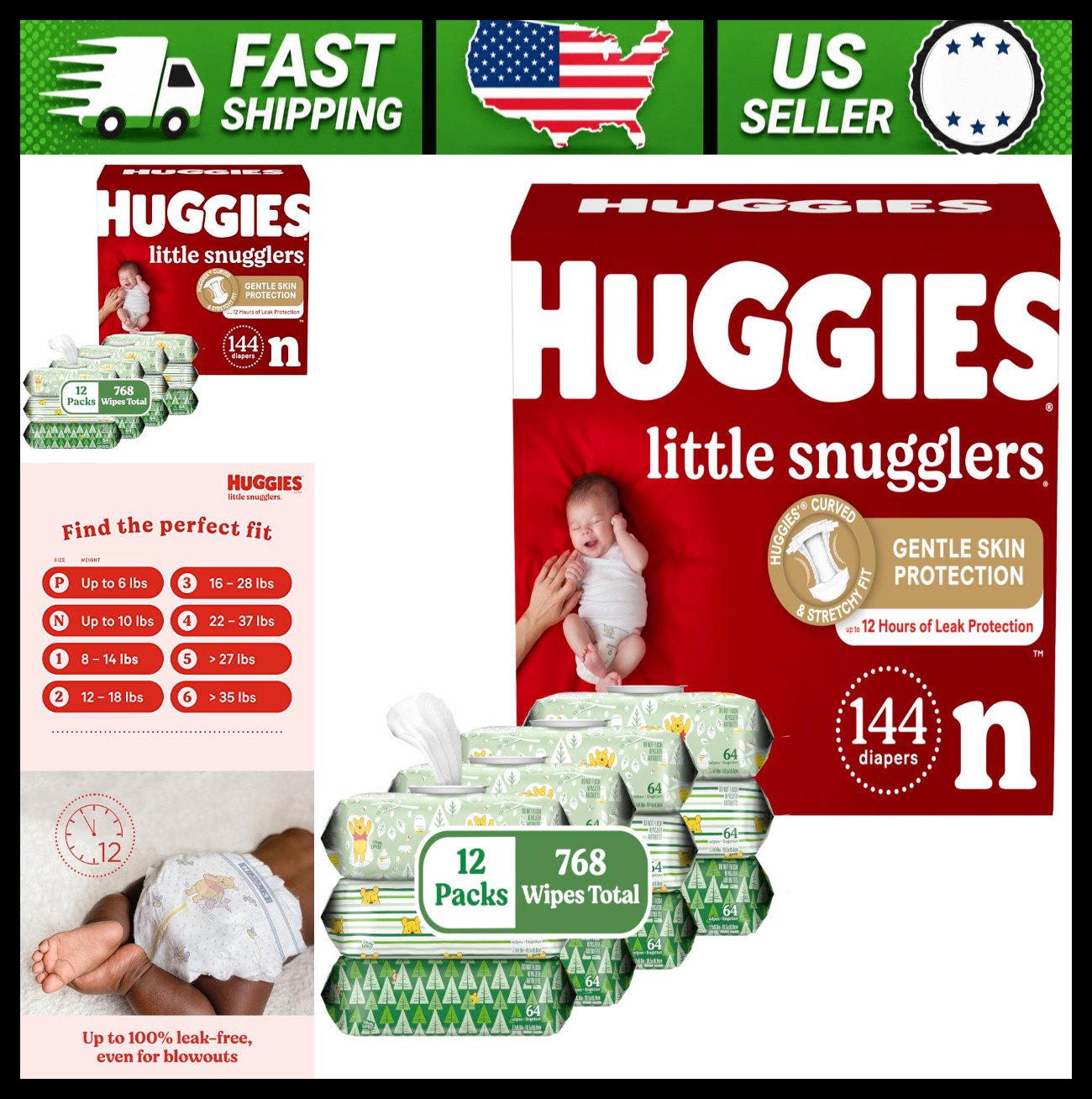

Photos from current listings. Actual item, color, and included accessories may vary.
Newborn Diaper Buying Guide
Newborn diapers are sized for babies up to roughly 10 lb, using a cutout for the umbilical stump and a softer, thinner absorbent core than larger sizes. The core trade-off is absorbency versus breathability and fit: overnight-capable designs add absorbent layers and stretch, but too much bulk or a poorly sealed leg gasket causes leaks. The clear rule is to buy a diaper with a true newborn cutout, a wetness indicator, and a size range matched to birth weight, and to skip any 'newborn' product that is really a size 1 with a smaller print.


At a glance
- Category
- Diapers & Wipes
- Data updated
- Nov 17, 2026
Current offers
Highlights
- True newborn diapers are rated up to about 10 lb (4.5 kg); size 1 typically starts at 8–14 lb, so a 'newborn' bundle at 192 count is likely a size 1 in disguise.
- Umbilical cord cutout or notch is the defining newborn feature—it keeps the waistband below the stump until it heals, usually 1–3 weeks.
- Wetness indicators are standard on premium newborn tiers (Huggies Little Snugglers, Pampers Swaddlers) but are often absent on budget plant-based or white-label lines.
- Plant-based diapers typically use a pulp/PLA blend in the backsheet and core, but the absorbent SAP gel is still petroleum-derived; they are not compostable in home bins.
Best use cases
- Best fit: hospital bag and first two weeks—pick a small pack of true newborn (up to 10 lb) with cord cutout and wetness indicator, plus one pack of size 1 for the transition.
- Best fit: overnight at 3–6 weeks once the stump heals—a size 1 overnight diaper with a larger absorbent pad and stretch waistband reduces 3 a.m. changes.
- Wrong fit: buying a 192-count 'newborn' bundle before birth—most babies outgrow true newborn size in 2–4 weeks, leaving most of the box unused.
- Wrong fit: plant-based diapers for a baby with frequent blowouts—plant-based backsheets are often less stretchy, so fit-dependent containment is weaker than premium mainstream tiers.
Buying tips
- Match the weight range to birth weight: if the expected birth weight is over 8 lb, start with size 1 and use true newborn only for the first week or two.
- Count on 8–12 changes per day: a 30–40 count newborn pack lasts 3–5 days, so buy small packs first and scale up only after confirming fit.
- Look for a back elastic waistband and double leg gussets—these two features do more for blowout containment than core thickness in the newborn stage.
- Skip diapers with lotion or fragrance if the baby has sensitive skin; plain pulp/SAP cores with a breathable backsheet are the safer default.
Specs
| Size Range | Newborn: up to 10 lb / Size 1: 8–14 lb |
|---|---|
| Cord Cutout | U-notch or fold-down front waist |
| Wetness Indicator | Yes on premium; rare on budget |
| Backsheet Type | Breathable cloth-like vs plastic film |
Related searches
What to check before buying
- Confirm the diaper's stated weight range covers your baby's birth weight and the next 2–3 lb of growth.
- Check that the front waistband has a cord cutout or fold-down notch, not just a printed 'newborn' label.
- Verify the backsheet is breathable (cloth-like or perforated film) if the baby will wear the diaper for 2–3 hour stretches.
- Ensure you have a fragrance-free wipe and a barrier cream on hand—newborn skin reacts to frequent wiping, not just the diaper.
FAQ
Data sources: eBay / Amazon listings and product attribute feeds Data updated Nov 17, 2026.
Some links on this page are affiliate links. If you buy after clicking one, we may earn a commission at no extra cost to you. This does not change which products appear here or their order. Affiliate disclosure.