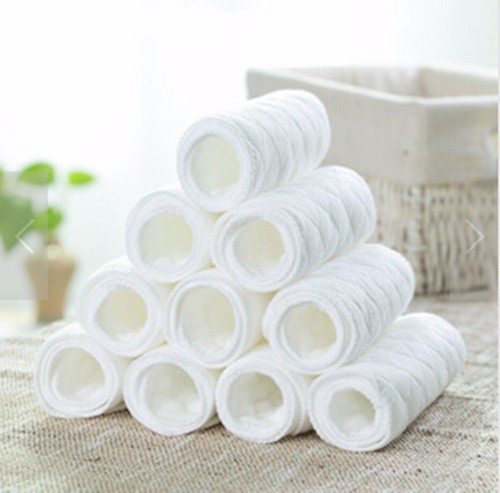

Photos from current listings. Actual item, color, and included accessories may vary.
Reusable Diaper Buying Guide
Reusable diapers are washable cloth systems that replace disposables, with the core trade-off being upfront absorbency and fit engineering versus long-term cost and waste. The decisive split is between pocket diapers with stay-dry liners and flat/prefold systems with separate covers: pick pockets for convenience and fit adjustability, flats/prefolds for maximum washability and airflow.


At a glance
- Category
- Diapers & Wipes
- Data updated
- Nov 15, 2026
Current offers

Highlights
- Pocket diapers use a waterproof PUL outer with a stay-dry microfleece lining and require separate insert stuffing; all-in-one (AIO) designs sew the absorbent core in, reducing prep time but increasing dry time.
- Absorbency is rated in layers: bamboo/cotton blends at 4-6 layers handle daytime, while 8-10 layers of hemp or bamboo terry are needed for overnight and heavy wetters.
- Rise snaps create three size bands (newborn, infant, toddler) covering roughly 8-35 lbs; one-size pocket diapers adjust via a front rise snap row, while sized systems use separate small/medium/large shells.
- Wash durability depends on PUL laminate quality and seam sealing—diapers with a double gusset leg elastics and reinforced PUL backing resist delamination through 200+ hot washes.
Best use cases
- Best fit for full-time cloth from birth: a one-size pocket diaper stash of 24-30 shells with 36-48 inserts, because daily washing every 2 days requires that rotation.
- Choose flats or prefolds plus separate covers if you have hard water or a basic top-load washer—flat cotton weaves agitate clean without the microfiber odor trapping that plagues pocket inserts.
- Skip sized all-in-ones for overnight use; their sewn-in cores saturate through the night, so use a dedicated overnight configuration of a hemp fitted diaper under a wool or PUL cover.
Buying tips
- Buy 24-30 one-size pocket diapers for one child in full-time use; fewer than 20 forces daily washing and accelerates PUL wear from frequent hot cycles.
- Match insert material to water hardness: microfiber absorbs fast but harbors detergent residue in hard water; bamboo and hemp are slower-absorbing but rinse cleaner above 180 ppm hardness.
- Check rise snap count—three rows (newborn/infant/toddler) with at least three snap settings per row provide the 8-35 lb coverage; two-row systems top out around 25 lbs.
- For overnight, layer a 4-layer hemp insert under a 2-layer bamboo insert in a pocket; single microfiber inserts alone typically leak past 4-5 hours on toddlers.
Specs
| Diaper System | Pocket / AIO / Prefold+Cover |
|---|---|
| Absorbency Layers | 4-6 day / 8-10 overnight |
| Size Coverage | One-size 8-35 lb (3 rise snaps) |
| Outer Material | PUL waterproof laminate |
Related searches
What to check before buying
- Measure your washer drum: top-loaders with agitators handle flats and prefolds best; front-loaders need an extra rinse cycle for pocket liners to release detergent.
- Confirm your water hardness (test strip)—above 180 ppm requires a water softener or extra rinses, or PUL will develop mineral buildup and repelling.
- Check diaper pail space: 24-30 diapers per wash cycle need a 13-20 gallon pail with a washable liner, plus a wet bag for outings.
- Verify your dryer's heat settings—PUL covers and shells must air-dry or tumble low; high heat delaminates the waterproof layer within months.
FAQ
Data sources: eBay / Amazon listings and product attribute feeds Data updated Nov 15, 2026.
Some links on this page are affiliate links. If you buy after clicking one, we may earn a commission at no extra cost to you. This does not change which products appear here or their order. Affiliate disclosure.