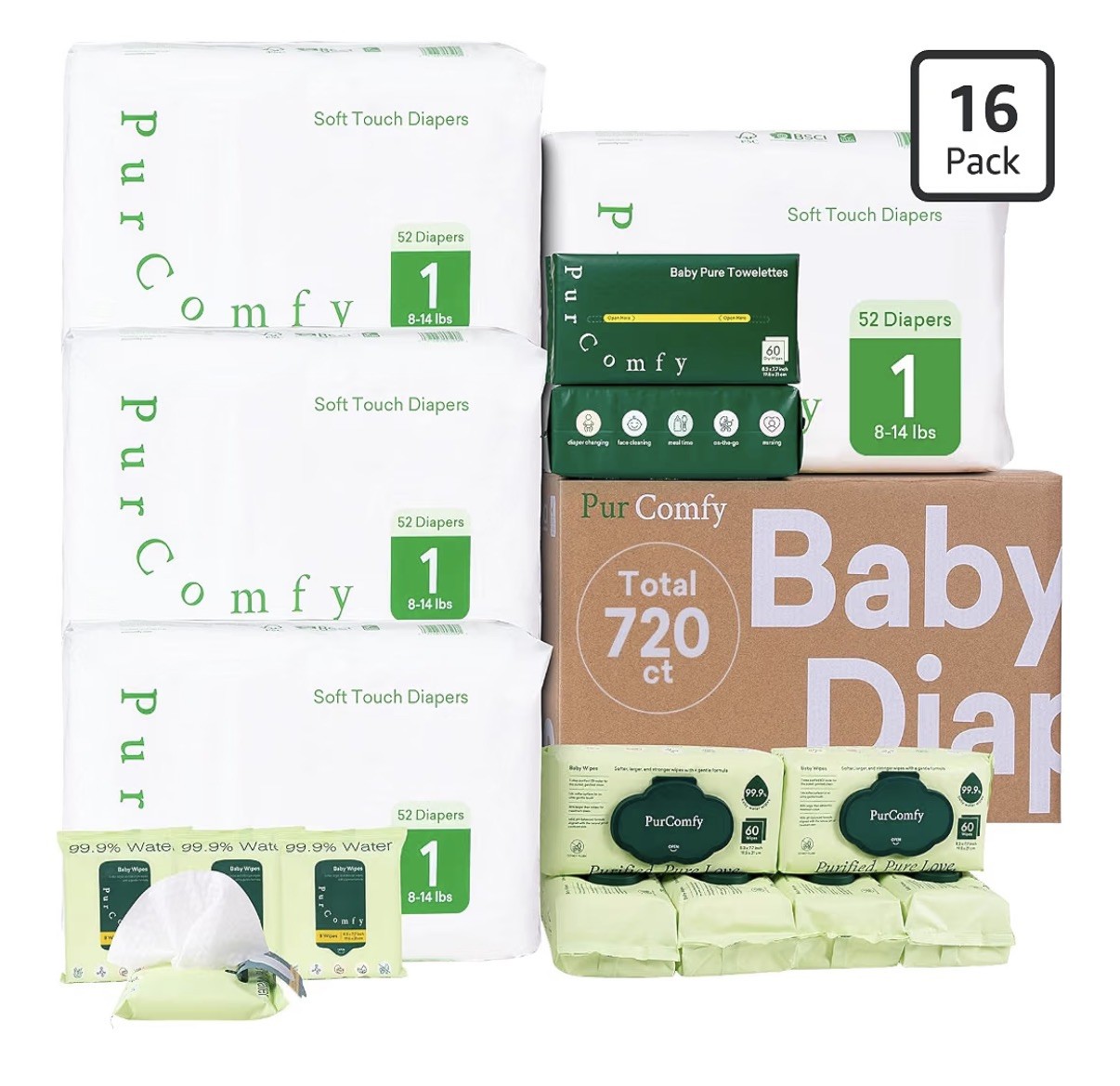

Photos from current listings. Actual item, color, and included accessories may vary.
Size 1 Diaper Buying Guide
Size 1 diapers are engineered for babies roughly 8–14 lb (3.6–6.4 kg), bridging the newborn stage and the transition to Size 2. The core trade-off is absorbency capacity versus fit contour: a diaper sized purely by weight can gap at the legs on a long, lean baby or dig at the waist on a shorter, heavier one. The decision rule is to buy Size 1 only when your baby's weight and thigh circumference both land inside the overlap zone, and to prioritize a stretchy side panel and wetness indicator over marginal absorbency claims.


At a glance
- Category
- Diapers & Wipes
- Data updated
- Nov 17, 2026
Current offers
Highlights
- Weight band 8–14 lb (3.6–6.4 kg) is the industry-standard Size 1 range; below 8 lb use Newborn, above 14 lb move to Size 2 to avoid blowouts.
- Diaper absorbency scales with pulp/SAP core mass—Size 1 typically holds 2–3 voids, so overnight use often requires a Size 2 or a booster pad.
- Stretchy back/side panels and a wetness indicator are the two features that most reliably prevent leaks and over-wearing in Size 1.
- Plant-based or chlorine-free pulp changes the material source, not the absorbent SAP chemistry—performance is comparable when the core mass matches.
Best use cases
- Best fit: babies 8–12 lb with average thigh circumference—buy standard Size 1 with stretch sides and a wetness indicator for daytime and short outings.
- Best fit: overnight sleep for babies near the top of the Size 1 band—choose a Size 1 overnight or booster-compatible diaper, or size up to Size 2 for the night.
- Wrong fit: newborns under 8 lb or preemies—skip Size 1 and use Newborn sizing until the weight and leg gaps close.
- Wrong fit: babies over 14 lb or with heavy overnight output—skip Size 1 entirely and move to Size 2; a Size 1 will gap and leak regardless of brand.
Buying tips
- Match weight first, then check thigh fit: if the leg elastic leaves red marks, size up even if weight is within the Size 1 band.
- Count 8–12 changes per day: a Size 1 pack of 100–120 diapers covers roughly 8–12 days for a newborn, so buy in small batches until fit is confirmed.
- Prefer diapers with a wetness indicator and stretchy side panels—these two features reduce leak and rash risk more than pulp percentage claims.
- For overnight, choose a Size 1 with a larger core or add a booster; standard daytime Size 1 diapers are not built for 10+ hour wear.
Specs
| Size 1 Weight Band | 8–14 lb / 3.6–6.4 kg |
|---|---|
| Closure Type | Stretchy side panels vs standard tabs |
| Wetness Indicator | Yes / No (line turns color) |
| Core Material | Standard pulp-SAP vs plant-based pulp |
Related searches
What to check before buying
- Weigh and measure: confirm baby is 8–14 lb and measure thigh circumference so the leg cuffs seal without pinching.
- Check the waistband: the diaper should sit below the umbilical stump for newborns and above it once healed—verify the fold-down notch exists.
- Confirm overnight plan: decide whether you need a booster-compatible Size 1 or will size up to Size 2 for nights before buying a bulk case.
- Verify wipes compatibility: if buying a diaper-and-wipes kit, confirm wipes are fragrance-free and sized for sensitive skin to avoid rash.
FAQ
Data sources: eBay / Amazon listings and product attribute feeds Data updated Nov 17, 2026.
Some links on this page are affiliate links. If you buy after clicking one, we may earn a commission at no extra cost to you. This does not change which products appear here or their order. Affiliate disclosure.