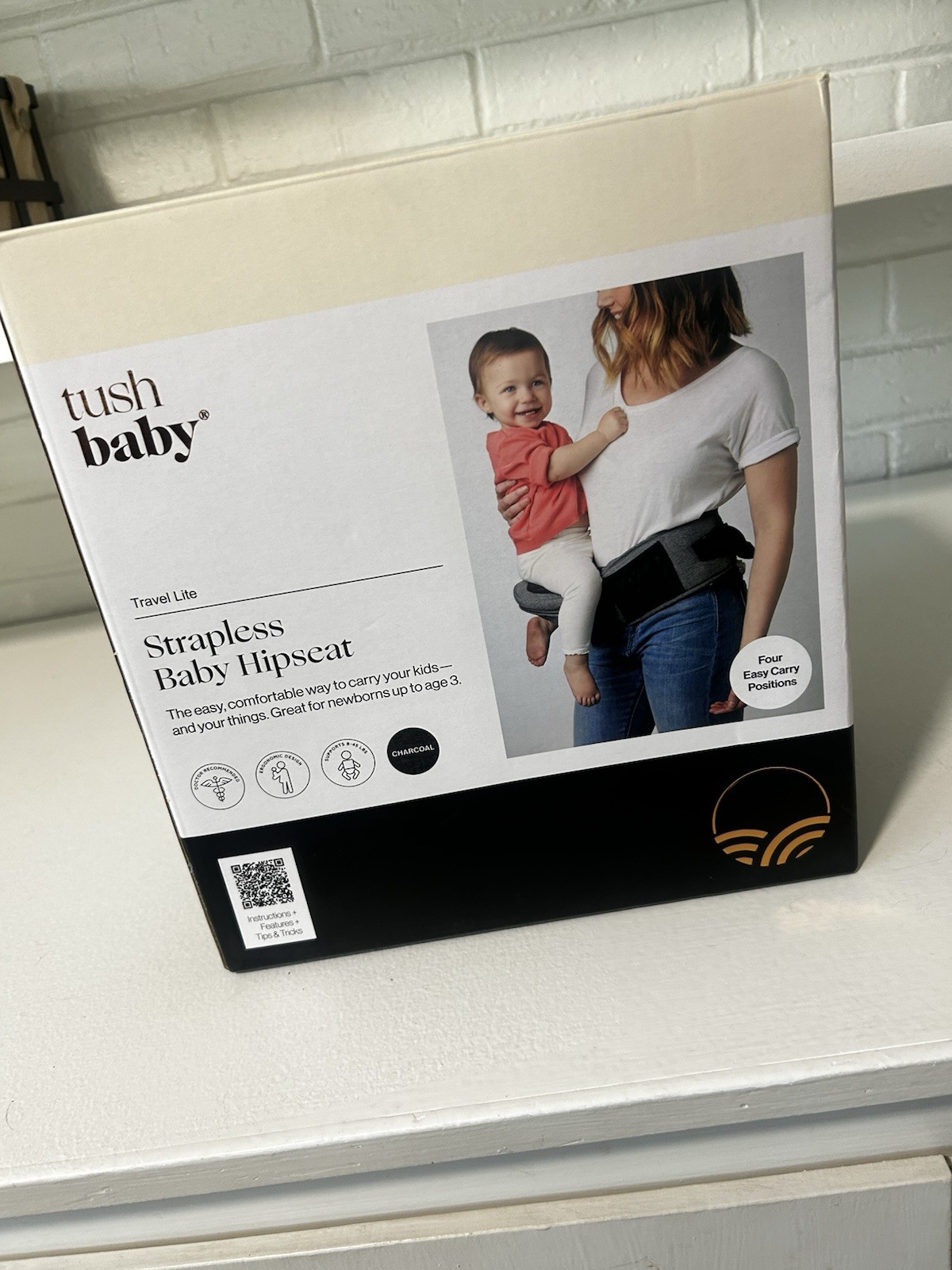

Photos from current listings. Actual item, color, and included accessories may vary.
Tushbaby Hip Carrier Buying Guide
Tushbaby Hip Carriers are structured hip-seat carriers designed to offload arm fatigue by transferring a child's weight to your hips and lumbar region. The core trade-off is between the padded, load-distributing hip belt and the compactness needed for quick on/off; genuine Tushbaby units use a wide, contoured waistband with a firm seat shelf, while lookalikes often skimp on foam density and buckle grade. Buy the real structured hip-seat architecture if you need all-day toddler carrying; skip it if you need a hands-free back carry or a newborn-inward carrier.


At a glance
- Category
- Baby Carriers, Slings & Backpacks
- Data updated
- Nov 18, 2026
Current offers
Highlights
- Genuine Tushbaby uses a wide contoured waist belt with dense EVA foam seat shelf that transfers load to the pelvis, not the shoulders.
- Load rating is typically up to 44 lb (20 kg) on the seat shelf, but real-world comfort drops sharply above roughly 30-35 lb.
- Buckle hardware should be dual-side-release acetal (POM) rated for repeated cycles; flimsy single-release buckles are the main failure point on clones.
- The seat shelf depth and side walls keep a toddler seated without a crotch strap, so seat geometry matters more than strap padding.
Best use cases
- Best fit: toddlers 6 months to 3 years who want up/down carrying constantly — pick the structured hip seat with wide belt for quick transfers.
- Best fit: parents with back or shoulder strain — the hip-seat design offloads weight to the pelvis, unlike soft slings that load the shoulders.
- Wrong fit: newborns and infants under 6 months who need full head/neck support — use a structured newborn carrier or wrap instead.
- Skip if: you need hands-free back carry or long hikes — a framed backpack carrier or full buckle carrier is the correct tool.
Buying tips
- Measure your waist at the iliac crest: the belt must overlap by at least 4-6 inches; most hip carriers fit waists roughly 24-45 inches.
- Check seat shelf depth: a toddler seat needs at least 5-6 inches of shelf depth so the child sits rather than perches.
- Confirm the buckle is a dual-release side-squeeze acetal buckle; single-button clones pop open under load.
- Match the carrier to child weight, not age: seat-shelf hip carriers work best from sitting age (about 6 months) up to 30-35 lb comfortably.
Specs
| Carrier Type | Structured hip seat / no back panel |
|---|---|
| Weight Range | Up to ~44 lb (20 kg) seat rating |
| Waist Fit | Adjustable ~24-45 in with overlap |
| Buckle Grade | Dual-release acetal (POM) side buckles |
Related searches
What to check before buying
- Measure your hip circumference and confirm the belt range covers it with overlap — most adjustable belts span about 24-45 inches.
- Confirm the child can sit independently; hip-seat carriers without a crotch strap require a stable sitter.
- Check the seat shelf width against your child's thigh circumference so the seat supports to the knee, not just the crotch.
- Verify the waistband sits on your iliac crest, not your soft waist, and that the foam is dense enough not to collapse under load.
FAQ
Data sources: eBay / Amazon listings and product attribute feeds Data updated Nov 18, 2026.
Some links on this page are affiliate links. If you buy after clicking one, we may earn a commission at no extra cost to you. This does not change which products appear here or their order. Affiliate disclosure.