Photos from current listings. Actual item, color, and included accessories may vary.
Safety Gate Buying Guide
Safety gates are physical barriers that protect children and pets from falls, stairs, and off-limit rooms, and the core trade-off is mounting method versus structural security. Pressure-mounted gates rely on friction and are unsuitable for top-of-stairs use, while hardware-mounted gates bolt into studs or masonry for load-bearing safety. Choose a hardware-mounted gate for the top of any staircase and a pressure-mounted gate only for doorways, hallways, and bottom-of-stair transitions.


At a glance
- Category
- Baby Monitoring & Safety
- Data updated
- Nov 17, 2026
Current offers
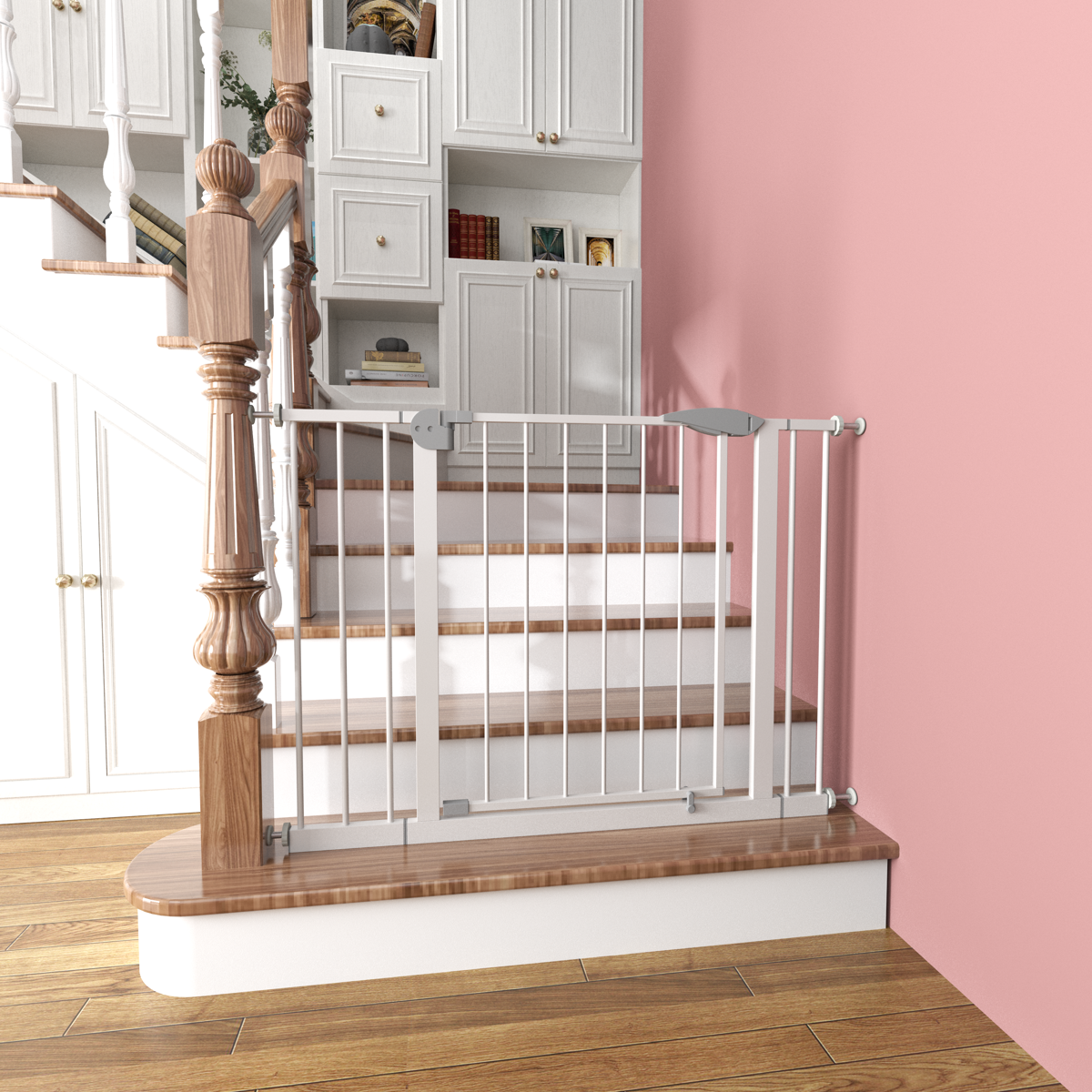 29.5-45.3 Wide Baby Gate For Stairs, Dog Indoor For Doorways, No Drilling Pressure Mounted Pet Gates For Kids, Easy Walk Through Safety White$56.99
 View on Mallflare
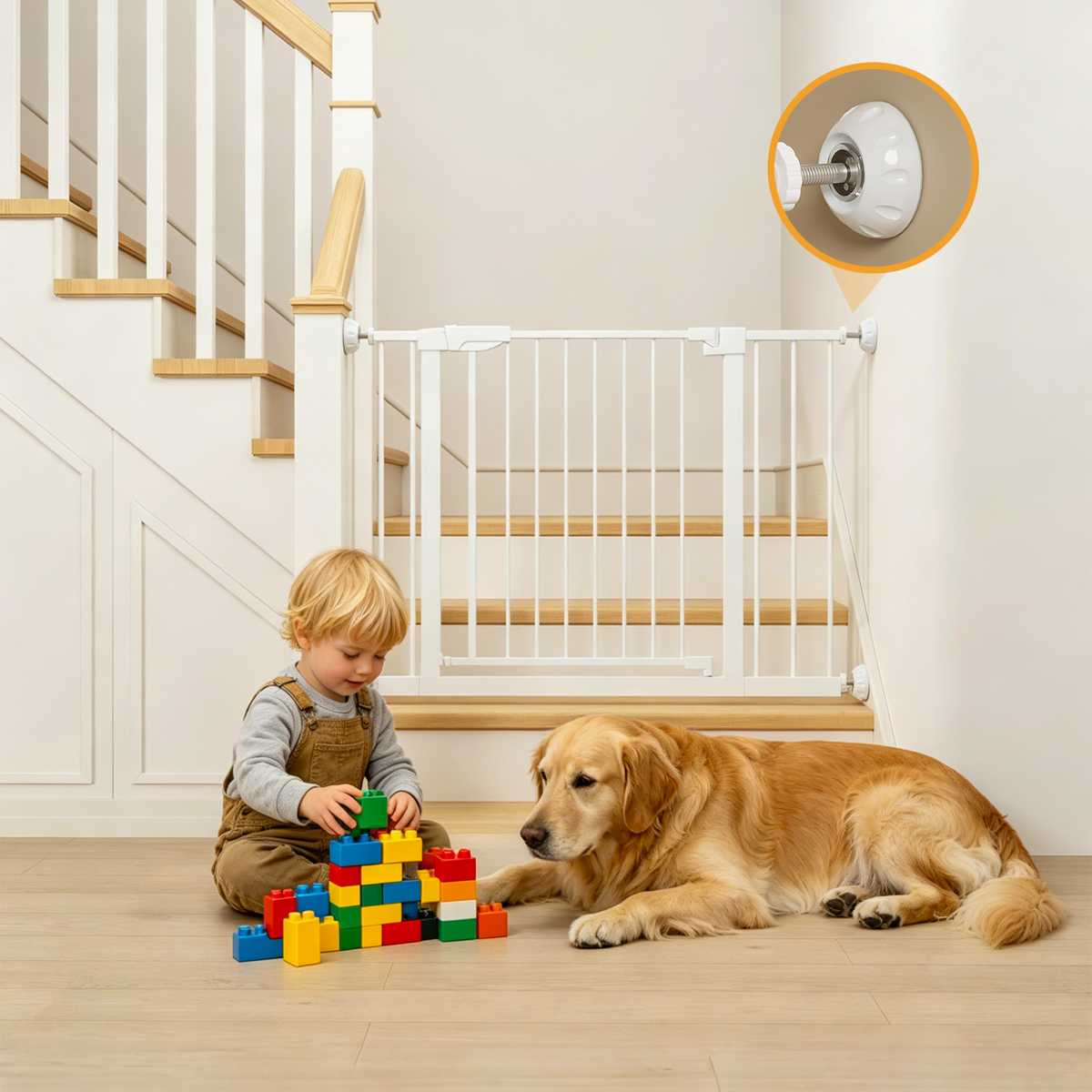 29.5-45.3" Wide Baby Gate with wall protector for Stairs, Dog Indoor for Doorways, No Drilling Pressure Mounted Pet Gates for Kids, Easy Walk Through Safety White$58.99View on Mallflare
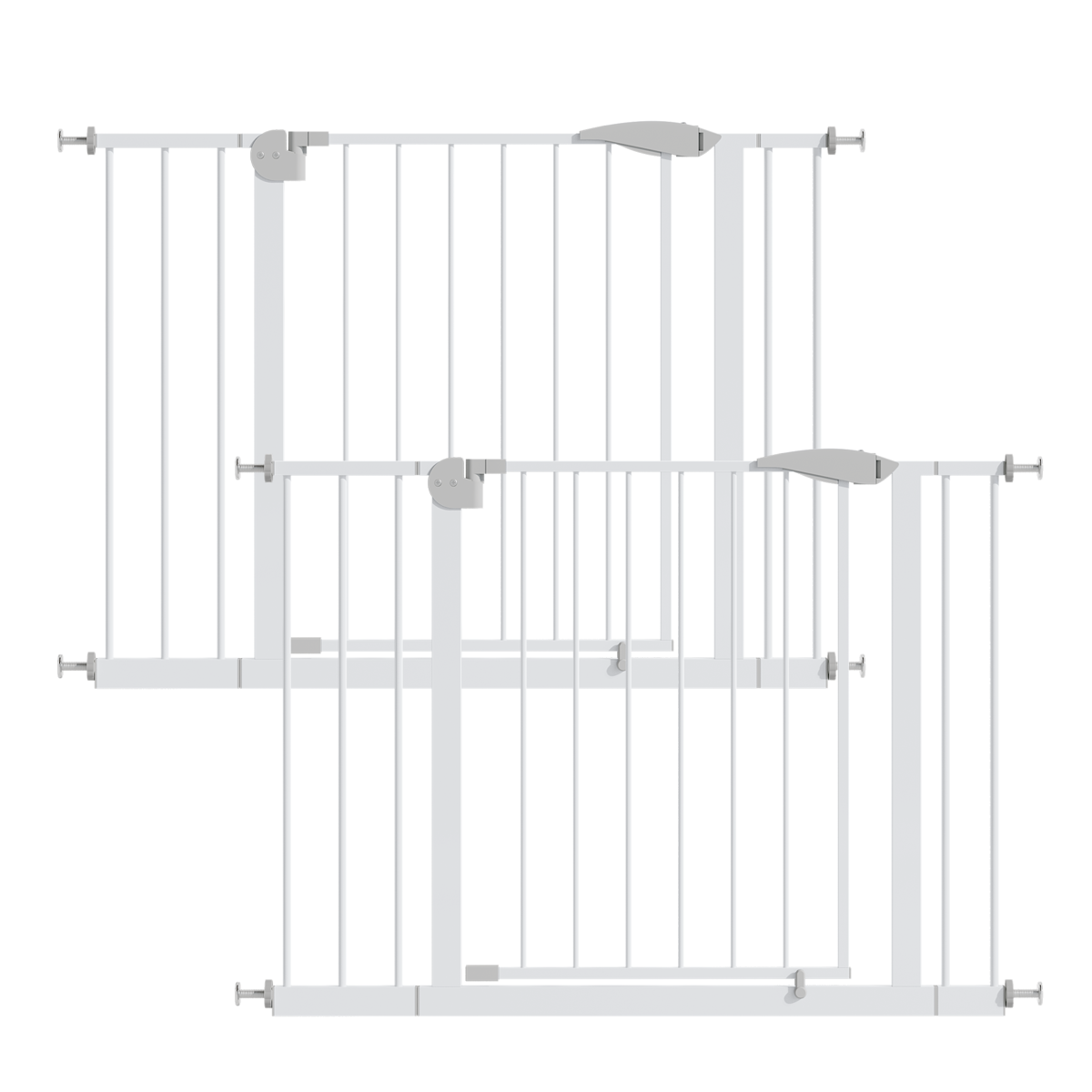 2 Pack 29.5-44.1" Wide Baby Gate for Stairs, Dog Indoor for Doorways, No Drilling Pressure Mounted Pet Gates for Kids, Easy Walk Through Safety White$98.99View on Mallflare
Highlights
- Mounting method dictates safety: pressure gates use friction and can slip under a child's push, while hardware gates anchor with screws into wall studs or masonry.
- Top-of-stair gates must be hardware-mounted; most safety standards and pediatric guidance prohibit pressure gates at the top of stairs because a falling child can dislodge them.
- Gate width is set by the opening plus extensions: a 29.5–45.3-inch gate covers standard doorways, but openings beyond 45 inches need extension kits or a wider model.
- Walk-through gates use a swing door with a latching handle, while step-over gates have a fixed bar that adults must climb over—walk-through is safer for frequent use near stairs.
Best use cases
- Top of stairs: choose a hardware-mounted, walk-through gate rated for stair use; skip any pressure-mounted model regardless of width or price.
- Bottom of stairs and doorways: a pressure-mounted gate with rubber wall cups works and avoids drilling, but only if the opening is between 29.5 and 45.3 inches.
- Pet-only containment in a hallway: a pressure gate with a walk-through door is sufficient; skip hardware mounting if no child climbs or pushes on the gate.
- Wide open-plan spaces over 45 inches: use a hardware-mounted gate with extension panels or a configured play-yard; a single pressure gate cannot span that width safely.
Buying tips
- Measure the opening at its narrowest point and add at least 2 inches for mounting hardware; a gate rated 29.5–45.3 inches fits openings in that range with the included extensions.
- For top-of-stair use, confirm the gate is explicitly labeled hardware-mounted and stair-safe; pressure-mounted gates lack the anchor strength for fall protection.
- Choose a gate with a one-hand walk-through latch and a door that swings both directions; this reduces the chance of an adult stepping over and tripping near stairs.
- Steel or aluminum frames with a minimum 1.5-inch bar spacing prevent head entrapment; vertical bars should be no more than 2⅜ inches apart per safety guidance.
Specs
| Mounting Type | Pressure vs hardware-mounted |
|---|---|
| Stair Rating | Hardware only for top of stairs |
| Gate Width Range | 29.5–45.3 in with extensions |
| Bar Spacing | 2⅜ in max to prevent entrapment |
Related searches
What to check before buying
- Measure the doorway or stair opening width and height before buying; gate height should be at least 30 inches to prevent climbing.
- For hardware mounting, locate wall studs or use masonry anchors; drywall alone will not hold a stair gate under load.
- Check that the gate includes wall cups or a mounting kit and that the latch is operable with one hand for adults.
- Confirm the gate is rated for the location: top-of-stair gates must be hardware-mounted, while pressure gates are for doorways and bottom-of-stair use only.
FAQ
Data sources: eBay / Amazon listings and product attribute feeds Data updated Nov 17, 2026.
Some links on this page are affiliate links. If you buy after clicking one, we may earn a commission at no extra cost to you. This does not change which products appear here or their order. Affiliate disclosure.