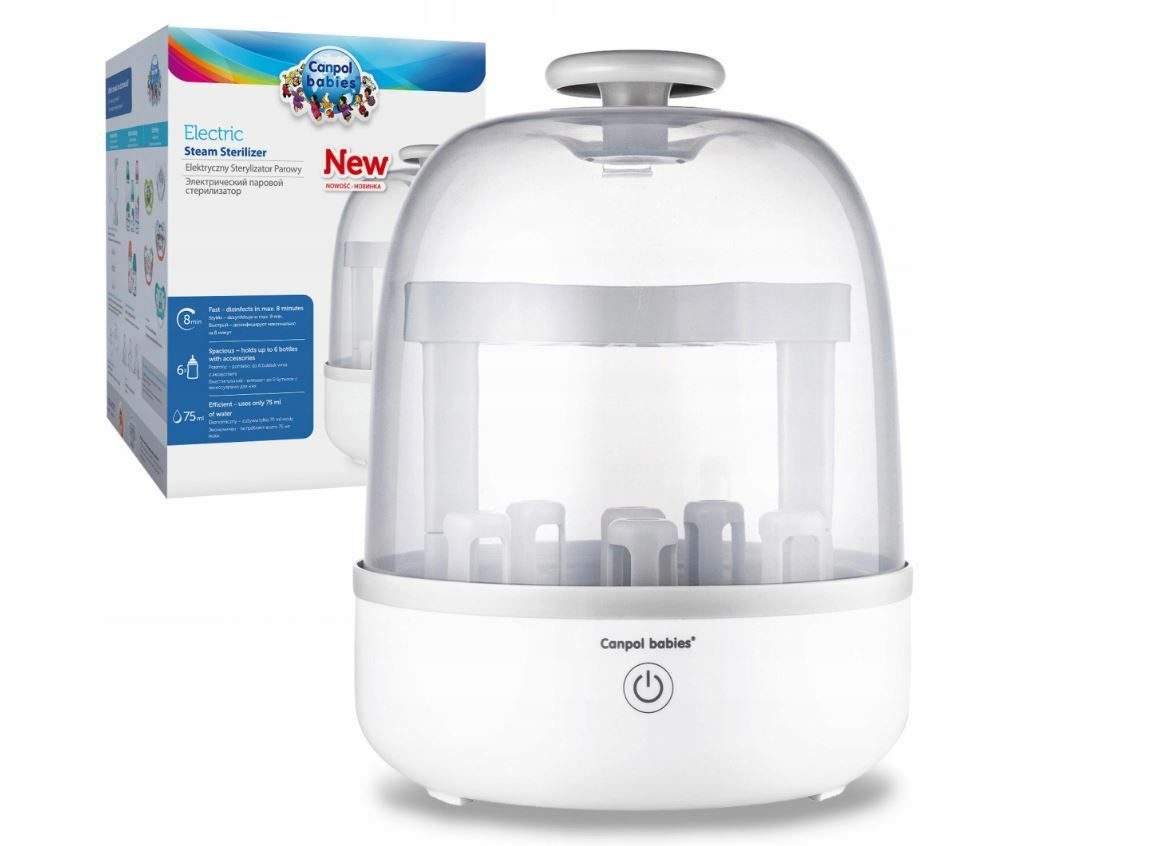

Photos from current listings. Actual item, color, and included accessories may vary.
Feeding Bottle Buying Guide
A feeding bottle is a closed liquid-delivery system where the nipple, venting, and material grade determine whether a newborn feeds comfortably or swallows air. The primary trade-off is anti-colic venting complexity versus cleaning simplicity, and the decision rule is to match bottle architecture to your baby's feeding stage and your sterilization workflow. Durable, low-part-count designs with standard wide necks beat feature-heavy bottles that trap milk residue.


At a glance
- Category
- Feeding & Sterilizing
- Data updated
- Nov 15, 2026
Current offers
Highlights
- Vent placement defines colic performance: internal vent tubes reduce swallowed air but add parts; bottom-air vents are easiest to clean; nipple-base vents are a middle ground.
- Nipple flow is staged by hole size and milk viscosity: slow-flow for 0-3 months, medium for 3-6 months, fast for 6+ months or thickened formula.
- Bottle neck standard matters: wide-neck (approx. 2 in / 50 mm) fits most breast pumps and warmers; narrow-neck requires branded adapters and nipples.
- Material grade governs heat tolerance and clarity: borosilicate glass handles repeated steam sterilization; PP and PPSU are shatter-resistant but PPSU resists yellowing longer than PP.
Best use cases
- Newborn (0-3 months) with gas or reflux: pick a wide-neck bottle with an internal vent system and slow-flow nipple; skip fast-flow nipples and narrow-neck bottles that require adapters.
- Breastfed baby transitioning to bottle: choose a wide-base, soft-silicone nipple with a gradual slope to mimic breast latch; skip firm orthodontic nipples and very long nipples.
- Pumping parent combining breast and bottle: buy wide-neck bottles that thread directly onto your pump flange; skip narrow-neck glass unless you own a narrow-neck pump adapter.
- High-volume sterilization household: borosilicate glass or PPSU bottles tolerate repeated steam and dishwasher cycles; skip thin PP bottles if you sterilize daily.
Buying tips
- Count feed volumes before sizing: newborns take 2-4 oz per feed, so 4-5 oz bottles cover the first months; buy 8-9 oz bottles only for 6+ months or formula top-ups.
- Match nipple flow to age and formula thickness: slow-flow (one hole) for 0-3 months, medium (two holes) for 3-6 months, fast (three holes or Y-cut) for 6+ months or cereal-thickened milk.
- Check neck diameter against your pump and warmer: wide-neck bottles are about 50 mm across the threads; narrow-neck are about 37 mm and need branded adapters.
- Prefer bottles with fewer than four parts per feed: each extra vent component is a cleaning and loss risk; silicone nipples should be replaced every 2-3 months.
Specs
| Vent System | Internal tube / bottom vent / nipple-base |
|---|---|
| Neck Diameter | Wide ~50 mm / Narrow ~37 mm |
| Nipple Flow | Slow 0-3 mo / Medium 3-6 mo / Fast 6+ mo |
| Bottle Material | Borosilicate glass / PP / PPSU |
Related searches
What to check before buying
- Measure your pump flange and warmer opening: wide-neck bottles fit most flanges directly; narrow-neck needs an adapter ring.
- Confirm your sterilizer basket height and bottle count: standard steam sterilizers fit 4-6 wide-neck bottles upright; glass bottles need vertical clearance.
- Check dishwasher top-rack clearance and temperature: PP and PPSU are top-rack safe; borosilicate glass is dishwasher safe but avoid rapid temperature shocks.
- Verify nipple collar compatibility: replacement nipples must match the bottle brand's collar thread; cross-brand nipples leak unless the collar is identical.
FAQ
Data sources: eBay / Amazon listings and product attribute feeds Data updated Nov 15, 2026.
Some links on this page are affiliate links. If you buy after clicking one, we may earn a commission at no extra cost to you. This does not change which products appear here or their order. Affiliate disclosure.