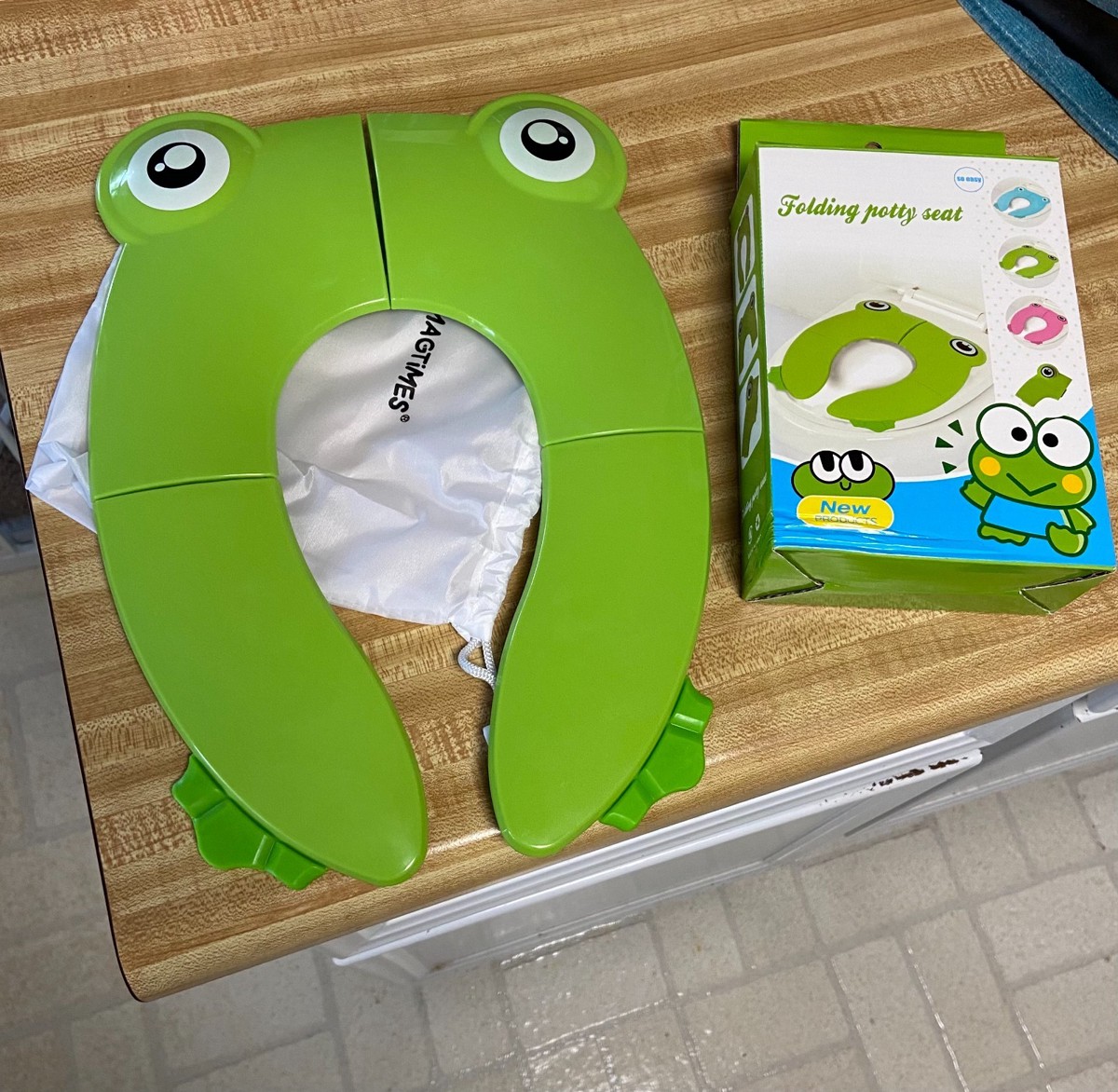

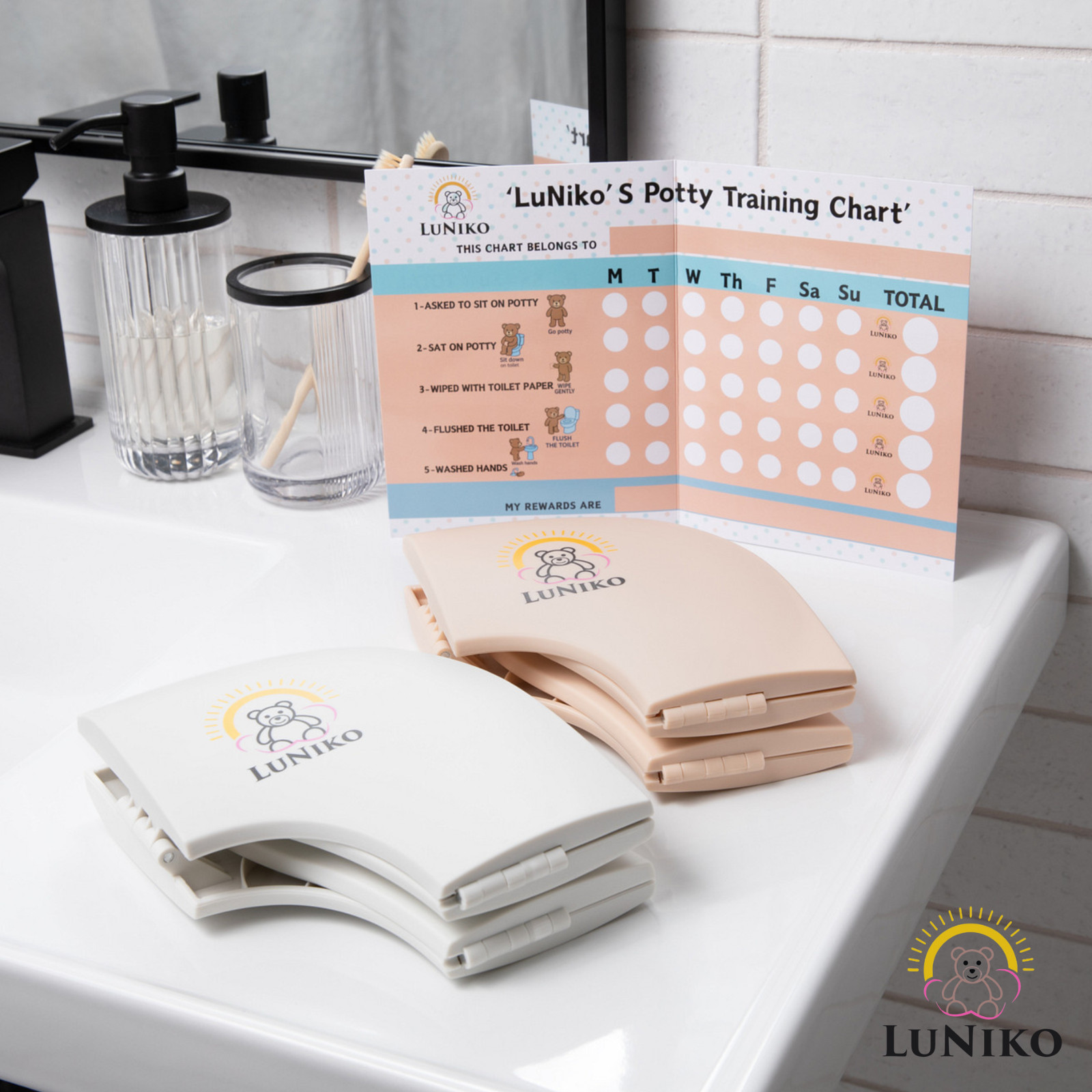
Photos from current listings. Actual item, color, and included accessories may vary.
Portable Potty Seat Buying Guide
A portable potty seat is a foldable or compact training seat that lets a toddler use a full-size toilet away from home, and the key trade-off is hinge strength and splash geometry versus packability. Durable options use wide rubberized contact patches and a locking hinge that survives repeated folding; compromises rely on thin friction tape and loose pivots that wobble on oval bowls. The decision rule: buy a seat with at least four non-slip contact points and a rigid locking mechanism, skip any seat marketed only on cute colorways without hinge or grip specs.


At a glance
- Category
- Potty Training
- Data updated
- Nov 15, 2026
Current offers
Highlights
- Folding travel seats split into two architectures: clamshell hinge designs that fold flat to roughly 1 inch thick, and silicone splash guards that collapse into a small disc.
- Non-slip performance depends on rubberized or TPE grip pads on the underside; bare plastic rims slide on elongated and oval toilet bowls.
- A splash guard or raised front lip is the difference between a clean travel experience and urine escaping between the seat and bowl rim, especially for boys.
- Locking hinges rated for repeated fold-unfold cycles separate durable seats from loose-pivot models that develop wobble after a few trips.
Best use cases
- Best fit for diaper-bag carry and restaurant or public restroom trips: pick a clamshell folding seat with a hard shell, four rubber grip pads, and a locking hinge that folds to about 1 inch thick.
- Best fit for home-plus-travel hybrid use: choose a seat that fits both standard and elongated bowls and includes a travel bag, so it works on the home toilet and on the road without a second purchase.
- Wrong fit: a soft cushioned seat or one with only two small grip dots — it slides on public oval bowls and offers no splash control; skip it for travel duty.
- Wrong fit: a bulky non-folding training seat with handles — it will not fit in a typical diaper bag or backpack side pocket; keep it home-only.
Buying tips
- Measure the home toilet bowl opening first: most standard bowls are about 8–9 inches wide at the inner rim; elongated bowls run longer, so confirm the seat's underside span covers your rim before buying.
- Choose seats with rubberized or TPE grip pads across the full contact arc, not four tiny dots — full-arc grip is what prevents sliding on glossy ceramic.
- Look for a positive-lock hinge or latch; a friction-only pivot loosens with use and lets the seat shift sideways mid-use.
- Prefer seats with a front splash guard and a wipe-clean hard plastic shell over fabric covers, which absorb moisture and odor on the go.
Specs
| Seat Architecture | Clamshell fold vs silicone splash guard |
|---|---|
| Grip Material | Rubberized/TPE full-arc pads vs bare plastic |
| Hinge Type | Locking latch vs friction pivot |
| Bowl Compatibility | Standard round and most elongated |
Related searches
What to check before buying
- Measure your toilet bowl: width and length of the outer rim, plus whether it is standard round or elongated, so the seat's contact patches land on ceramic, not the opening.
- Confirm the folded dimensions fit your diaper bag or backpack pocket — clamshell seats typically fold to roughly 1 inch thick by 5–7 inches wide.
- Check the seat's weight rating and age guidance against your child's size; most portable seats are built for toddlers roughly 18 months to 4 years.
- Verify the grip material and hinge type before travel: rubberized pads and a locking latch, not bare plastic and a loose pin.
FAQ
Data sources: eBay / Amazon listings and product attribute feeds Data updated Nov 15, 2026.
Some links on this page are affiliate links. If you buy after clicking one, we may earn a commission at no extra cost to you. This does not change which products appear here or their order. Affiliate disclosure.