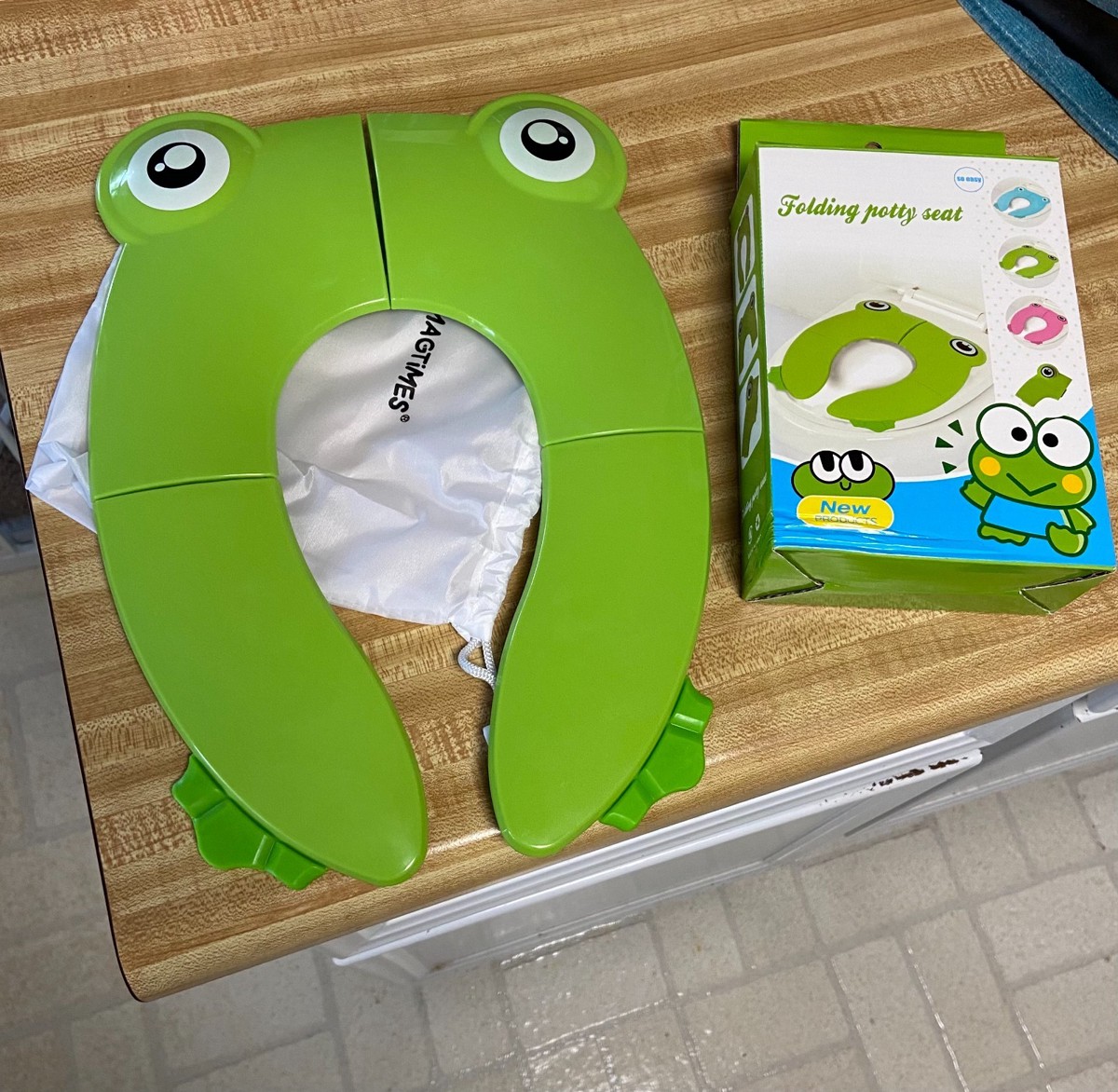

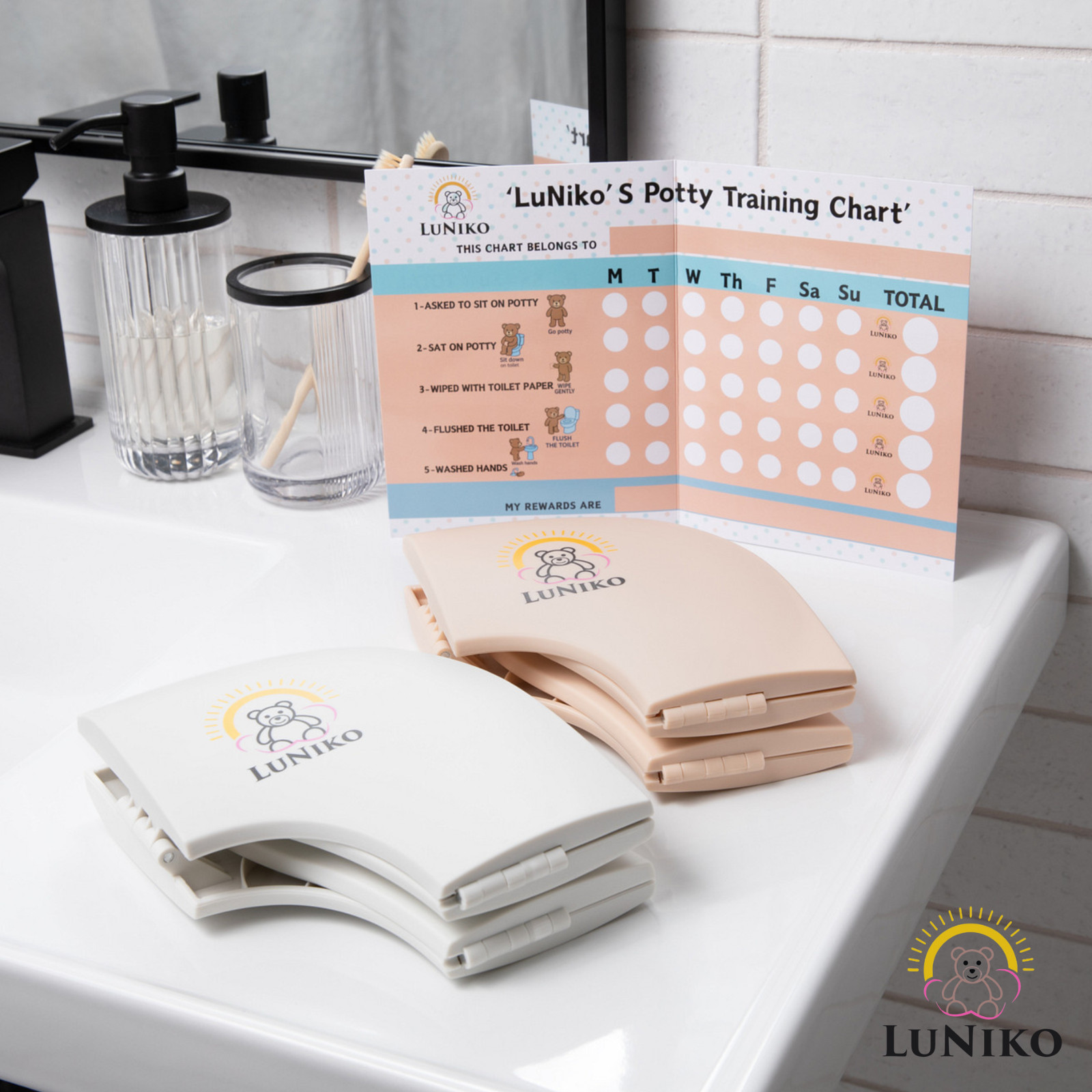
Photos from current listings. Actual item, color, and included accessories may vary.
Portable Potty Training Seat Buying Guide
A portable potty training seat is a compact, travel-ready reducer that lets a toddler use an adult toilet safely away from home. The core trade-off is between folding hinge durability and non-slip stability versus packability and weight. Durable options use rigid polypropylene with rubberized grip pads and a wide, contoured splash guard; compromises rely on thin plastic, weak hinges, and undersized seats that shift under a child.


At a glance
- Category
- Potty Training
- Data updated
- Nov 15, 2026
Current offers
Highlights
- Folding seats use a living-hinge or pinned-hinge design; pinned metal or double-wall polypropylene hinges survive repeated folding, while single thin living hinges crack within months.
- Non-slip stability comes from full-perimeter TPR or silicone pads on the underside; partial foam strips slide on smooth ceramic bowls.
- Seat opening geometry matters: a contoured splash guard 3–5 cm tall and a rear gap under 2 cm prevent urine spray and pinching on standard elongated bowls.
- Weight and folded size separate travel tiers: sub-400 g seats fold to under 4 cm thick for diaper bags, while rigid non-folding reducers are for home or car use only.
Best use cases
- Best fit: frequent air or road travel with a toddler — pick a pinned-hinge folding seat under 400 g with full TPR underside pads and a carry bag.
- Best fit: public restroom use — choose a seat with a tall splash guard and wide side wings that bridge elongated and standard bowls without wobble.
- Wrong fit: home-only training — skip folding hinges and buy a rigid, non-folding reducer with a high back and armrests for confidence.
- Wrong fit: children over 50 lbs or wide builds — a portable reducer's narrow opening will pinch; move to a toilet trainer with a larger aperture.
Buying tips
- Match the seat to bowl shape: elongated bowls need a seat with a rear cutout and flex wings; round bowls need a compact oval with full-perimeter pads.
- Check hinge construction in photos — prefer visible metal pins or double-wall polypropylene over thin single-piece living hinges that fatigue.
- Weigh the packability trade-off: seats under 400 g and 4 cm folded thickness fit diaper bags; anything thicker belongs in a car or suitcase.
- Confirm the opening width is at least 14 cm across and the splash guard is molded, not a flimsy clip-on, to prevent leaks and pinching.
Specs
| Hinge Type | Pinned metal vs living polypropylene |
|---|---|
| Base Grip | Full TPR perimeter vs foam dots |
| Folded Thickness | Under 4 cm travel vs rigid home |
| Weight Rating | Up to ~50 lbs / 14 cm opening |
Related searches
What to check before buying
- Measure your home and common travel toilets: seat must span 32–38 cm wide and fit both round and elongated bowls without overlap.
- Check the child's weight and thigh fit — most portable reducers are rated to roughly 50 lbs and a 14 cm minimum opening.
- Verify the underside has continuous TPR or silicone pads, not four small foam dots that peel off.
- Confirm folded dimensions against your diaper bag or stroller pocket before buying a folding model.
FAQ
Data sources: eBay / Amazon listings and product attribute feeds Data updated Nov 15, 2026.
Some links on this page are affiliate links. If you buy after clicking one, we may earn a commission at no extra cost to you. This does not change which products appear here or their order. Affiliate disclosure.