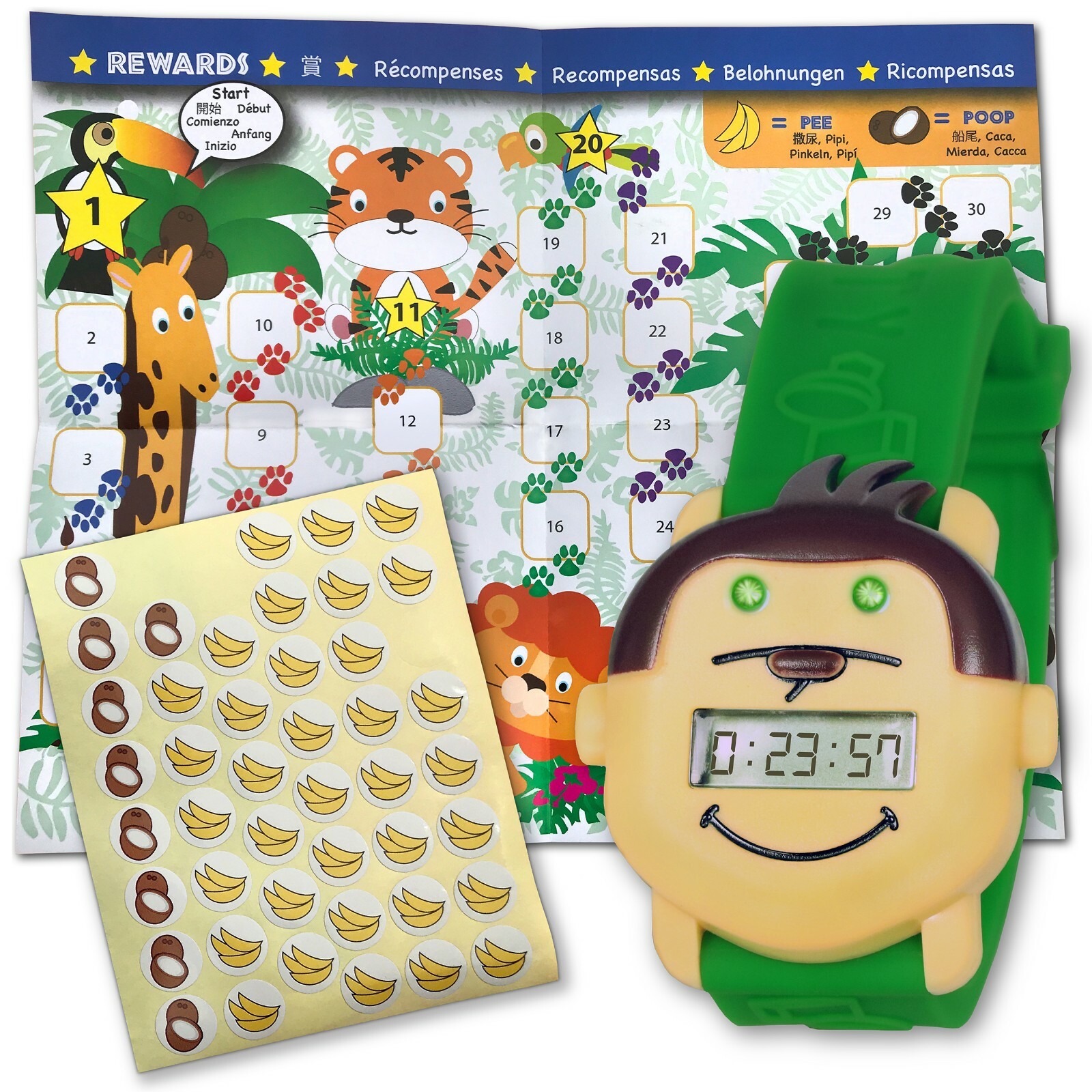

Photos from current listings. Actual item, color, and included accessories may vary.
Potty Training Watch Buying Guide
A potty training watch is a wearable timer that vibrates or chimes at set intervals to prompt a child to use the toilet, replacing parental nagging with a consistent, child-friendly cue. The core trade-off is between simple interval-only timers and smart models with app pairing, custom schedules, and progress tracking—the former is more durable and independent, the latter adds flexibility but introduces charging and compatibility complexity. Choose a basic vibration timer if you want a rugged, waterproof, no-phone-required device; choose a smart watch only if you will actively manage schedules via an app and accept nightly charging.


At a glance
- Category
- Potty Training
- Data updated
- Nov 15, 2026
Current offers
Highlights
- Timer-only watches use a simple IC with fixed 30/60/90-minute intervals and a coin-cell or USB-rechargeable battery lasting weeks; smart models add Bluetooth, accelerometer, and app sync, cutting battery life to 1-3 days.
- Water resistance is the key durability metric: IPX7 or 5 ATM ratings survive handwashing and accidental toilet dunks, while unrated novelty watches fail within weeks from moisture ingress.
- Vibration alert is superior to audible beeps for daycare and classroom settings; models with both let you switch modes, but vibration motors are the first component to fail on low-cost units.
- Kid-proof construction means a recessed or lockable battery door, soft silicone or TPU strap, and no exposed charging port; USB-C or magnetic charging is more durable than micro-USB on smart versions.
Best use cases
- Best fit: A basic vibration-only timer watch with 30/60/90-minute presets for a 2-4 year old in daycare or preschool—no phone needed, waterproof, and the child can press a button to reset after a successful trip.
- Wrong fit: A Bluetooth smartwatch with app scheduling for a child under 3 or a household that won't consistently charge it—the added complexity and nightly charging undermine the routine.
- Best fit: A smart watch with custom intervals and reward tracking for a 4-6 year old in active training who responds to visual progress and needs variable schedules (e.g., every 45 minutes after lunch).
- Wrong fit: Any watch without a secure battery door or IPX7 rating for a child prone to chewing or soaking toys—skip unrated novelty character watches and choose a sealed, screw-back battery compartment.
Buying tips
- Match interval presets to bladder capacity: 30 minutes for early training (18-30 months), 60 minutes for steady progress, and 90 minutes for nighttime or older trainees; avoid watches with only one fixed interval.
- Verify water resistance rating explicitly—IPX7 (1 m for 30 min) is the minimum for handwashing and toilet splashes; 5 ATM (50 m) is better if the child swims or bathes with it.
- For smart models, confirm the app runs on your phone OS (iOS/Android) and supports multiple child profiles; avoid models requiring a proprietary hub or subscription.
- Choose a strap material of soft silicone or TPU with a standard 18-20 mm lug width so you can replace a chewed strap; avoid glued-on novelty bands that can't be swapped.
Specs
| Alert Type | Vibration / audible chime / both |
|---|---|
| Interval Presets | 30 / 60 / 90 min (variable vs fixed) |
| Water Resistance | IPX7 minimum / 5 ATM swim-rated |
| Power Source | Coin-cell (6-12 mo) vs USB recharge (1-3 days) |
Related searches
What to check before buying
- Measure your child's wrist circumference (typically 12-15 cm for ages 2-5) and confirm the watch strap adjusts down to that size with at least 2 cm of overlap.
- Check the battery type and expected life: coin-cell (CR2032) lasts 6-12 months and is user-replaceable; USB-rechargeable smart watches need a nightly charge and a cable you won't lose.
- Confirm the alert mode suits your child's environment—vibration for daycare/classroom, audible chime for home—and that volume or vibration strength is adjustable or at least noticeable.
- For smart watches, verify Bluetooth range (10 m typical) and whether the watch stores schedules onboard so it still prompts if the phone is out of range.
FAQ
Data sources: eBay / Amazon listings and product attribute feeds Data updated Nov 15, 2026.
Some links on this page are affiliate links. If you buy after clicking one, we may earn a commission at no extra cost to you. This does not change which products appear here or their order. Affiliate disclosure.