
Photos from current listings. Actual item, color, and included accessories may vary.
Indoor Dog Gate With Door Buying Guide
An indoor dog gate with a door is a pressure-mounted or hardware-mounted barrier that keeps dogs contained while allowing humans to pass through a built-in walk-through door. The core trade-off is mounting method versus doorway damage: pressure-mounted gates install without tools but rely on rubber pads and can be pushed over by strong dogs, while hardware-mounted gates screw into the frame or wall for maximum rigidity. The decision rule is simple: choose a hardware-mounted gate for dogs over 40 lb or any doorway receiving daily heavy traffic, and a pressure-mounted gate only for small, calm dogs and rental-friendly, temporary setups.
At a glance
- Category
- Baby Monitoring & Safety
- Data updated
- Nov 20, 2026
Current offers
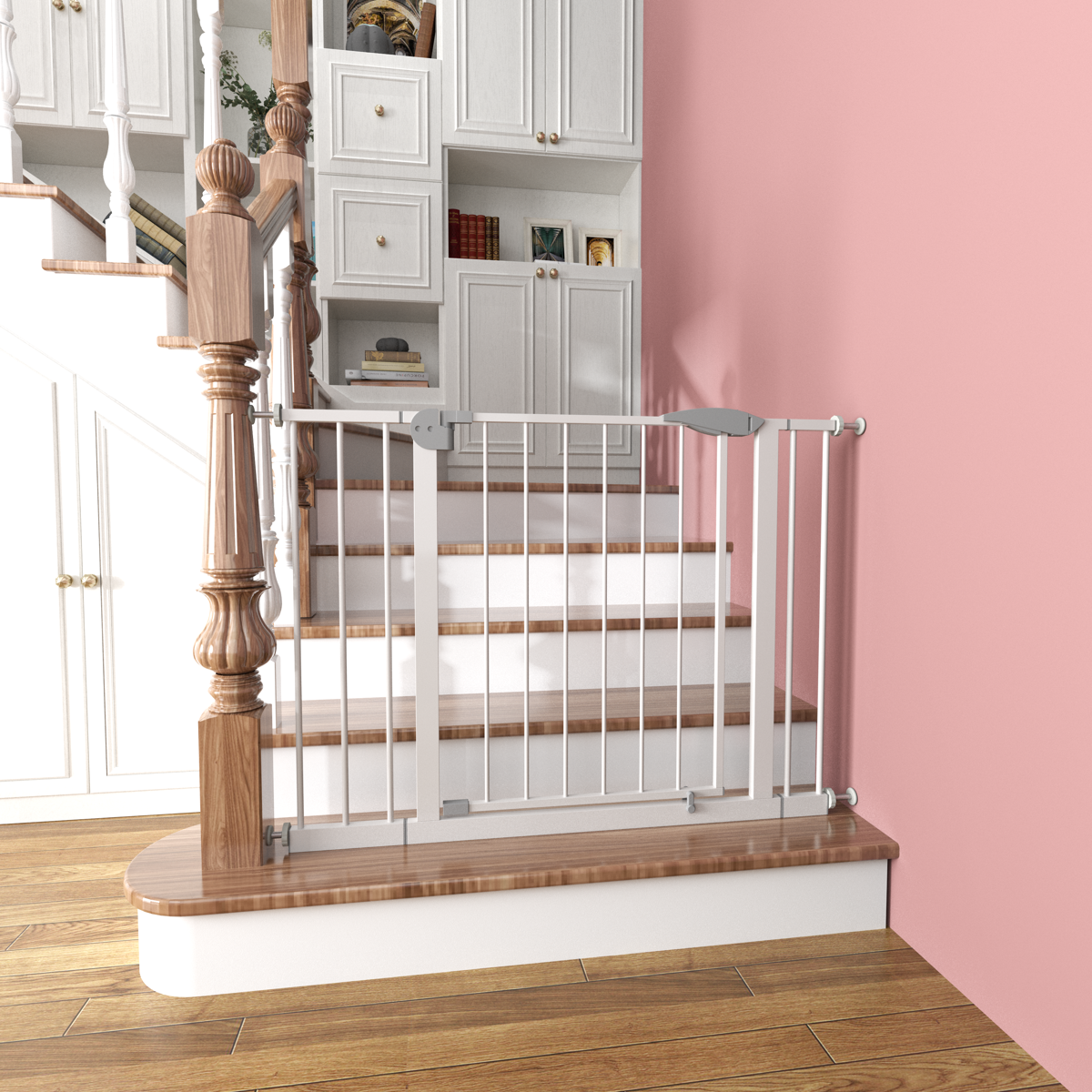 29.5-45.3 Wide Baby Gate For Stairs, Dog Indoor For Doorways, No Drilling Pressure Mounted Pet Gates For Kids, Easy Walk Through Safety White$56.99View on Mallflare
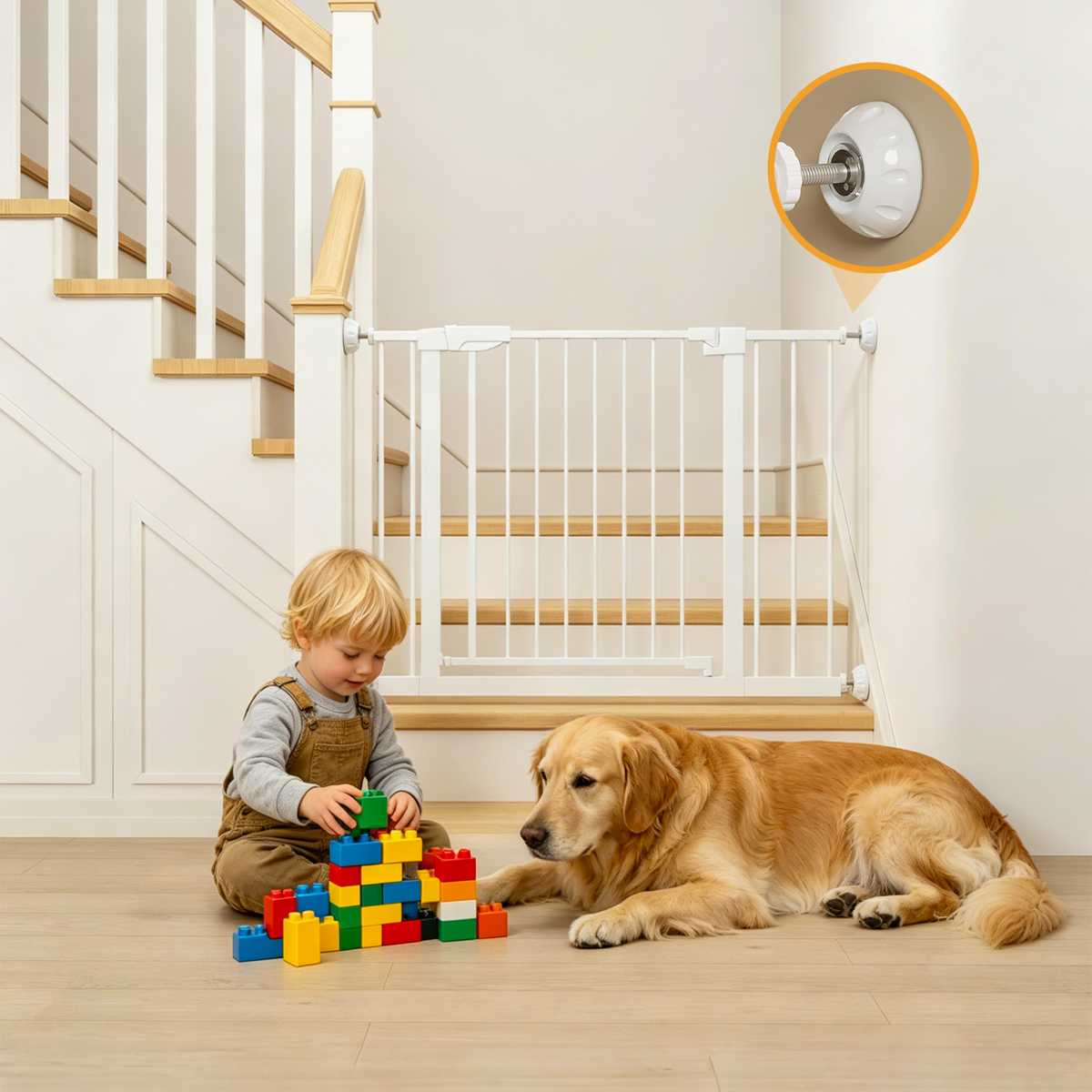 29.5-45.3" Wide Baby Gate with wall protector for Stairs, Dog Indoor for Doorways, No Drilling Pressure Mounted Pet Gates for Kids, Easy Walk Through Safety White$58.99View on Mallflare
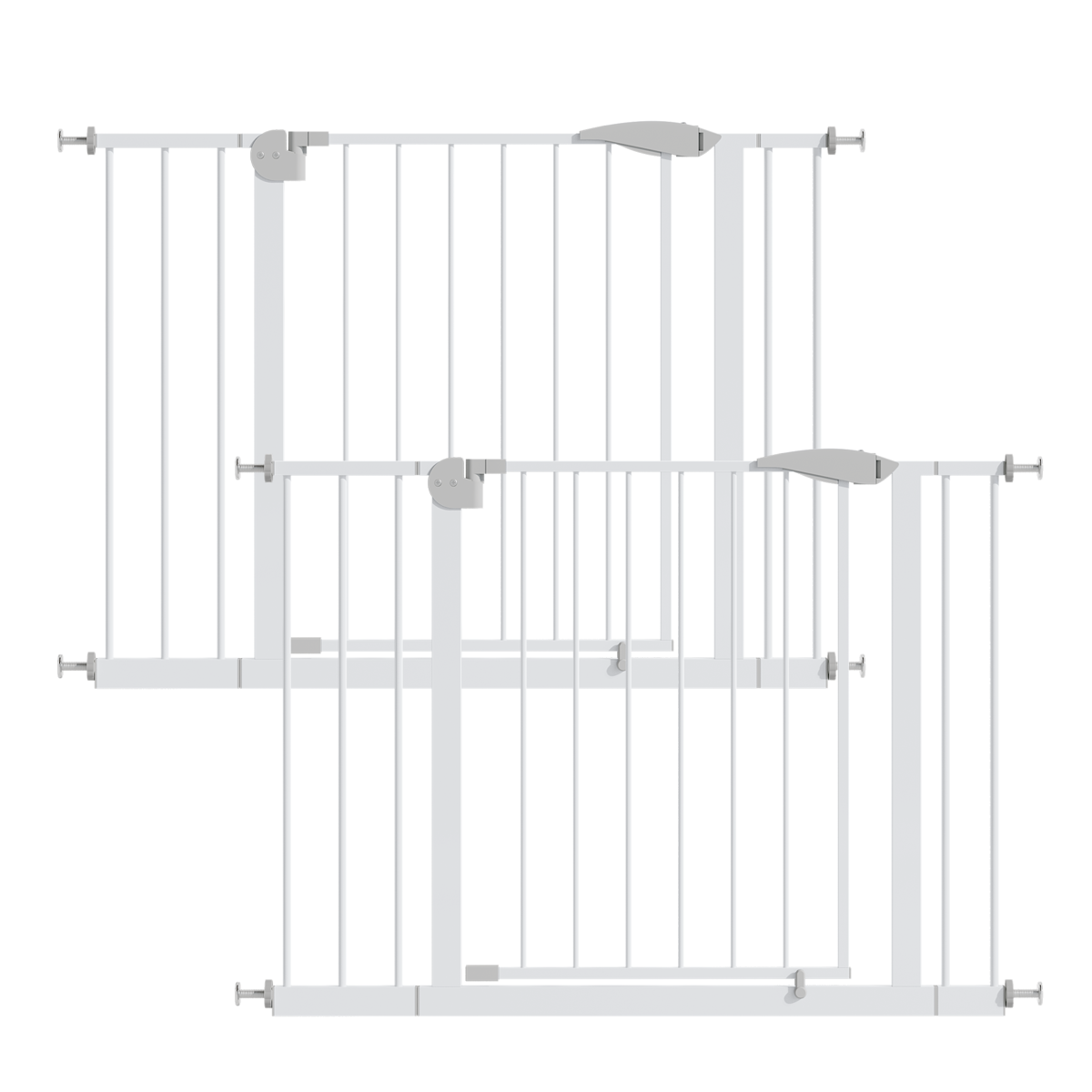 2 Pack 29.5-44.1" Wide Baby Gate for Stairs, Dog Indoor for Doorways, No Drilling Pressure Mounted Pet Gates for Kids, Easy Walk Through Safety White$98.99View on Mallflare
Highlights
- Pressure-mounted gates rely on friction pads against the door frame and typically hold dogs up to 30–40 lb; they require no drilling but can be dislodged by a running or jumping dog.
- Hardware-mounted gates attach with screws or brackets into studs or the door frame and are the only safe option for dogs over 40 lb, multi-dog households, and top-of-stair placement.
- Walk-through doors come in two architectures: a full-width swing door on hinges or a smaller pet door integrated into a fixed panel; swing doors need at least the gate width plus clearance to open.
- Height matters more than width for jumpers: standard gates are 24–30 in tall, while 36–48 in gates are required for dogs that clear 30 in, and stair gates must never use pressure mounting at the top.
Best use cases
- Best fit: a hardware-mounted 36-in-tall gate with a swing door for a 50-lb Labrador in a high-traffic kitchen doorway — screw-in rigidity and a self-closing hinge handle daily adult passage.
- Best fit: a pressure-mounted 30-in gate with a narrow pet door for a 15-lb senior dog in a rental apartment — no drilling, removable for move-out, and the small door keeps the dog out of the kitchen.
- Wrong fit: a pressure-mounted gate at the top of stairs for any dog — pressure gates can shift under load and create a fall hazard; only hardware-mounted gates belong at stair tops.
- Wrong fit: a 24-in-tall gate for a jumper or a dog over 40 lb, even if the door latch is convenient — height and mounting strength, not door style, determine whether the gate actually contains the dog.
Buying tips
- Measure the doorway opening at its narrowest point, then add 2 in of extension coverage: a gate rated for 29–34 in fits a 30-in opening, but a 36-in opening needs a gate with extension kits rated to 38 in.
- Match gate strength to dog weight: pressure-mounted for dogs under 30 lb, hardware-mounted for 30–40 lb and above, and always hardware-mounted for dogs over 40 lb or any aggressive push-through behavior.
- Check door swing clearance: a walk-through door needs the gate width plus 20–24 in of open-swing arc, so narrow hallways may require a gate whose door swings both directions or a narrower pet-door panel.
- For stairways, buy only a hardware-mounted gate rated for stair use; confirm the mounting kit includes lag bolts or stud anchors, since drywall anchors alone will not hold a dog's impact load.
Specs
| Mounting Type | Pressure-mounted vs hardware-mounted |
|---|---|
| Gate Height | 24–30 in standard; 36–48 in for jumpers |
| Door Style | Full swing door vs pet-door panel |
| Stair Rating | Hardware-mounted only at stair top |
Related searches
What to check before buying
- Measure the doorway width at floor, mid-height, and top — older homes often vary by 0.5–1 in, and a gate must fit the narrowest point without exceeding its maximum extension.
- Confirm the mounting surface: pressure gates need solid flat frames with at least 2 in of contact per pad; hardware gates need wood studs, masonry, or a included drywall-anchor kit rated for the gate's load.
- Measure the dog's height at the shoulder and add 6 in: a 22-in-tall dog needs a gate at least 28 in tall to prevent jumping, and stair gates should be at least 30 in tall.
- Check the gate's door opening width against the adults who will pass through daily — pet-door panels often leave only 14–20 in of clearance, while full swing doors typically provide 20–26 in.
FAQ
Data sources: eBay / Amazon listings and product attribute feeds Data updated Nov 20, 2026.
Some links on this page are affiliate links. If you buy after clicking one, we may earn a commission at no extra cost to you. This does not change which products appear here or their order. Affiliate disclosure.