Photos from current listings. Actual item, color, and included accessories may vary.
Pet Gate Stair Buying Guide
Pet gate stairs are pressure-mounted or hardware-mounted barriers designed to block stairways while allowing quick adult pass-through, and the core trade-off is between no-drill pressure mounting (renter-friendly, but unsuitable for top-of-stairs use) and screwed-in hardware mounting (load-rated, but permanent). The decision rule: use hardware-mounted gates at the top of any staircase and pressure-mounted gates only at the bottom or in doorways, never invert this for a wider opening.


At a glance
- Category
- Baby Monitoring & Safety
- Data updated
- Nov 17, 2026
Current offers
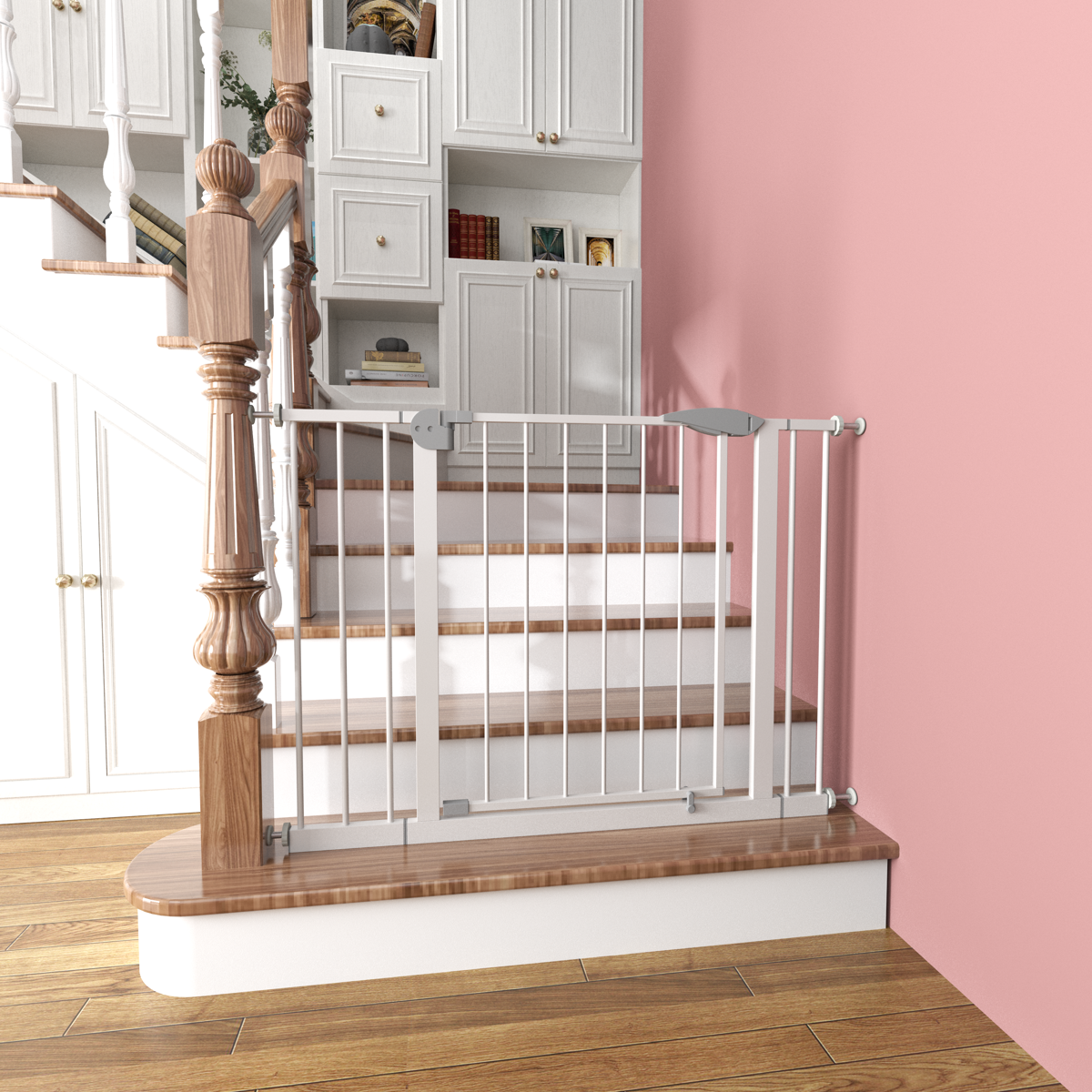 29.5-45.3 Wide Baby Gate For Stairs, Dog Indoor For Doorways, No Drilling Pressure Mounted Pet Gates For Kids, Easy Walk Through Safety White$56.99
 View on Mallflare
 29.5-45.3" Wide Baby Gate with wall protector for Stairs, Dog Indoor for Doorways, No Drilling Pressure Mounted Pet Gates for Kids, Easy Walk Through Safety White$58.99View on Mallflare
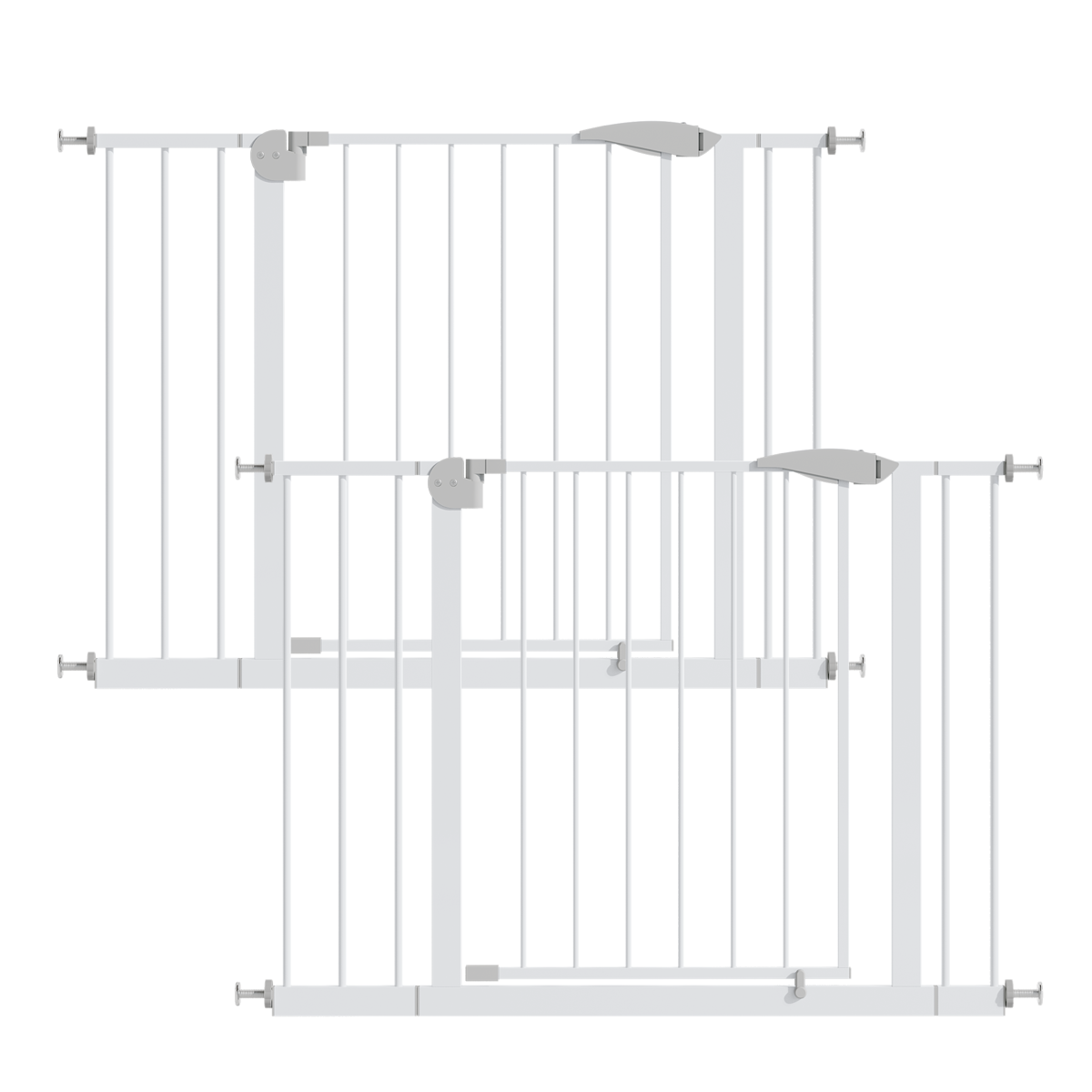 2 Pack 29.5-44.1" Wide Baby Gate for Stairs, Dog Indoor for Doorways, No Drilling Pressure Mounted Pet Gates for Kids, Easy Walk Through Safety White$98.99View on Mallflare
Highlights
- Pressure-mounted gates rely on friction between rubber pads and wall surfaces and are not rated to stop a fall down stairs; hardware-mounted gates anchor into studs or masonry and are the only safe choice at stair tops.
- Gate width range is set by the frame plus extension kits: a 29.5-45.3 in span means the gate ships with extensions or an adjustable frame, but the actual walk-through opening shrinks as span widens.
- A 2-pack configuration is intended for two separate doorways or a bottom-of-stair plus doorway pair, not for stacking two gates in one opening; each gate needs its own mounting surface.
- Walk-through gates use a swing door with a latching mechanism; the door swings in one direction only and requires clearance equal to the gate panel width plus a few inches on the swing side.
Best use cases
- Best fit: bottom-of-stair or doorway blocking for renters — choose a pressure-mounted no-drill gate with wall protectors, since it removes cleanly without patching drywall.
- Best fit: top-of-stair safety — choose a hardware-mounted gate screwed into studs or a stair-post mounting kit; skip every pressure-mounted model for this location regardless of width.
- Wrong fit: wide or irregular openings beyond the listed span — do not bridge the gap with a pressure gate alone; use a hardware-mounted gate with the correct extension kit or a configured play-yard panel system.
- Best fit: multi-location coverage — the 2-pack suits one bottom-of-stair gate plus one doorway gate; do not buy a 2-pack expecting to combine both gates into a single extra-wide barrier.
Buying tips
- Measure the opening at the wall surface, not the frame, and confirm the gate's minimum span is at or below that measurement; a gate listed 29.5-45.3 in needs the wall-to-wall distance to fall inside that range with the pads compressed.
- For top-of-stair use, specify hardware-mounted with a one-hand latch and a door that swings away from the stairs; confirm the mounting kit includes lag bolts or a stair-post adapter.
- Width extensions add span but reduce the pass-through opening; on narrow landings pick the smallest gate that covers the span rather than a wide gate with extensions.
- Check the bar spacing: vertical bars should be no more than 2.75 in apart for toddler containment and no more than 2 in for small-breed pets; larger spacing defeats the safety purpose.
Specs
| Mount Type | Pressure no-drill vs hardware screw-in |
|---|---|
| Stair Position | Hardware only at top; pressure at bottom |
| Span Range | Approx. 29.5-45.3 in with extensions |
| Bar Spacing | <=2.75 in toddler / <=2 in pets |
Related searches
What to check before buying
- Measure wall-to-wall opening width at floor level and at gate height; confirm the number sits inside the gate's min-max span.
- Identify whether the mounting surface is drywall over studs, plaster, masonry, or a banister post — pressure gates need flat, solid surfaces and hardware gates need studs or a post adapter.
- For stair-top installation, confirm the landing depth fits the gate frame plus swing clearance and that the door opens away from the staircase.
- Verify the gate height (typically 28-36 in) clears your stair railing height and that the latch is reachable from the safe side of the landing.
FAQ
Data sources: eBay / Amazon listings and product attribute feeds Data updated Nov 17, 2026.
Some links on this page are affiliate links. If you buy after clicking one, we may earn a commission at no extra cost to you. This does not change which products appear here or their order. Affiliate disclosure.