
Photos from current listings. Actual item, color, and included accessories may vary.
Pressure Mounted Gate With Door Buying Guide
A pressure-mounted gate with door is a tension-held barrier that relies on rubber pads and a threaded spindle to grip a doorway or stair opening without drilling; the core trade-off is convenience versus holding force. The decisive rule: choose a gate whose spindle travel covers your exact opening plus at least 1 inch of compression, and whose door swings clear of the walking path — undersized spindles and swing-blocking frames are the failure modes.
At a glance
- Category
- Baby Monitoring & Safety
- Data updated
- Nov 20, 2026
Current offers
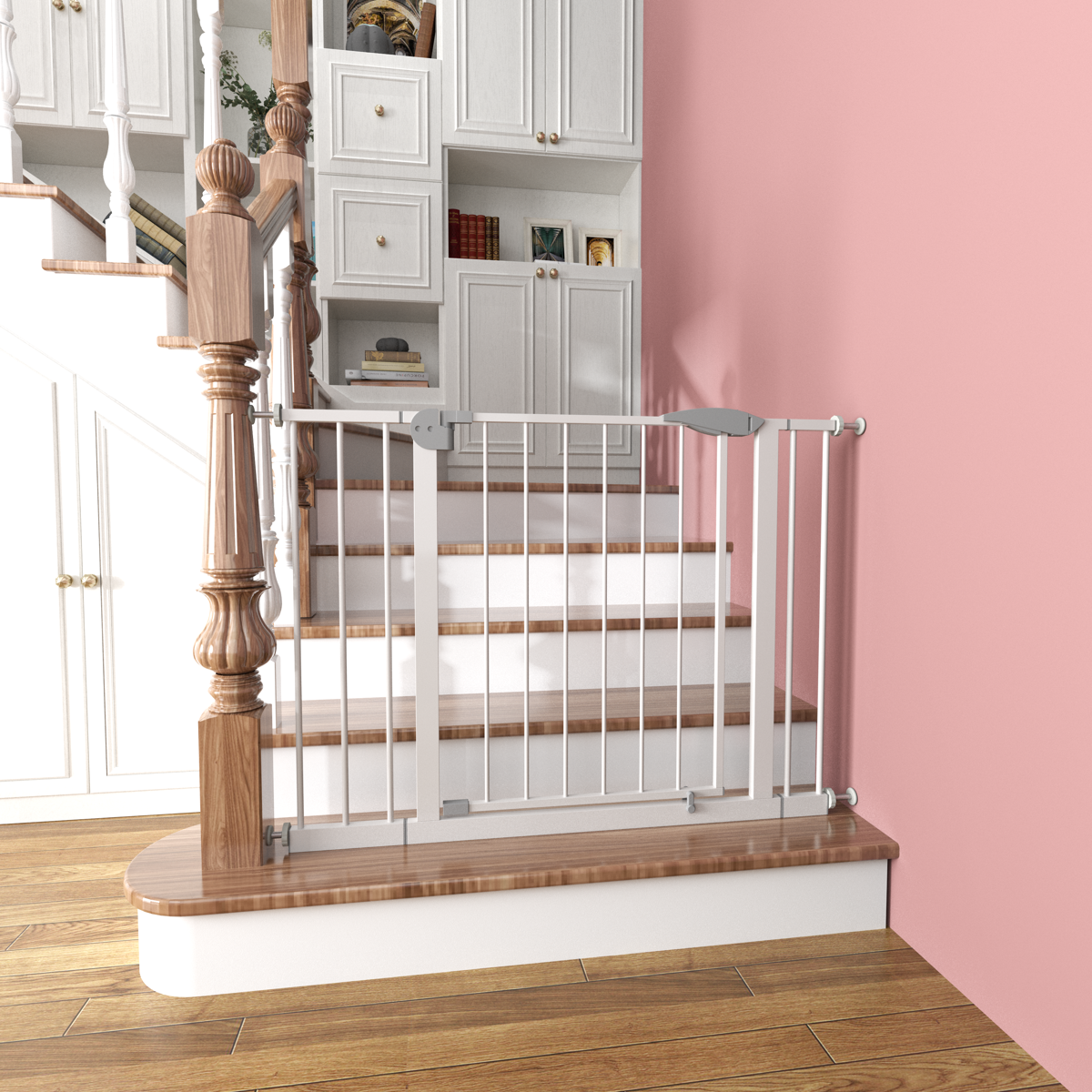 29.5-45.3 Wide Baby Gate For Stairs, Dog Indoor For Doorways, No Drilling Pressure Mounted Pet Gates For Kids, Easy Walk Through Safety White$56.99View on Mallflare
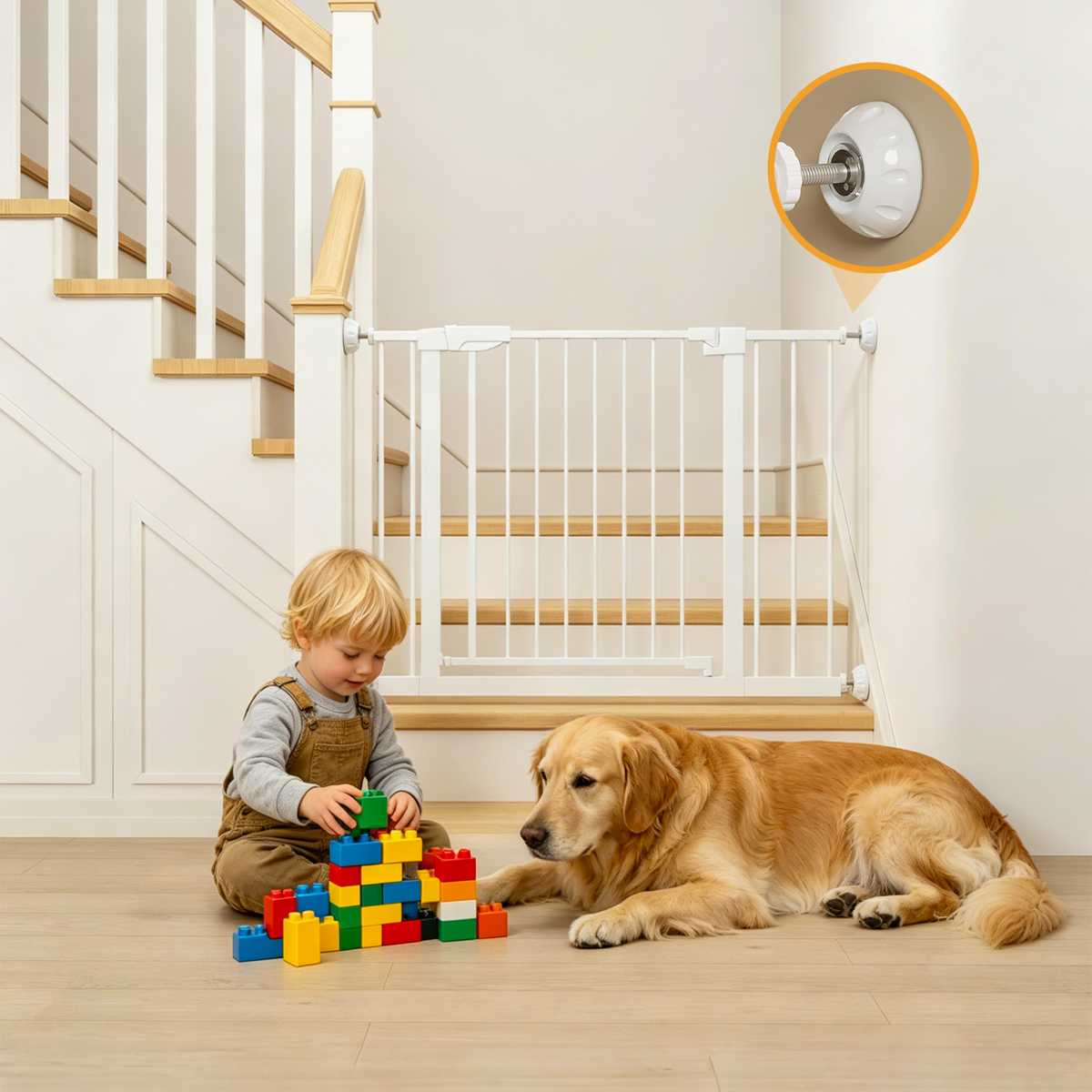 29.5-45.3" Wide Baby Gate with wall protector for Stairs, Dog Indoor for Doorways, No Drilling Pressure Mounted Pet Gates for Kids, Easy Walk Through Safety White$58.99View on Mallflare
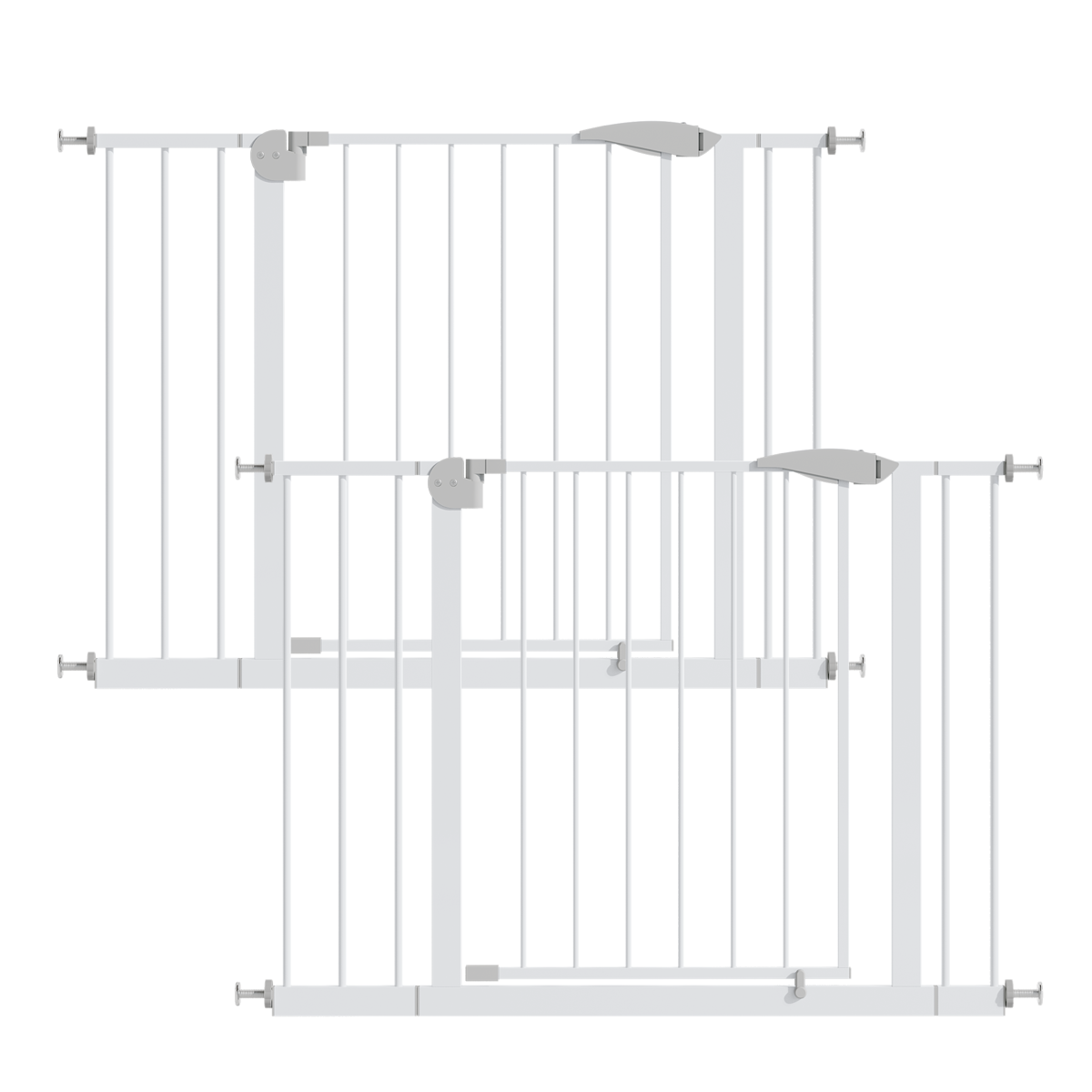 2 Pack 29.5-44.1" Wide Baby Gate for Stairs, Dog Indoor for Doorways, No Drilling Pressure Mounted Pet Gates for Kids, Easy Walk Through Safety White$98.99View on Mallflare
Highlights
- Pressure gates use a threaded tension spindle and rubber contact pads; holding force depends on pad compression, so the spindle must extend at least 1–2 inches beyond the opening width.
- Door styles differ: a full walk-through door with a one-hand latch and 180° swing beats a low step-over bar for stairs and high-traffic doorways.
- Hardware-mounted gates use screws into studs or a banister adapter and hold far more force than pressure gates; pressure gates should never be the top-of-stairs barrier.
- Wall cups or protectors spread load on drywall and trim; without them, spindle pressure can dent paint and crush soft plaster.
Best use cases
- Best fit: doorways, hallways, and bottom-of-stair landings where no drilling is allowed — pick a pressure gate with a self-closing walk-through door and wall cups.
- Best fit: renters and temporary setups — pressure mounting leaves no holes; choose a gate whose spindle range brackets the opening with 1 inch of margin.
- Wrong fit: top of stairs — use a hardware-mounted gate screwed into studs; a pressure gate can be pushed loose and is a fall hazard.
- Wrong fit: openings wider than the spindle's maximum — buy an extension kit or a wider gate instead of over-extending the spindle, which reduces grip.
Buying tips
- Measure the opening at the narrowest point and add 1–2 inches; choose a gate whose stated range spans your opening plus that compression.
- Match gate height to the child: at least 24 inches for toddlers, 30 inches or more for climbers; pet gates for dogs need height matched to jump height.
- For stairs, buy a hardware-mounted gate; pressure gates are for flat doorways and landings only.
- Check the door swing: a 180° swing and a one-hand latch matter in narrow halls; a gate that swings into the stairwell is a trip hazard.
Specs
| Mount Type | Pressure tension vs hardware screw |
|---|---|
| Spindle Width Range | Opening + 1-2 in compression |
| Door Swing | Walk-through 90-180 degrees |
| Stair Suitability | Bottom landing only (pressure) |
Related searches
What to check before buying
- Measure the doorway width at the narrowest point, including baseboard and trim, and confirm the gate's spindle range plus 1 inch covers it.
- Confirm the mounting surface: drywall, plaster, or wood trim all need wall cups; soft plaster may need a hardware-mounted gate instead.
- Check the walking path: the door must swing clear of stairs and furniture, and the latch must be reachable one-handed.
- Verify the gate height clears your child's climbing ability and that the bottom bar (if any) is low enough to step over safely.
FAQ
Data sources: eBay / Amazon listings and product attribute feeds Data updated Nov 20, 2026.
Some links on this page are affiliate links. If you buy after clicking one, we may earn a commission at no extra cost to you. This does not change which products appear here or their order. Affiliate disclosure.