Photos from current listings. Actual item, color, and included accessories may vary.
Stair Gate Buying Guide
A stair gate is a child/pet barrier whose safety hinges on one trade-off: pressure-mounted tension (no drilling, easy to move, but never safe at the top of stairs) versus hardware-mounted anchoring (screwed into studs/wall, required at stair tops). The decision rule: top-of-stairs requires a hardware-mounted gate with a no-trip bottom bar and a one-hand adult latch; bottom-of-stairs and doorways can use pressure-mounted gates provided they are never placed over a step.


At a glance
- Category
- Baby Monitoring & Safety
- Data updated
- Nov 17, 2026
Current offers
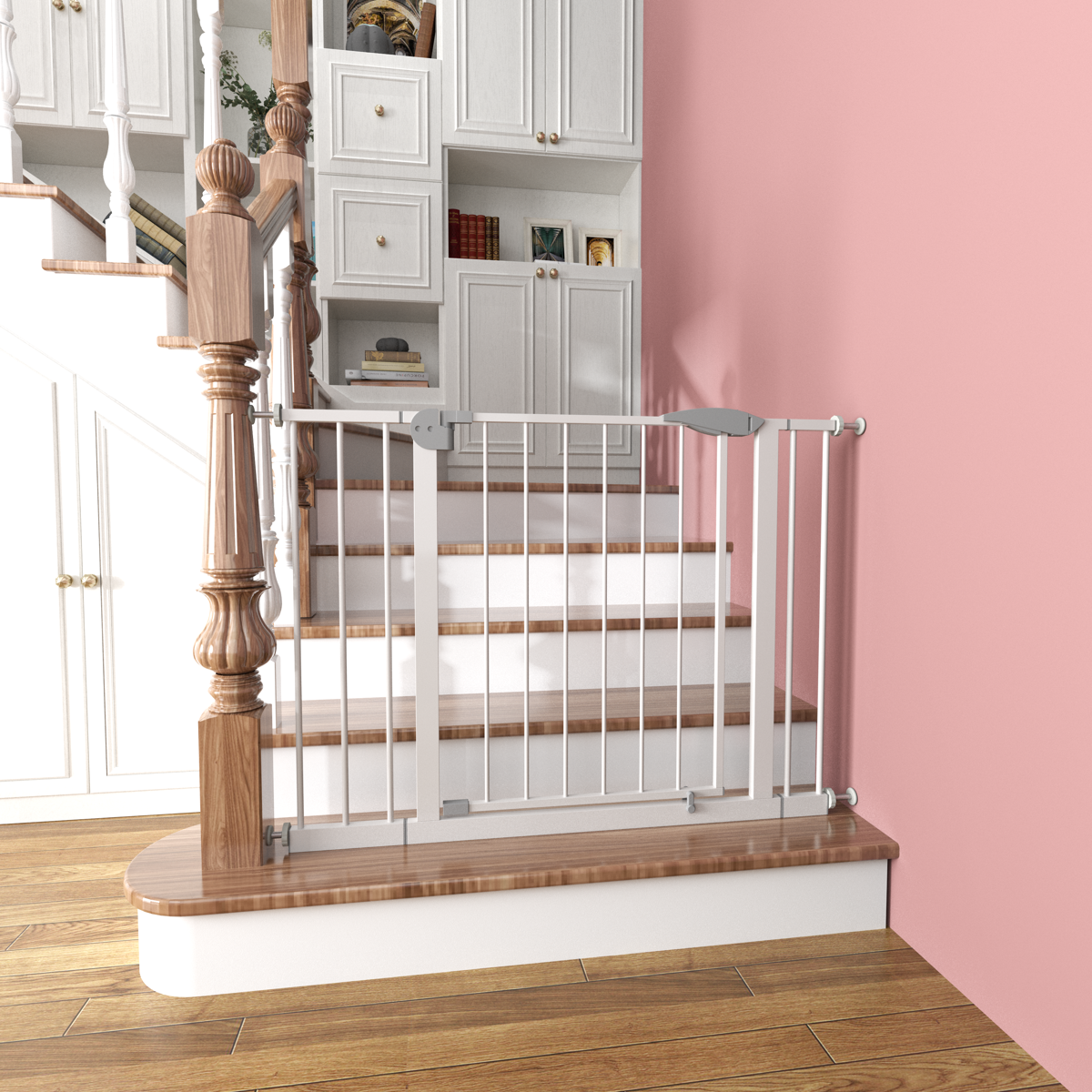 29.5-45.3 Wide Baby Gate For Stairs, Dog Indoor For Doorways, No Drilling Pressure Mounted Pet Gates For Kids, Easy Walk Through Safety White$56.99
 View on Mallflare
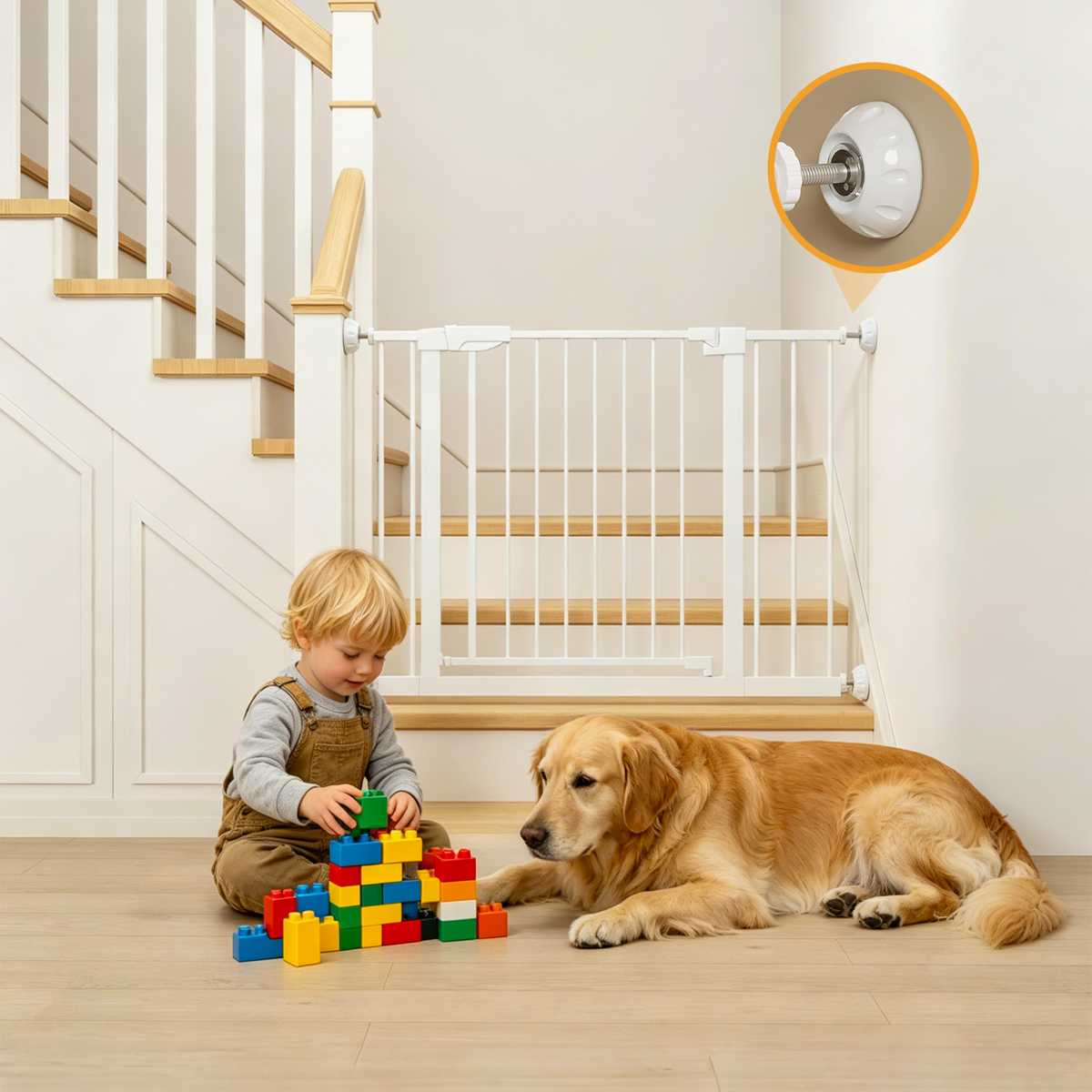 29.5-45.3" Wide Baby Gate with wall protector for Stairs, Dog Indoor for Doorways, No Drilling Pressure Mounted Pet Gates for Kids, Easy Walk Through Safety White$58.99View on Mallflare
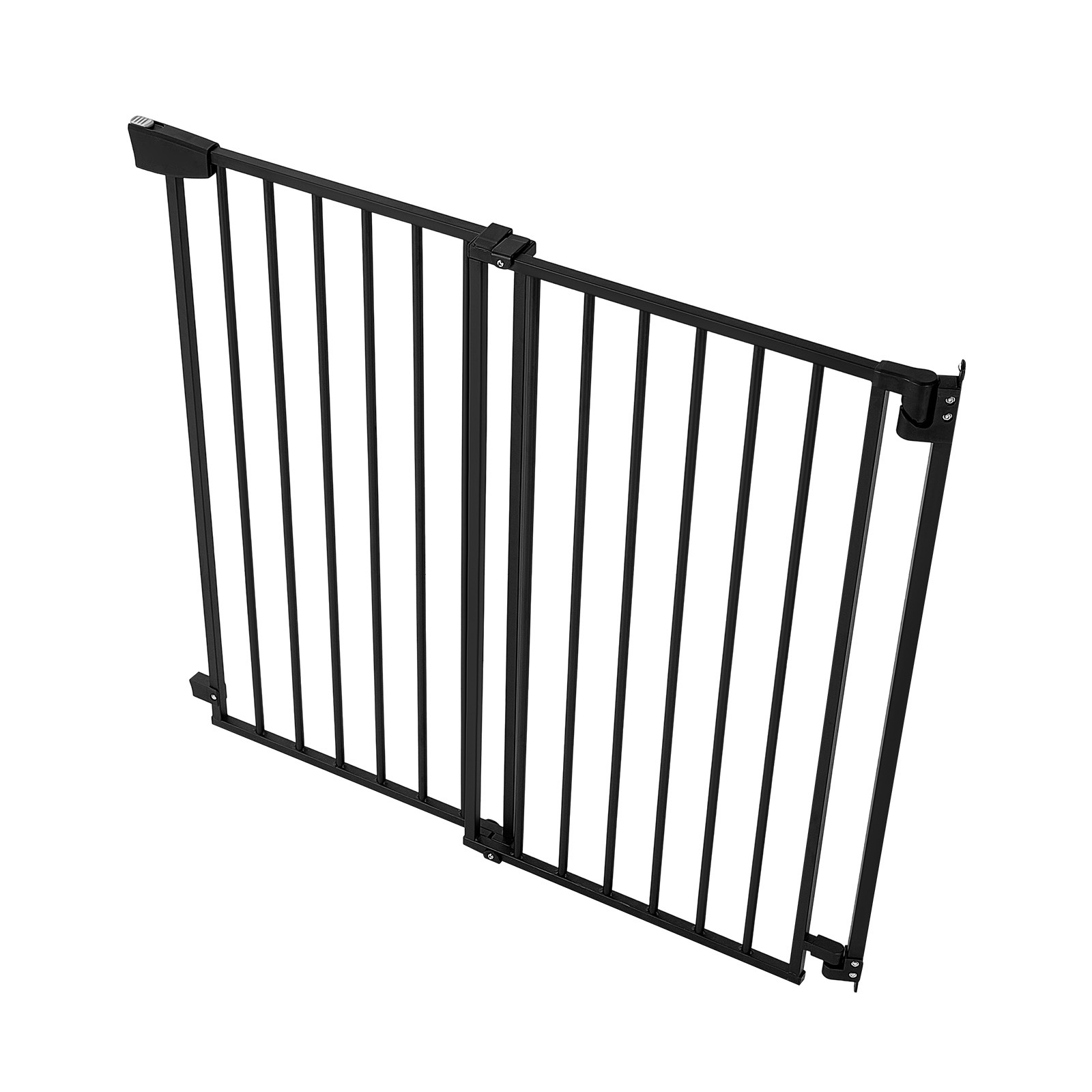 Baby Gate For Stairs, 28-43 In Adjustable Width, 30 In High Dog No Bottom Bar, One-Handed Operation, Easy Drilling Installation With Hardware Kit, For Doorways, And House, Black$63.99View on Mallflare
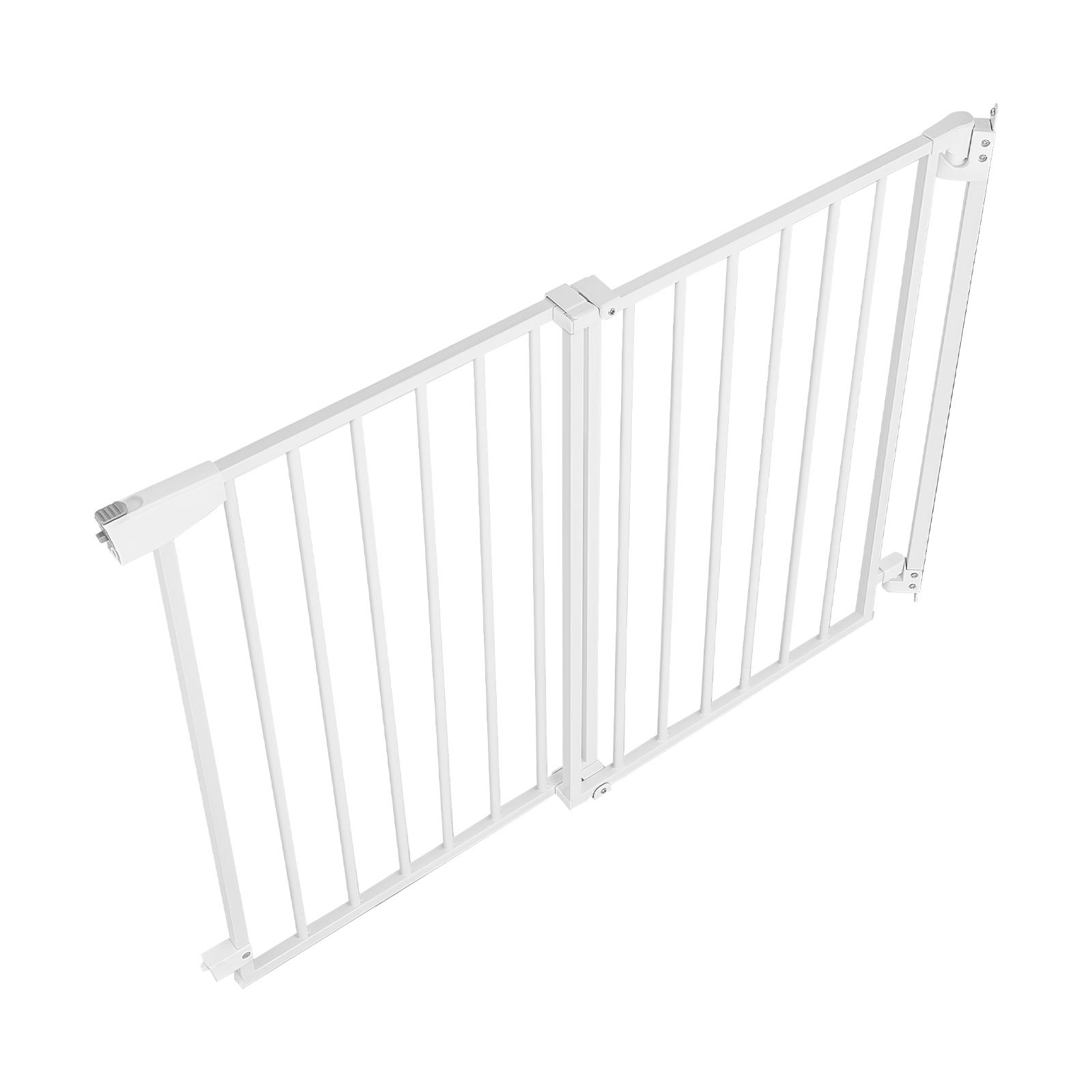 Baby Gate For Stairs, 29-43 In Adjustable Width, 36 In High Dog No Bottom Bar, One-Handed Operation, Easy Drilling Installation With Hardware Kit, For Doorways, And House, White$63.99View on Mallflare
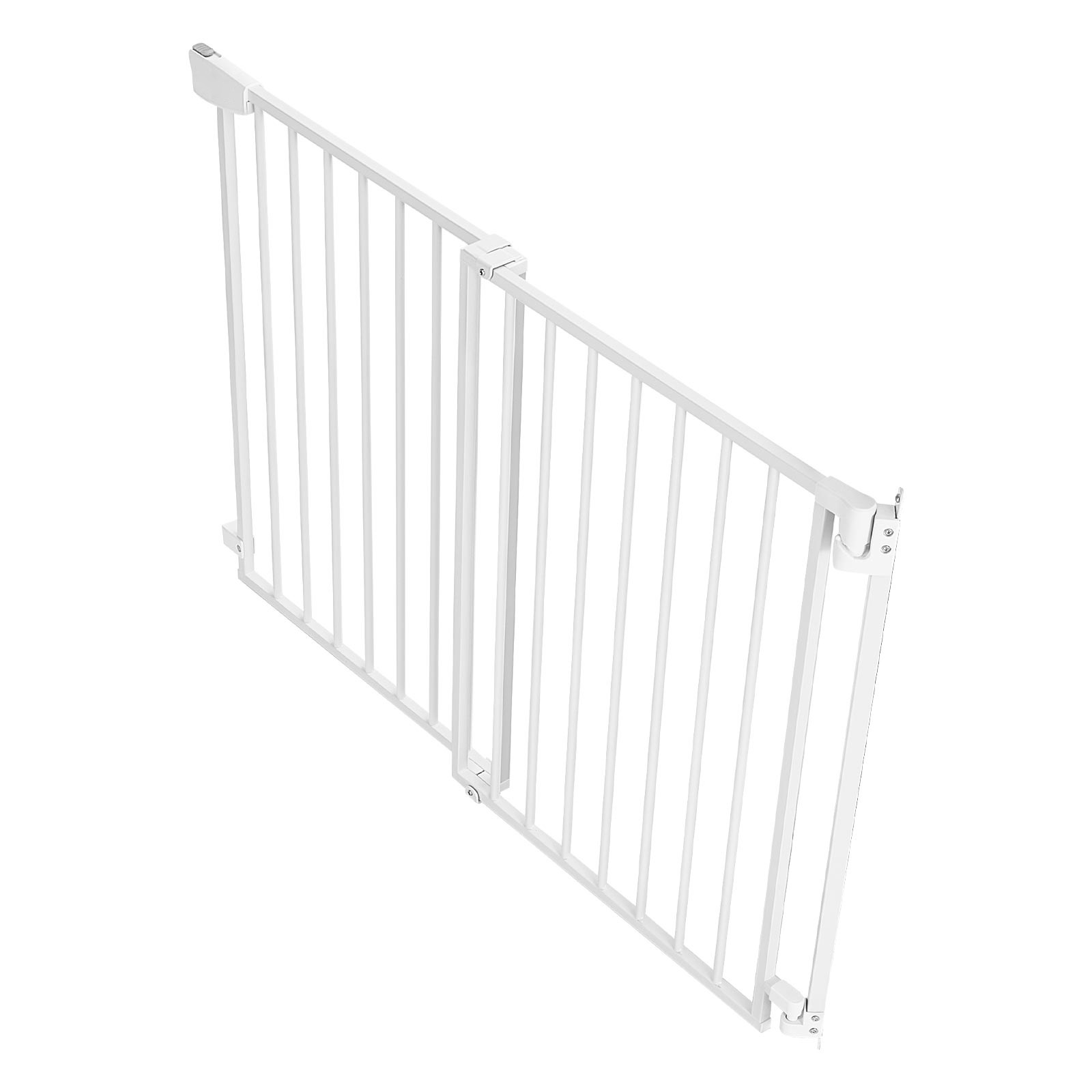 Baby Gate For Stairs, 31-48 In Adjustable Width, 30 In High Dog No Bottom Bar, One-Handed Operation, Easy Drilling Installation With Hardware Kit, For Doorways, And House, White$66.99View on Mallflare
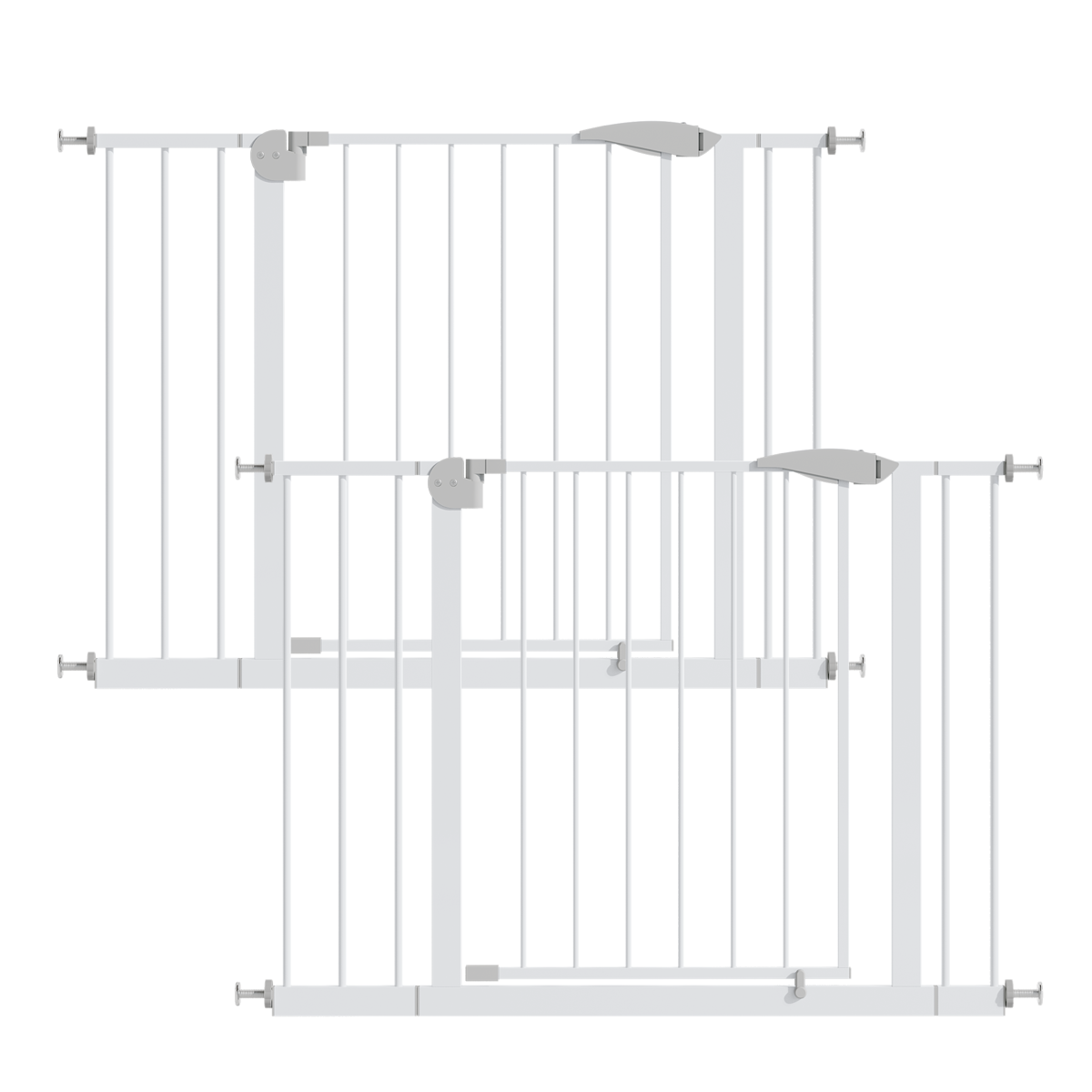 2 Pack 29.5-44.1" Wide Baby Gate for Stairs, Dog Indoor for Doorways, No Drilling Pressure Mounted Pet Gates for Kids, Easy Walk Through Safety White$98.99View on Mallflare
Highlights
- Mounting architecture is the safety determinant: pressure-mounted gates rely on friction and can be pushed out at a stair top; hardware-mounted gates bolt into studs or a wall plate and are the only compliant choice at the top of stairs.
- Height tiers trade climb-resistance for step-over clearance: 30 in gates suit toddlers and small dogs, while 36 in gates add roughly 6 in of vertical barrier for climbers and large dogs.
- No-bottom-bar designs remove the floor trip hazard and allow flush mounting across a stair nosing, while standard gates have a floor frame that must sit clear of the top step.
- One-handed operation with a dual-action or squeeze-and-lift latch prevents a toddler from opening the gate while allowing an adult carrying a child to pass through.
Best use cases
- Top of stairs: choose a hardware-mounted gate with a no-bottom-bar frame and one-hand latch, drilling into studs or using the included wall cups; skip every pressure-mounted model regardless of width range.
- Bottom of stairs and doorways: a pressure-mounted gate spanning the opening with rubber wall cups is appropriate and removable; skip hardware mounting only if you need to move the gate between openings frequently.
- Wide or angled openings (hallways, open-plan rooms): extend a hardware-mounted gate with a manufacturer extension kit or pick an adjustable-width model covering the measured span, and skip fixed-width gates that leave gaps.
- Pet-only containment in a doorway: a 30 in pressure-mounted gate is sufficient; skip 36 in climb-resistant tiers unless the dog is a known jumper or the child is a climber.
Buying tips
- Measure the opening at its narrowest point and add the gate frame plus any extension kit; choose an adjustable range that brackets your measurement with at least 1–2 in of overlap on each side.
- At a stair top, confirm the gate mounts to wood studs or a solid wall plate; drywall alone cannot hold a hardware-mounted gate under a child's push load.
- Select 36 in height for climbers or large dogs and 30 in for standard toddler/pet use, and confirm the gate's bottom bar or no-bar design clears your stair nosing and floor trim.
- Match latch type to household use: a dual-action squeeze latch is toddler-resistant, while a simple lift latch is faster for adults but easier for older children to defeat.
Specs
| Mount Type | Hardware-mounted vs pressure-mounted |
|---|---|
| Gate Height | 30 in standard / 36 in climb-resistant |
| Bottom Bar | No-bar stair-safe vs floor-frame |
| Latch Operation | One-hand dual-action vs lift latch |
Related searches
What to check before buying
- Measure the stair opening width at the narrowest point, plus the height of the stair nosing and any baseboard or trim the gate must clear.
- Identify whether the mounting surface is wood stud, masonry, or drywall, and confirm the gate ships with the correct hardware (stud screws, wall cups, or masonry anchors).
- Check that the gate's adjustable range plus any extension kit covers your measured span without exceeding the manufacturer's maximum width.
- Confirm the gate's bottom bar or no-bar design sits clear of the top step and does not create a trip edge on the landing.
FAQ
Data sources: eBay / Amazon listings and product attribute feeds Data updated Nov 17, 2026.
Some links on this page are affiliate links. If you buy after clicking one, we may earn a commission at no extra cost to you. This does not change which products appear here or their order. Affiliate disclosure.