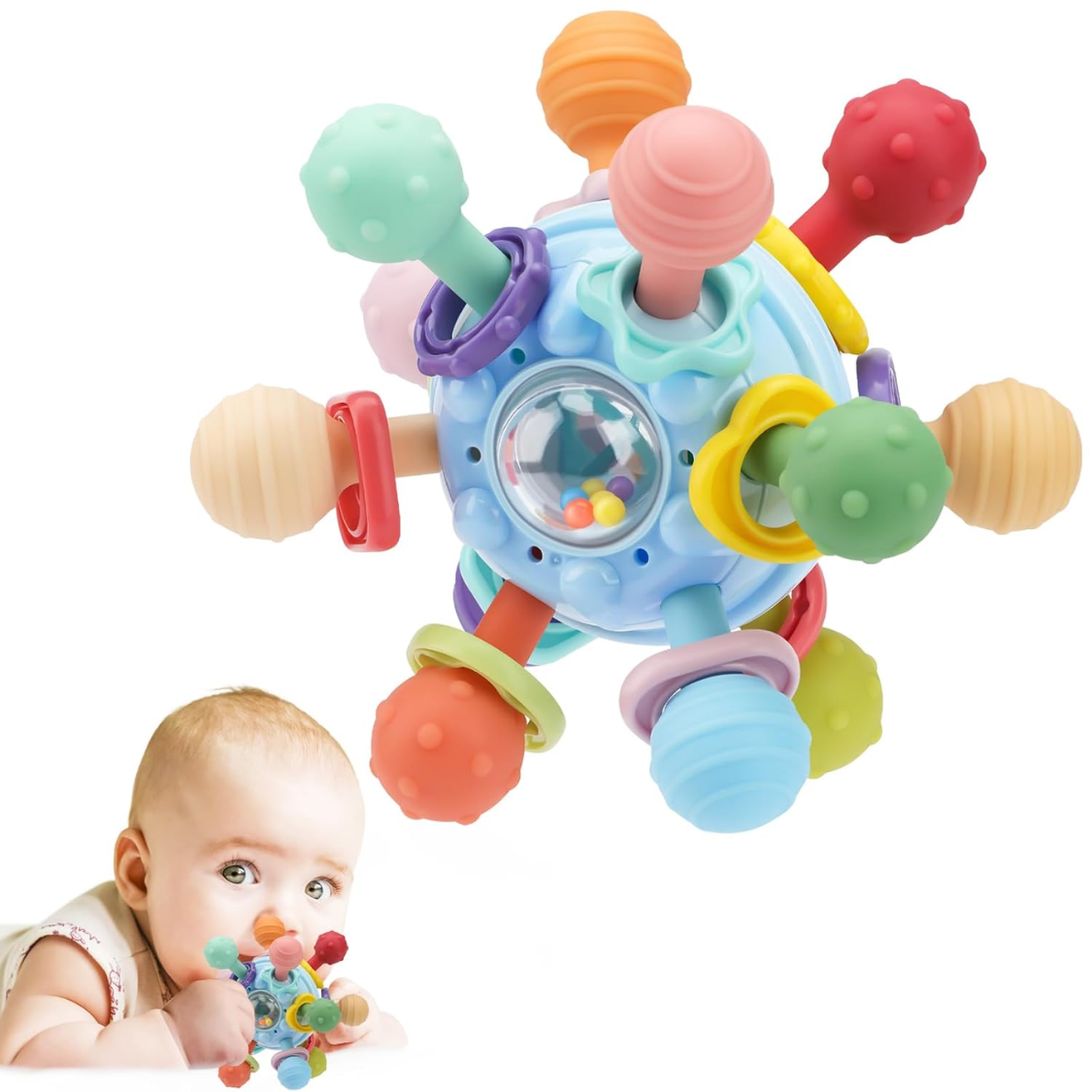

Photos from current listings. Actual item, color, and included accessories may vary.
Developmental Toy Buying Guide
Developmental toys for infants and toddlers are designed to target specific milestones—visual tracking, grasping, teething, cause-and-effect, and fine motor control—through safe, age-graded materials and mechanisms. The primary trade-off is between open-ended, high-contrast sensory play for newborns and structured cause-and-effect or stacking challenges for older infants, with safety cert standards and non-toxic material grades separating durable picks from compromises. The clear decision rule: match the toy's stimulation type (visual, tactile, auditory, motor) to the child's current developmental stage, and reject any item lacking age-appropriate choke-hazard sizing or food-grade/Phthalate-free material certification.


At a glance
- Category
- Baby Toys & Activity Gear
- Data updated
- Nov 15, 2026
Current offers
Highlights
- Age-graded sensory tiers: 0–3 months need high-contrast black/white/red patterns and gentle rattles; 3–6 months require textured teethers and graspable rings; 6–12 months demand cause-and-effect (pop-up, stacking, rolling); 12–18 months need fine-motor posting, sorting, and push-pull toys.
- Material safety grades: food-grade silicone (LFGB or FDA) for teethers, BPA-free ABS for rattles, and water-based non-toxic paint on wooden stacking toys; avoid PVC and phthalates entirely.
- Choke-hazard sizing: any toy or detachable part for under-3s must exceed 1.25 inches (3.17 cm) in diameter and 2.25 inches (5.71 cm) in length to pass the small-parts cylinder test.
- Montessori-aligned construction: single-skill isolation (e.g., one texture, one motion) with natural wood or high-contrast fabric outperforms multi-feature electronic toys for sustained focus in infants under 12 months.
Best use cases
- Best fit for newborns 0–3 months: high-contrast black-and-white cards or a Montessori Munari mobile—skip electronic light-and-sound toys that overstimulate and delay visual focus.
- Best fit for 3–6 month teething infants: food-grade silicone teether with multi-texture surfaces and a rattle core—skip freezer-gel teethers that risk leaking or becoming too hard.
- Best fit for 12–18 month toddlers: wooden stacking rings or a posting box with graduated sizes—skip complex 3+ electronic learning tablets that exceed their fine-motor and attention span.
- Wrong fit for any age: plush toys with glued-on eyes or loose ribbons, and battery-operated toys without a sealed screw-down compartment—these fail choke-hazard and ingestion safety standards.
Buying tips
- Match the toy to the milestone, not the month: a 6-month-old needs cause-and-effect (press-to-pop, shake-to-rattle), while a 12-month-old needs problem-solving (stack, sort, post)—buying ahead by more than one tier causes frustration and disuse.
- For teethers, verify food-grade silicone (LFGB/FDA) and a one-piece molded design with no glued seams; multi-part teethers with water-filled cavities are a bacterial-growth risk and should be avoided.
- For wooden toys, choose hardwood (maple, beech) with water-based non-toxic paint and rounded edges; softwood or painted MDF chips and splinters under teething pressure.
- Check battery compartments: any electronic developmental toy for under-3s must have a screw-secured battery door—tool-free snap lids are a button-battery ingestion hazard and fail ASTM F963.
Specs
| Age Stage | 0–3 / 3–6 / 6–12 / 12–18 mo |
|---|---|
| Material Grade | Food-grade silicone / hardwood / BPA-free |
| Safety Cert | ASTM F963 / EN71 |
| Choke-Part Minimum | 1.25 in dia × 2.25 in length |
Related searches
What to check before buying
- Measure the smallest detachable part against a small-parts tester (1.25 in diameter × 2.25 in length)—anything smaller is a choking hazard for under-3s.
- Confirm the toy's age grading matches the child's current stage and that it carries ASTM F963 (US) or EN71 (EU) safety certification on the packaging.
- For teethers, check material grade: food-grade silicone (LFGB/FDA) or natural rubber; reject PVC, phthalates, and BPA-labeled plastics.
- For electronic toys, verify a screw-secured battery compartment and volume control (or volume-off) to protect infant hearing and prevent button-battery access.
FAQ
Data sources: eBay / Amazon listings and product attribute feeds Data updated Nov 15, 2026.
Some links on this page are affiliate links. If you buy after clicking one, we may earn a commission at no extra cost to you. This does not change which products appear here or their order. Affiliate disclosure.