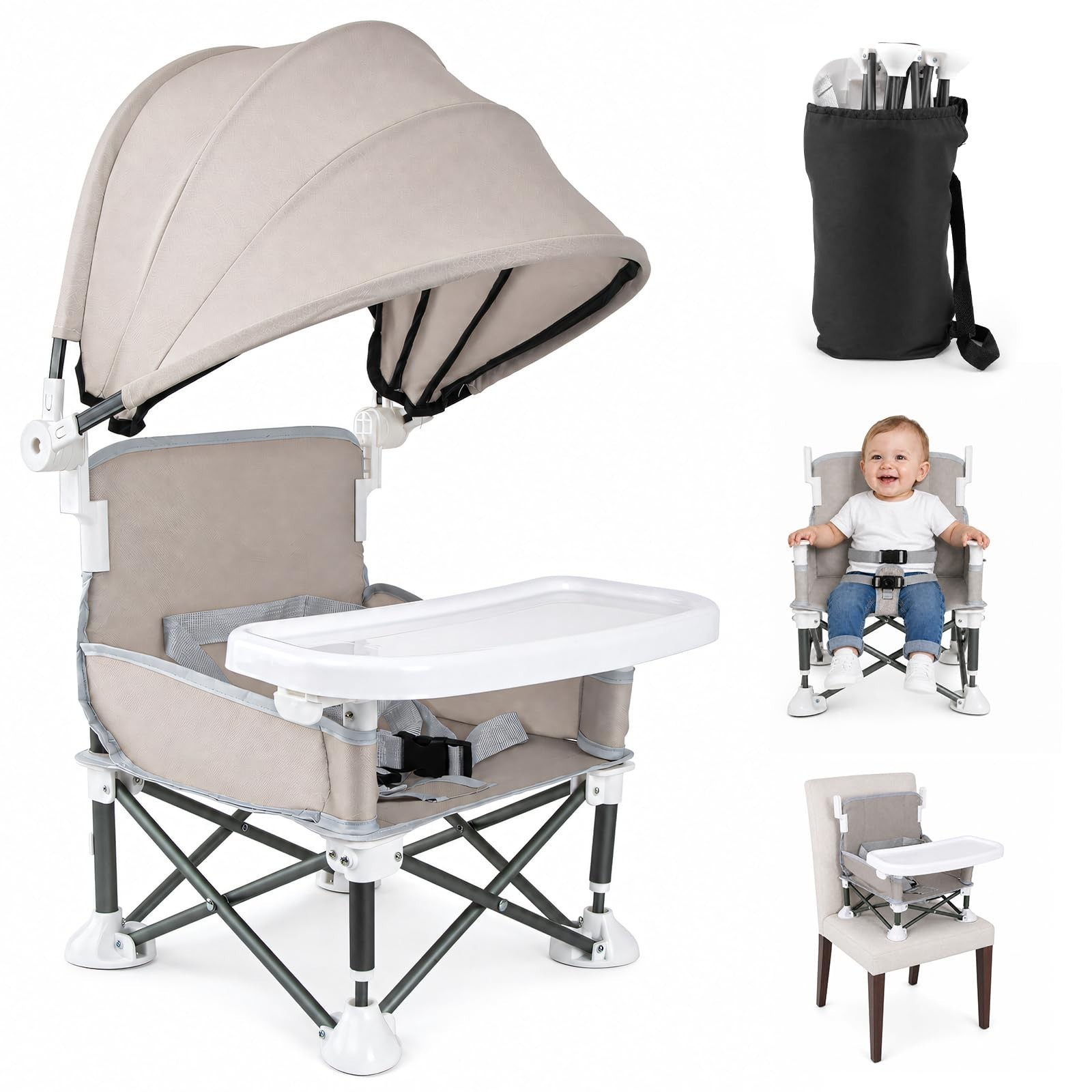

Photos from current listings. Actual item, color, and included accessories may vary.
Booster Seat Table Buying Guide
A booster seat table is a portable, strapped-on chair topper that brings a child up to dining height with a built-in tray or table surface. The core trade-off is between a full 3-in-1 system (booster, floor seat, and tray table) and a simple backless booster: the 3-in-1 adds bulk and setup time but eliminates the need for a separate high chair, while backless boosters are lighter and faster but rely on the host table for eating. The decision rule: buy a 3-in-1 only if you need tray-based feeding away from a table; otherwise a backless or tray-less booster with a wide, non-slip base is the more durable, travel-friendly choice.


At a glance
- Category
- Feeding & Sterilizing
- Data updated
- Nov 16, 2026
Current offers
Highlights
- 3-in-1 boosters combine a strapped chair seat, a removable feeding tray, and a fold-out floor-seat mode; the tray hinge and strap buckles are the first failure points, so look for metal-reinforced buckles and a tray rated for dishwasher-safe cleaning.
- Backless boosters use a contoured plastic shell with a 3-point or 5-point harness; the safety standard to match is ASTM F2640 (booster seats) and a minimum weight of 33 lb for backless use, while 3-in-1 trays typically support from 6 months or when the child sits unassisted.
- Strap systems matter more than shell thickness: a safety strap must wrap under the chair seat and a second strap secures the back; dual-strap designs with cam-lock buckles prevent the booster from sliding forward when the child pushes off the table.
- Tray tables are either clip-on (snap onto the booster arms) or slide-on (rail-guided); clip-on trays are easier to remove one-handed but crack at the clip tabs, while slide-on trays are more secure but require aligning the rails every time.
Best use cases
- Best fit for 3-in-1: families who travel to restaurants, camping, or grandparents' homes without a high chair—pick a 3-in-1 with a dishwasher-safe tray and a carry handle, and skip it if you only feed at your own dining table.
- Best fit for backless booster: daily use at a standard dining chair for a child 33 lb and up who can sit upright—choose a backless model with a wide, textured base and a 3-point harness, and skip the tray entirely.
- Best fit for hook-on table seat: apartments or small kitchens where floor space is tight—a hook-on seat clamps directly to the table edge and eliminates the chair altogether, but only works on tables with a solid lip and no glass tops.
- Wrong fit to avoid: a 3-in-1 with a fabric-covered tray and plastic snap clips if you plan to wash it daily—fabric traps crumbs and clips fatigue; choose a smooth plastic tray with metal hinges instead.
Buying tips
- Measure your dining chair seat width and depth before buying: most boosters fit seats 12–17 inches wide; a seat narrower than 12 inches will let the booster rock, and deeper than 17 inches leaves the safety strap too short to wrap under.
- Match the harness to the child's weight: 3-point harnesses suit 6–24 months, 5-point harnesses suit up to 50 lb; a backless booster without a harness is only safe once the child exceeds 33 lb and sits still.
- Check the tray attachment style: clip-on trays need a flat, rigid booster arm and are prone to cracking at the tabs; slide-on trays with metal rails last longer but require the booster to have matching rail channels.
- For travel, prioritize a booster under 4 lb with a fold-flat profile and a built-in carry strap; 3-in-1 models above 6 lb are car-camping only, not airplane or restaurant friendly.
Specs
| Booster Type | 3-in-1 / Backless / Hook-on |
|---|---|
| Tray Attachment | Clip-on vs Slide-on rails |
| Weight Range | 6 mo–50 lb (3-in-1); 33 lb+ backless |
| Safety Standard | ASTM F2640 / 3- or 5-point harness |
Related searches
What to check before buying
- Chair fit: measure seat width, depth, and back height—the booster must sit flat without overhanging the front edge, and the safety strap must reach under the seat pan.
- Table height: the booster tray or child's lap should sit 2–3 inches below the table edge so the child can reach food without slouching; a tray that sits higher than the table blocks access.
- Wipe-clean surfaces: choose a booster with a smooth, non-porous plastic shell and a tray without fabric inserts or deep crevices; dishwasher-safe trays are marked on the underside.
- Strap routing: confirm the chair has an open back or a gap between backrest and seat for the safety strap to pass through; solid-back chairs require a booster with a long enough strap to wrap around the entire backrest.
FAQ
Data sources: eBay / Amazon listings and product attribute feeds Data updated Nov 16, 2026.
Some links on this page are affiliate links. If you buy after clicking one, we may earn a commission at no extra cost to you. This does not change which products appear here or their order. Affiliate disclosure.