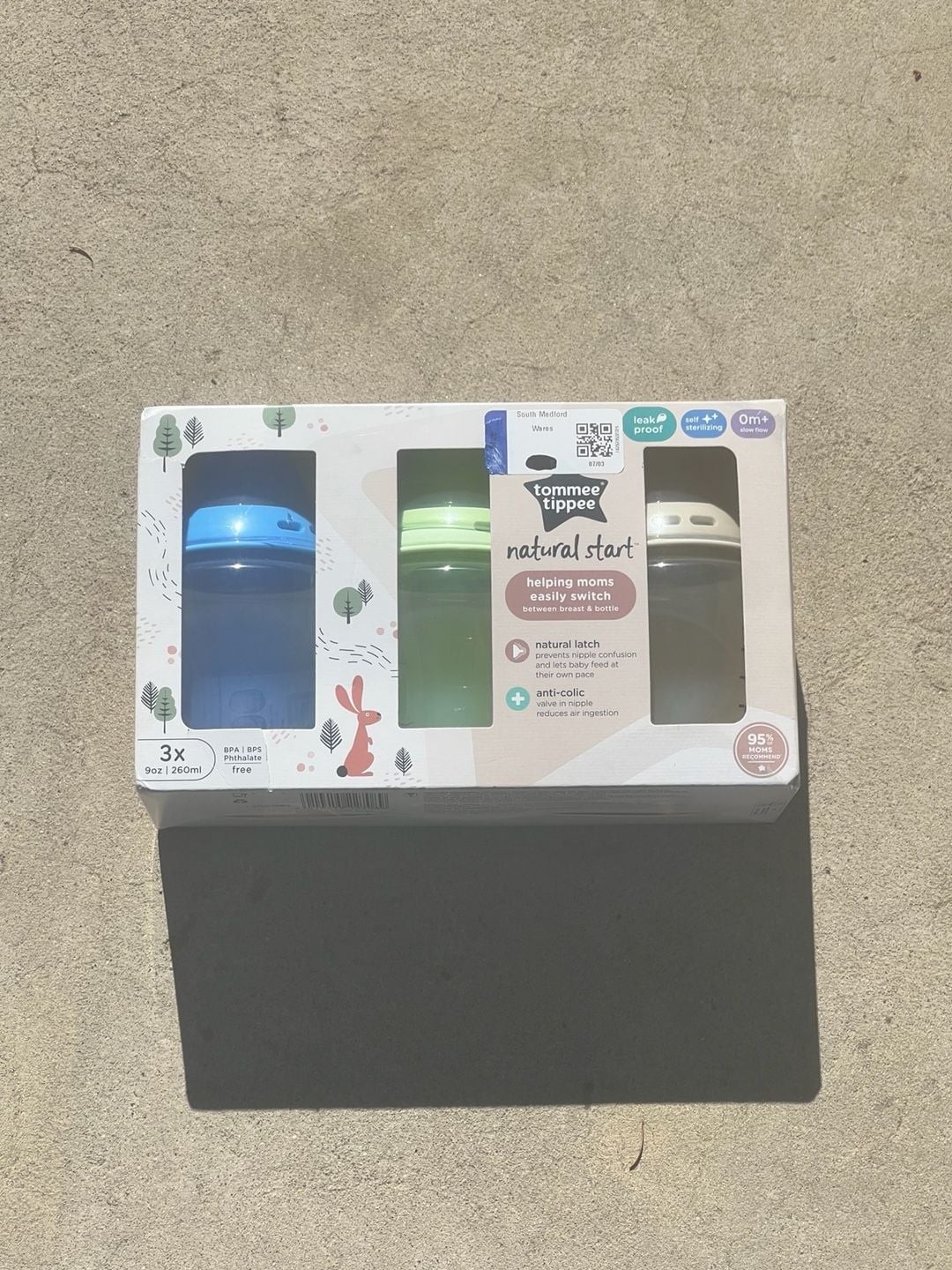

Photos from current listings. Actual item, color, and included accessories may vary.
Slow Flow Bottle Buying Guide
Slow-flow bottles are feeding vessels with a nipple designed to release milk at a controlled rate, typically 0–3 months or 'stage 1,' to protect newborns from overfeeding and gas. The primary trade-off is nipple flow rate versus material and venting design: a truly slow nipple paired with an effective anti-colic vent reduces air ingestion, while a fast or poorly vented nipple negates the benefit. Choose a bottle whose nipple is explicitly labeled slow-flow and whose vent system is integrated into the nipple base or collar, not an afterthought.


At a glance
- Category
- Feeding & Sterilizing
- Data updated
- Nov 19, 2026
Current offers
Highlights
- Nipple flow is graded by hole size and shape: slow-flow (stage 1) typically has a single small hole or Y-cut for 0–3 months; medium (stage 2) and fast (stage 3) have larger or multiple holes for older infants.
- Venting architecture matters more than bottle shape: integrated anti-colic vents (e.g., Tommee Tippee Natural Start's vented nipple base, Dr. Brown's internal vent system) reduce vacuum buildup and air swallowing compared to unvented nipples.
- Material grades: borosilicate glass resists thermal shock and is dishwasher-safe; PP (polypropylene) is lightweight but can degrade with repeated high-heat sterilization; silicone nipples are standard, with Shore hardness affecting latch.
- Capacity tiers: 5 oz / 150 ml suits newborns and early weeks; 9 oz / 260 ml is the standard step-up for 3+ months or larger feeds, but slow-flow nipples can be used on either size.
Best use cases
- Best fit: breastfed newborns needing flow pacing — choose a slow-flow silicone nipple with a wide, breast-like base and integrated vent (e.g., Tommee Tippee Natural Start 9oz slow-flow) to support latch without overwhelming flow.
- Best fit: formula-fed infants prone to gas or colic — pick a bottle with a proven internal vent system (Dr. Brown's Options+ or similar) and a slow-flow nipple; skip plain unvented bottles regardless of nipple speed.
- Wrong fit: babies over 3–4 months or taking more than 4 oz per feed — a true slow-flow nipple will frustrate them; step up to medium-flow while keeping the same vented bottle system.
- Wrong fit: caregivers who prioritize unbreakable, lightweight bottles for daycare — glass slow-flow bottles add weight and break risk; choose PP or PPSU bottles with slow-flow nipples instead.
Buying tips
- Match nipple stage to age and feeding cues: stage 1 / slow-flow for 0–3 months or paced bottle-feeding; do not size up just because the baby finishes quickly — check for dribbling, gulping, or arching as signs of too-fast flow.
- Prioritize bottles with vented nipple bases or internal vent systems; these reduce vacuum and air ingestion more effectively than angled bottle shapes alone, especially for colicky infants.
- For durability and sterilization flexibility, choose borosilicate glass or PPSU over standard PP if you plan frequent dishwasher or steam sterilization; PP is fine for occasional use but degrades faster.
- Confirm nipple and bottle compatibility within a system: slow-flow nipples are brand-specific; a slow-flow nipple from one brand will not fit another brand's collar, so standardize on one system before buying multiple bottles.
Specs
| Nipple Flow Stage | Slow (Stage 1) / 0–3 months |
|---|---|
| Bottle Capacity | 5 oz / 150 ml to 9 oz / 260 ml |
| Venting System | Integrated vent vs unvented |
| Bottle Material | Glass / PP / PPSU |
Related searches
What to check before buying
- Measure your sterilizer and bottle warmer capacity: 9 oz / 260 ml bottles are taller and wider than 5 oz bottles and may not fit compact sterilizers or cup-holder warmers.
- Check nipple base width against your baby's latch: wide-neck bottles (e.g., Tommee Tippee, Dr. Brown's Options+) have broader nipples that suit breastfed babies; narrow-neck standard bottles suit bottle-fed babies transitioning from hospital nipples.
- Verify vent parts are removable and dishwasher-safe if you want low-maintenance cleaning; internal vent systems have multiple small parts that require brushing.
- Confirm your chosen bottle system's replacement nipple stages are readily available, so you can step up from slow to medium flow without changing bottles.
FAQ
Data sources: eBay / Amazon listings and product attribute feeds Data updated Nov 19, 2026.
Some links on this page are affiliate links. If you buy after clicking one, we may earn a commission at no extra cost to you. This does not change which products appear here or their order. Affiliate disclosure.