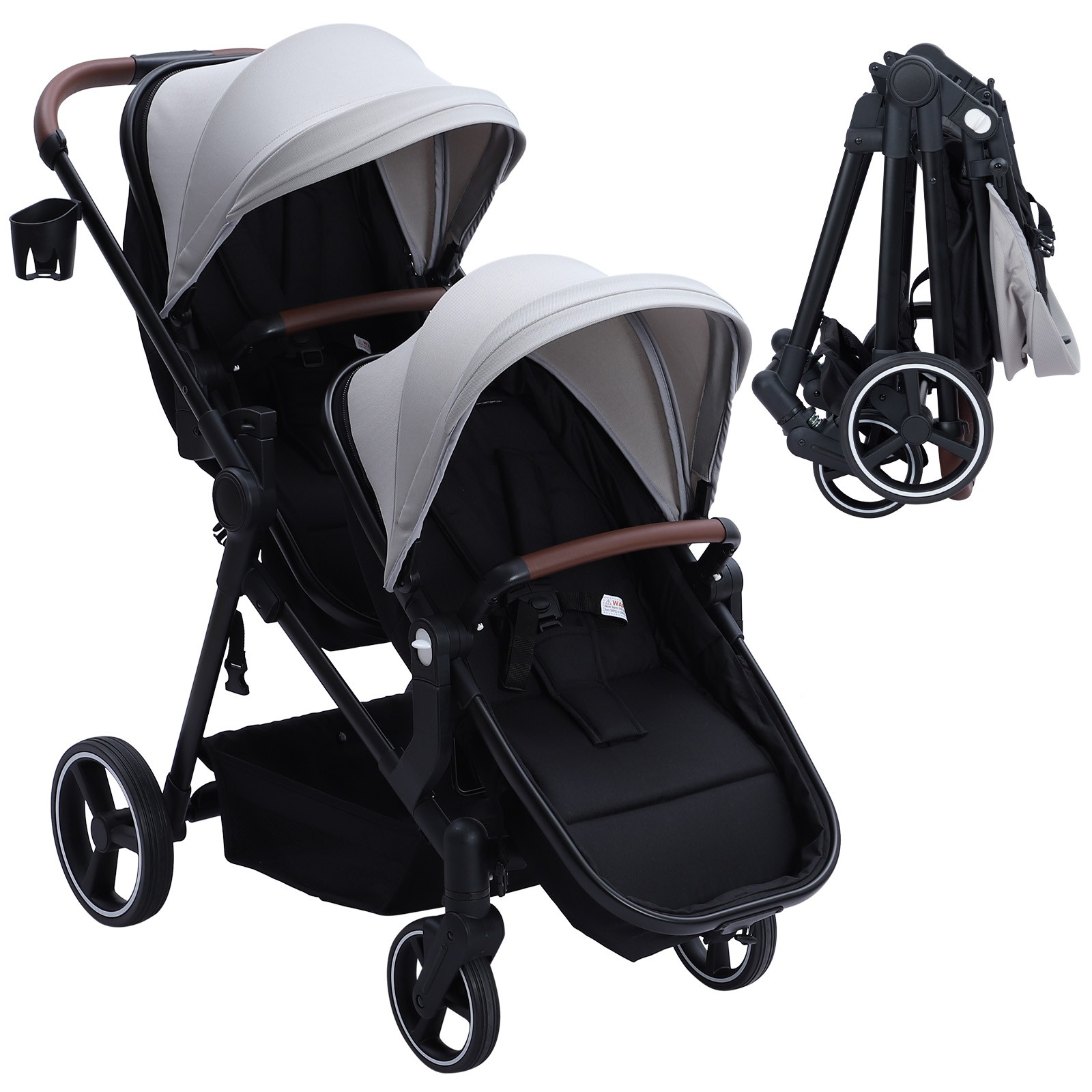

Photos from current listings. Actual item, color, and included accessories may vary.
Twin Stroller With Car Seat Buying Guide
A twin stroller with car seat capability is a modular travel system that accepts two infant car seats directly onto a double frame, eliminating the need to wake newborns during transfers. The core trade-off is between universal-frame flexibility (accepts many car seat brands via adapters) and dedicated-system integration (one brand's seats lock in with fewer parts). The decision rule: prioritize a frame with independently reclining seats, a one-step fold, and confirmed adapter compatibility for your exact car seat model—otherwise you inherit a bulky stroller that only works with one seat.


At a glance
- Category
- Strollers & Car Seats
- Data updated
- Nov 15, 2026
Current offers
Highlights
- Universal twin frames use interchangeable adapters (often included or sold as a brand-specific kit) to accept major infant car seat brands, while dedicated systems lock only the same brand's seats.
- Independent seat recline and a near-flat lie-flat position are essential for twins; a single shared recline forces both babies into the same angle.
- Frame weight and folded footprint determine daily usability: tandem frames fold narrower but longer, side-by-side frames fold wider but shorter.
- Car seat adapters must click-lock with an audible indicator; friction-fit or strap-only adapters are a safety compromise on double frames.
Best use cases
- Best fit: newborn twins or two under-12-month infants—choose a universal twin frame with two car seat adapters and independently reclining toddler seats for later.
- Best fit: one infant car seat plus one toddler—pick a tandem frame that accepts a car seat on one side and a standard seat on the other, with a standing board option.
- Wrong fit: preemies or low-birth-weight twins needing flat bassinet use—skip car-seat-only frames and choose a twin stroller with two bassinets or lie-flat seats.
- Wrong fit: frequent solo parent use with tight trunk space—skip wide side-by-side double frames and choose a narrow tandem that folds compactly.
Buying tips
- Measure your trunk opening and cargo floor before buying: side-by-side twin frames typically fold to 30–36 inches wide, while tandem frames fold to 22–26 inches wide but 40+ inches long.
- Confirm the adapter kit lists your exact car seat model and year; a 'universal' frame without a model-specific adapter is not compatible with every seat.
- Check the frame's weight limit per seat (often 35–50 lb per side) and the car seat's own weight limit—most infant seats max out at 30–35 lb.
- For doorways and elevators, keep the assembled width under 30 inches for side-by-side frames; tandem frames stay under 26 inches but need longer turning clearance.
Specs
| Frame Type | Tandem vs Side-by-side |
|---|---|
| Car Seat Compatibility | Universal adapter vs Brand-specific |
| Fold Width | 22-26 in tandem / 30-36 in side-by-side |
| Per-Seat Weight Limit | 35-50 lb per seat |
Related searches
What to check before buying
- Measure your vehicle trunk opening, cargo floor length, and width; ensure the folded stroller fits with the third row or cargo cover closed.
- Verify your home doorway, elevator, and stroller storage area clear the assembled width—side-by-side frames need 29–32 inches, tandems under 26 inches.
- Confirm your car seat model and year appear on the stroller frame's adapter compatibility list; buy the adapter kit at the same time as the frame.
- Check the frame's fold mechanism type (one-hand, two-step, or auto-lock) and whether it stands upright when folded for tight entryways.
FAQ
Data sources: eBay / Amazon listings and product attribute feeds Data updated Nov 15, 2026.
Some links on this page are affiliate links. If you buy after clicking one, we may earn a commission at no extra cost to you. This does not change which products appear here or their order. Affiliate disclosure.