
Photos from current listings. Actual item, color, and included accessories may vary.
Doorway Gate Buying Guide
A doorway gate is a pressure-mounted or hardware-mounted barrier that blocks stairs and room openings without drilling into walls or trim. The core trade-off is between pressure-mounted convenience (no tools, renter-friendly) and hardware-mounted security (screwed into studs, higher load capacity, safer for stair tops). Choose pressure-mounted for flat doorways with a positive stop, and hardware-mounted for any stair top or high-traffic opening.
At a glance
- Category
- Baby Monitoring & Safety
- Last updated
- Nov 21, 2026
Current offers
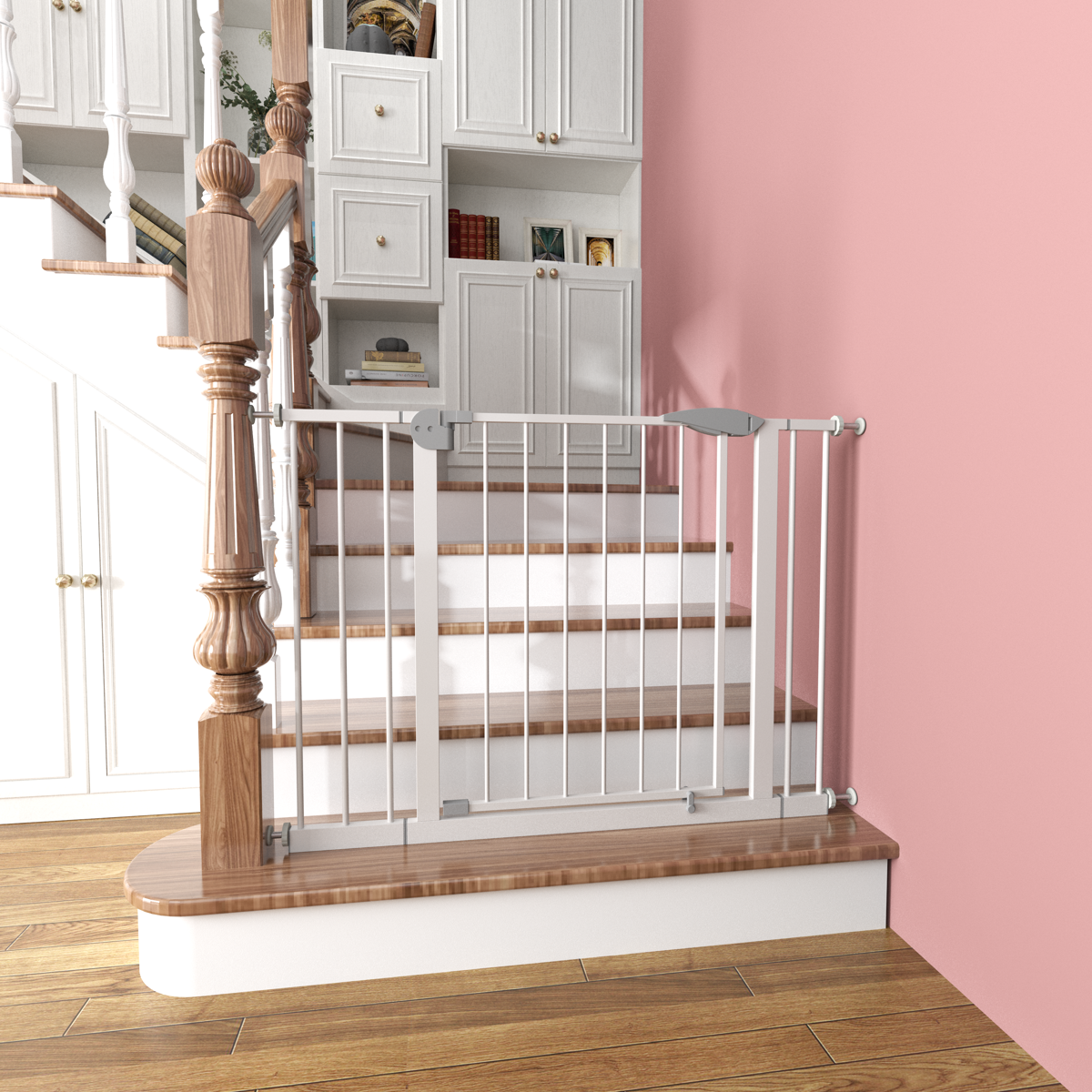 29.5-45.3 Wide Baby Gate For Stairs, Dog Indoor For Doorways, No Drilling Pressure Mounted Pet Gates For Kids, Easy Walk Through Safety White$56.99View on Mallflare
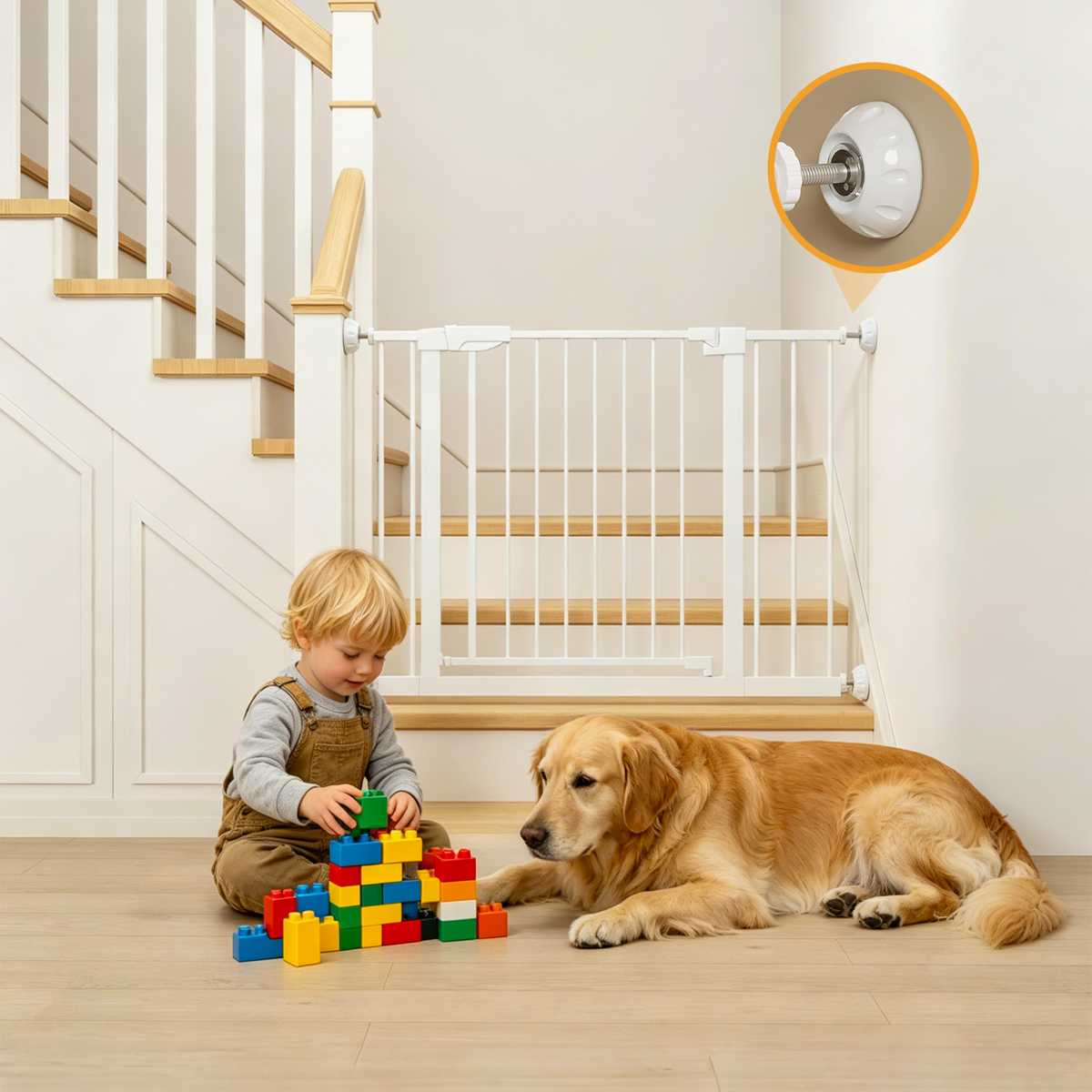 29.5-45.3" Wide Baby Gate with wall protector for Stairs, Dog Indoor for Doorways, No Drilling Pressure Mounted Pet Gates for Kids, Easy Walk Through Safety White$58.99View on Mallflare
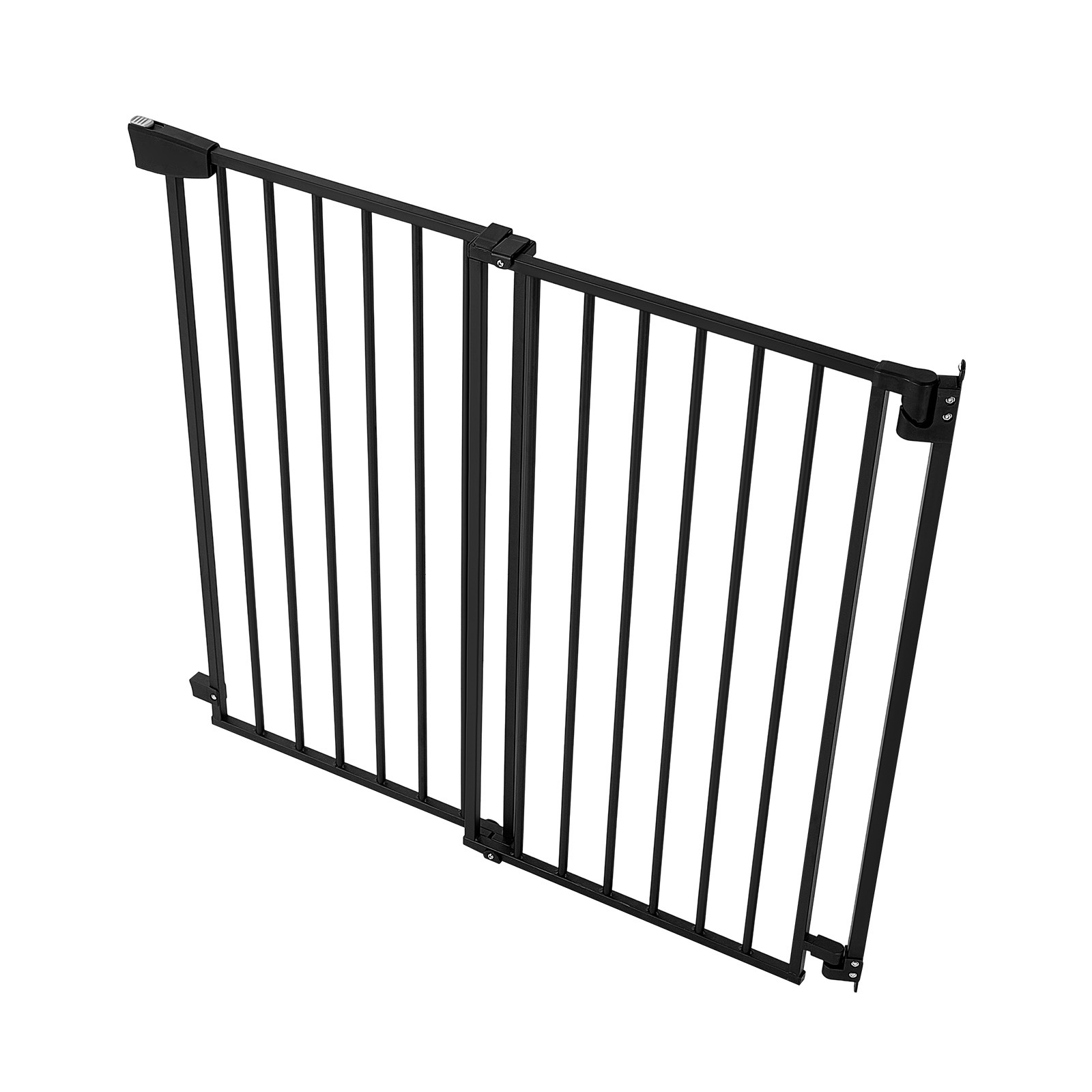 Baby Gate For Stairs, 28-43 In Adjustable Width, 30 In High Dog No Bottom Bar, One-Handed Operation, Easy Drilling Installation With Hardware Kit, For Doorways, And House, Black$63.99View on Mallflare
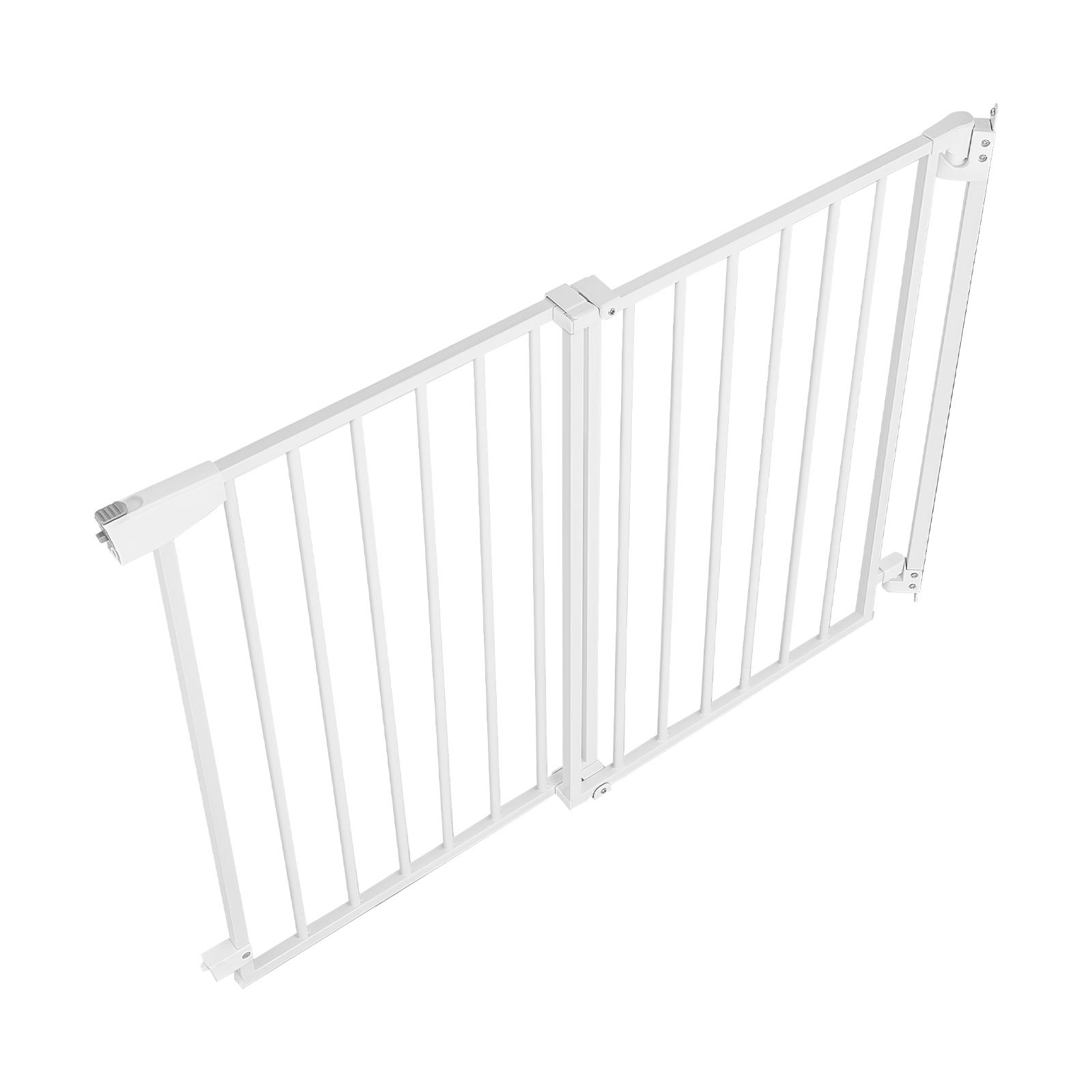 Baby Gate For Stairs, 29-43 In Adjustable Width, 36 In High Dog No Bottom Bar, One-Handed Operation, Easy Drilling Installation With Hardware Kit, For Doorways, And House, White$63.99View on Mallflare
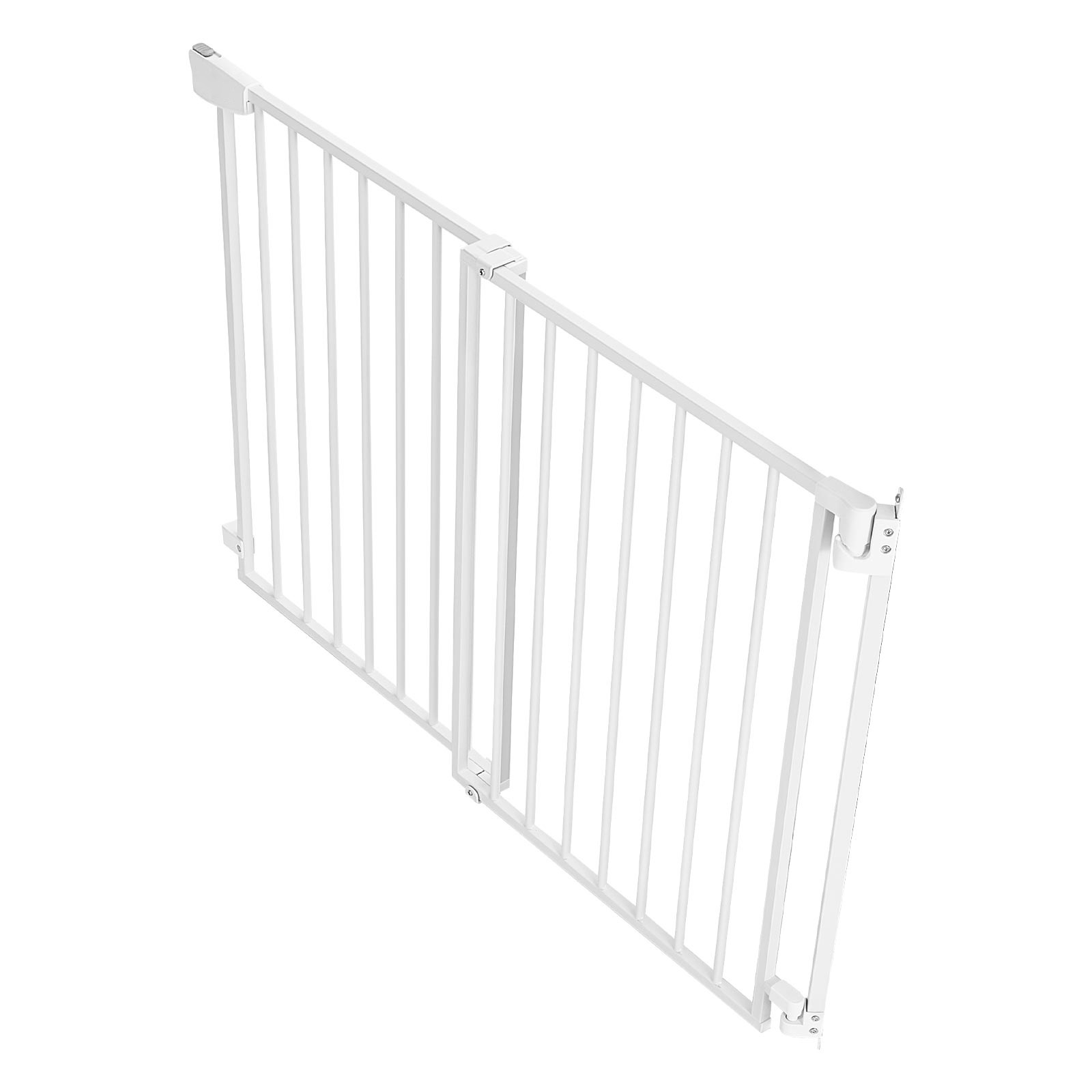 Baby Gate For Stairs, 31-48 In Adjustable Width, 30 In High Dog No Bottom Bar, One-Handed Operation, Easy Drilling Installation With Hardware Kit, For Doorways, And House, White$66.99View on Mallflare
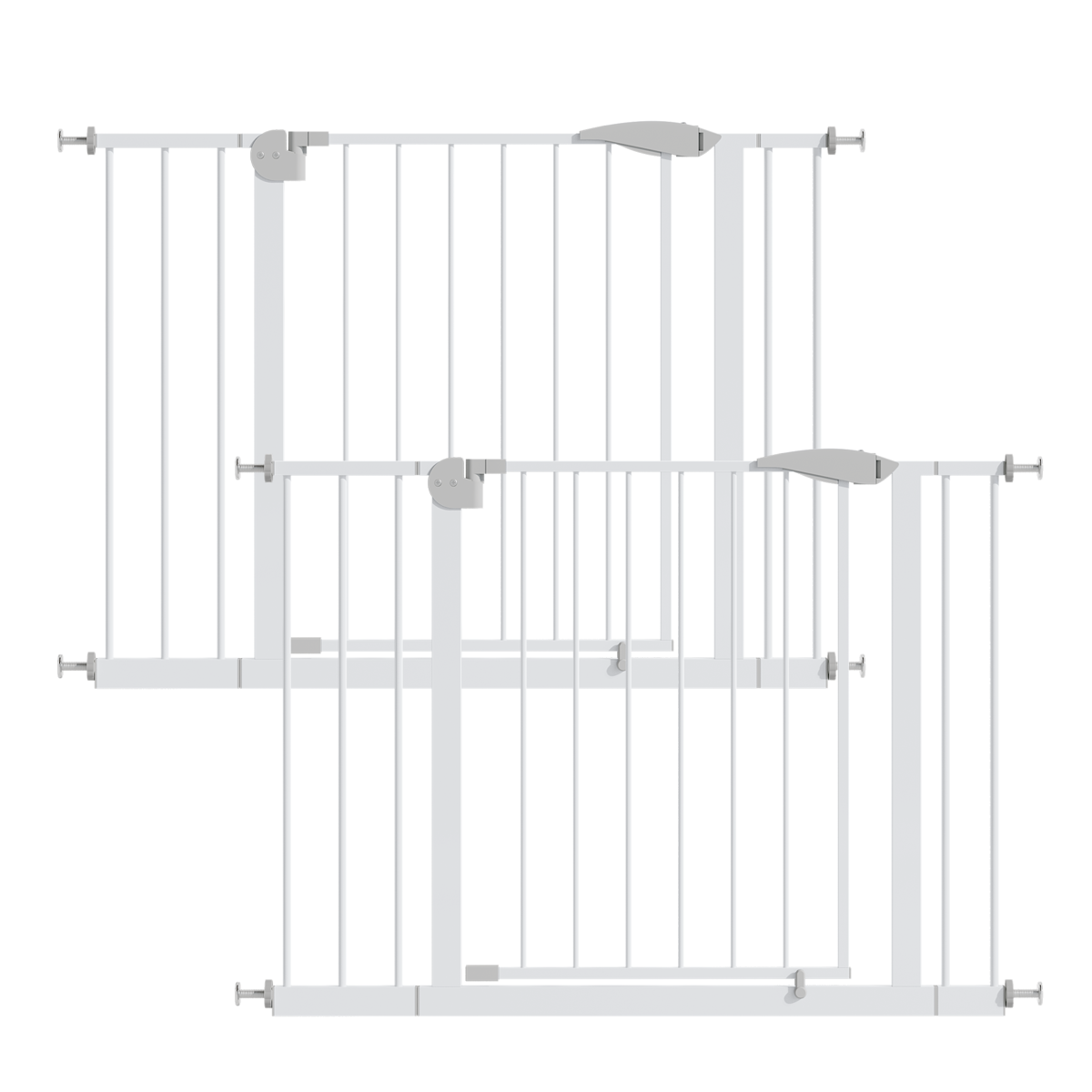 2 Pack 29.5-44.1" Wide Baby Gate for Stairs, Dog Indoor for Doorways, No Drilling Pressure Mounted Pet Gates for Kids, Easy Walk Through Safety White$98.99View on Mallflare
Highlights
- Pressure-mounted gates rely on rubber pads and tension; they are not safe at stair tops because a child can push the gate loose, so use hardware-mounted gates for top-of-stair installations.
- Adjustable width ranges overlap poorly: a 29.5–45.3 in gate covers most doorways but leaves gaps under 29.5 in, so measure the narrowest point and pick a gate whose minimum is at least 1 in smaller.
- Gate height matters: 30 in is standard for toddlers, while 36 in is needed for climbing pets or taller 3-year-olds; walk-through gates add a swing door that consumes 2–4 in of clearance.
- No-drill pressure gates use four-point tension and a locking spindle; hardware gates use steel brackets and lag screws into studs, offering 2–3x the push-out resistance for stairs and heavy dogs.
Best use cases
- Renters with a standard 30–36 in doorway: pick a pressure-mounted walk-through gate with a 29.5–45.3 in width range and rubber wall cups, no drilling required.
- Top-of-stair safety: choose a hardware-mounted gate with a no-bottom-bar design (to prevent tripping) and screw-in brackets; skip any pressure-mounted model regardless of brand.
- Wide open-plan doorway over 45 in: use an extension kit or a gate rated to 48 in minimum; a single 29.5–45.3 in gate will not span the opening without a manufacturer extension.
- Large dog or climbing toddler: select a 36 in high gate with a one-handed latch and drill-in hardware; a 30 in pressure gate is easily cleared or pushed over.
Buying tips
- Measure the doorway width at its narrowest point, then choose a gate whose minimum width is at least 1 in less than that measurement; a gate rated 29.5–45.3 in fits openings from 30.5 to 44.3 in reliably.
- For stair tops, buy only hardware-mounted gates with a no-bottom-bar threshold; pressure gates are banned at stair tops by most safety standards because the bottom bar is a trip hazard.
- Match gate height to the user: 30 in for children under 2, 36 in for climbing toddlers or dogs over 50 lb; walk-through gates need 2–4 in of swing clearance on the hinge side.
- Check the latch mechanism: one-handed operation with a double-action latch (squeeze and lift) is harder for children to defeat than a simple push-button; prefer gates that open both directions.
Specs
| Mount Type | Pressure-mounted vs hardware-mounted |
|---|---|
| Width Range | 28-43 in, 29.5-45.3 in, 31-48 in |
| Gate Height | 30 in standard / 36 in tall |
| Bottom Bar | With bottom bar vs no bottom bar |
Related searches
What to check before buying
- Measure doorway width at the narrowest point (including baseboards) and height clearance; confirm the gate's minimum width is at least 1 in smaller than your opening.
- Identify whether the installation is at a stair top (hardware-mounted, no bottom bar required) or a flat doorway (pressure-mounted acceptable); never use pressure mount at stair tops.
- Check wall surface: drywall with studs works for hardware gates; plaster or tile may need special anchors, and pressure gates need a flat, solid surface for rubber pads to grip.
- Confirm gate swing direction and clearance: a walk-through gate needs 2–4 in on the hinge side and must not block a hallway or door swing; measure before ordering.
FAQ
Data sources: eBay / Amazon listings and product attribute feeds. Updated Nov 21, 2026.
Some links on this page are affiliate links. If you buy after clicking one, we may earn a commission at no extra cost to you. This does not change which products appear here or their order. Affiliate disclosure.