
Photos from current listings. Actual item, color, and included accessories may vary.
Stair Safety Gate Buying Guide
Stair safety gates are rigid barriers that block a child or pet from a full flight of stairs, and the single decisive trade-off is hardware-mounted versus pressure-mounted anchoring: only hardware-mounted gates are safe at the top of stairs, while pressure-mounted gates suit doorways and bottom-of-stair use. Buy a hardware-mounted gate with a walk-through door for any top-of-stair location, and a pressure-mounted gate only where a wall or banister can take compression and no fall hazard exists on the far side.
At a glance
- Category
- Baby Monitoring & Safety
- Last updated
- Nov 21, 2026
Current offers
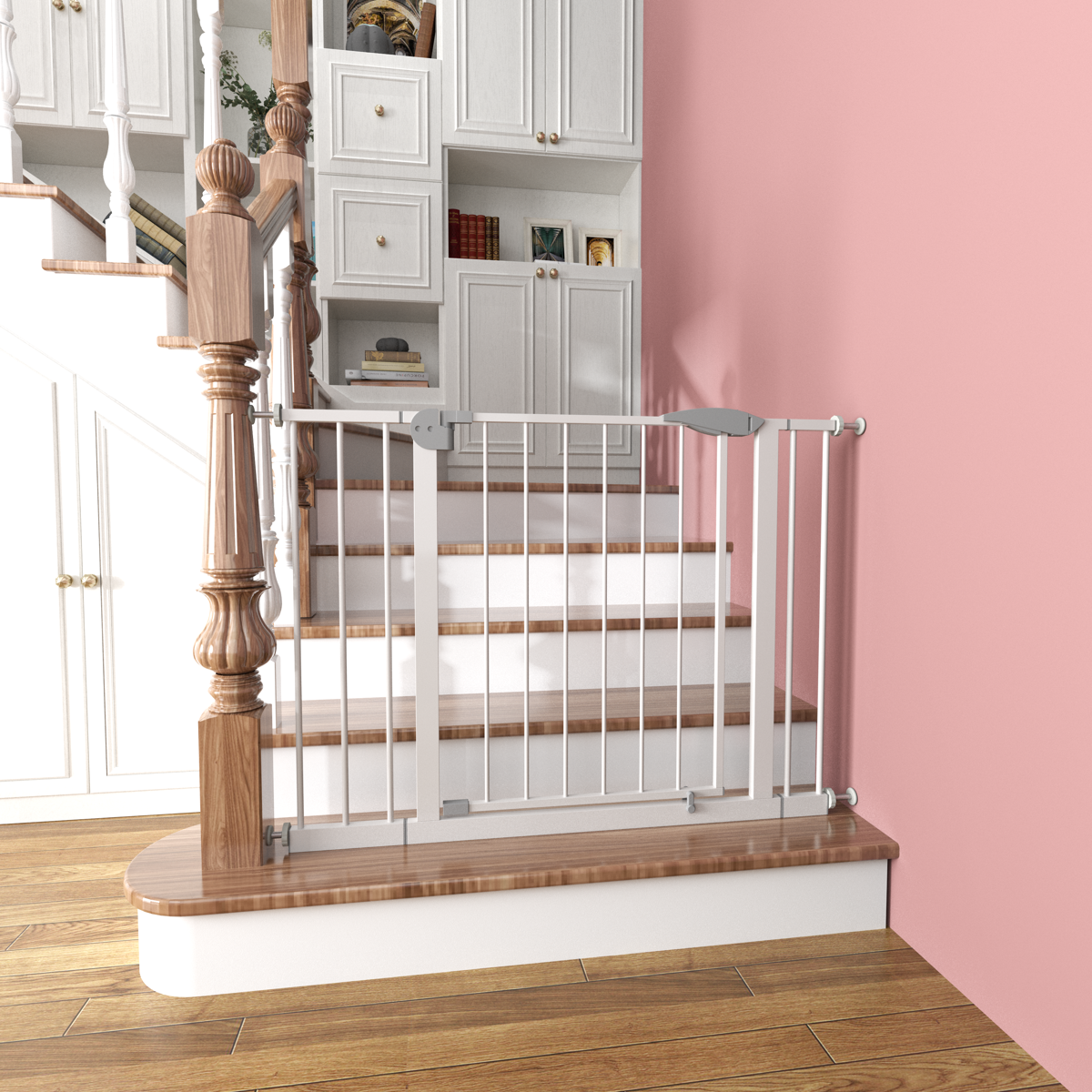 29.5-45.3 Wide Baby Gate For Stairs, Dog Indoor For Doorways, No Drilling Pressure Mounted Pet Gates For Kids, Easy Walk Through Safety White$56.99View on Mallflare
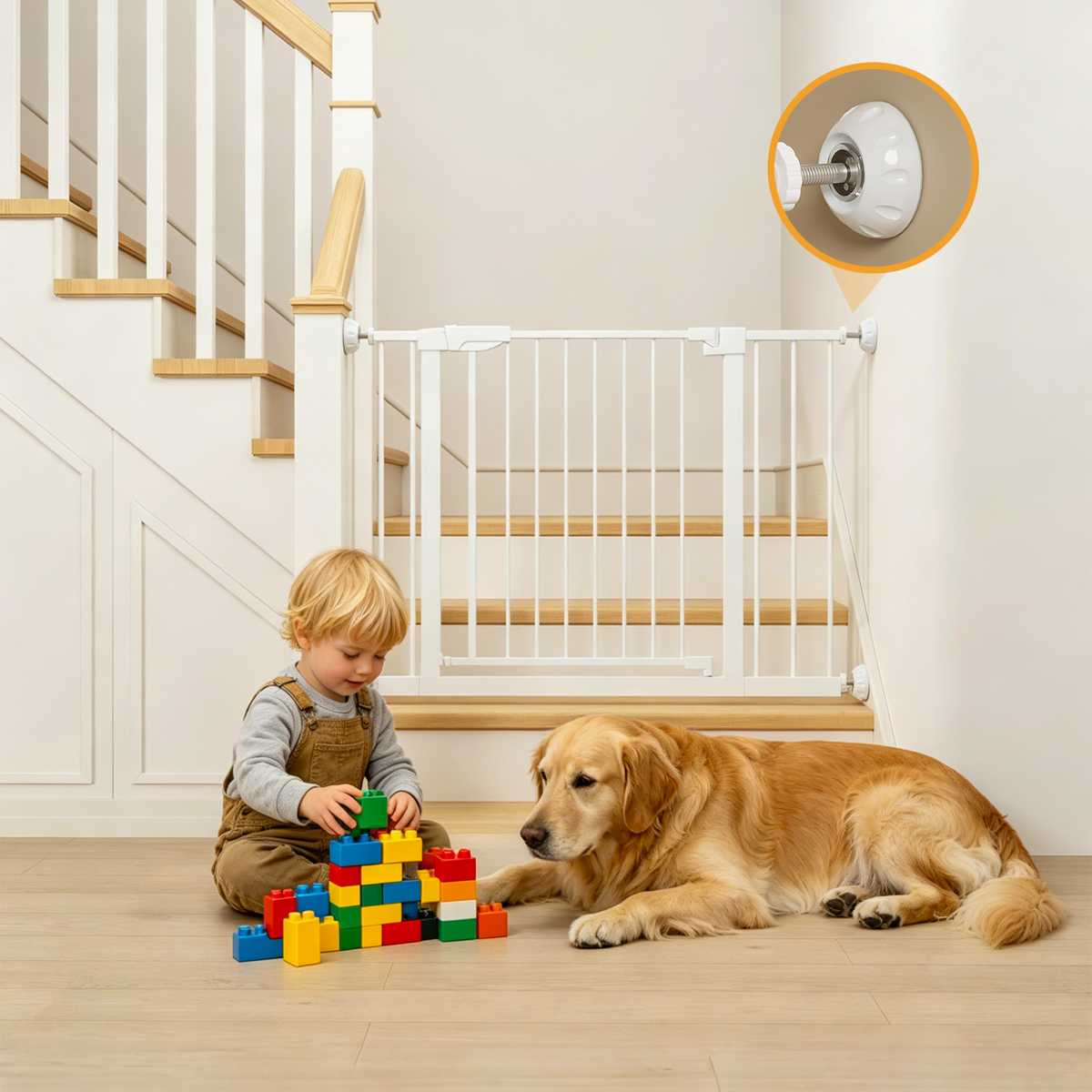 29.5-45.3" Wide Baby Gate with wall protector for Stairs, Dog Indoor for Doorways, No Drilling Pressure Mounted Pet Gates for Kids, Easy Walk Through Safety White$58.99View on Mallflare
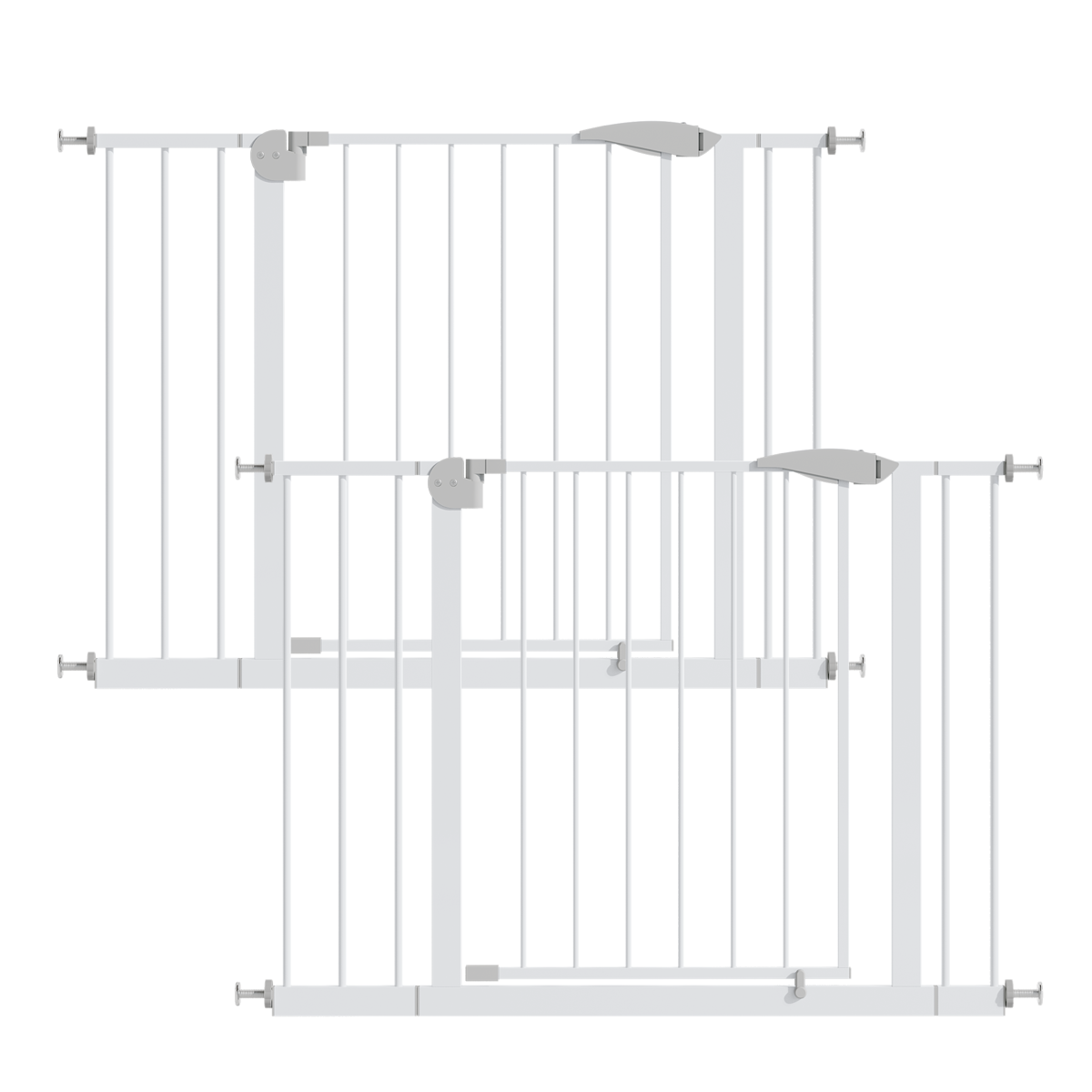 2 Pack 29.5-44.1" Wide Baby Gate for Stairs, Dog Indoor for Doorways, No Drilling Pressure Mounted Pet Gates for Kids, Easy Walk Through Safety White$98.99View on Mallflare
Highlights
- Hardware-mounted gates screw into studs or a banister via included cup-and-screw brackets and are the only gate type rated for top-of-stair use where the far side is a fall hazard.
- Pressure-mounted gates rely on rubber pads compressed against two walls or a banister and must never be used at the top of stairs because a child can push the gate out of the opening.
- Gate opening widths span roughly 29.5 to 45.3 inches via extension kits, and each gate lists a minimum and maximum opening; choose a gate whose adjustment range brackets your measured opening.
- Walk-through gates use a hinged door with a one-hand latch, while step-over gates have a fixed bottom bar that becomes a trip hazard on stair landings; walk-through designs are the practical stair choice.
Best use cases
- Top of stairs: choose a hardware-mounted walk-through gate with a no-trip threshold and a latch rated for the gate's full width; skip any pressure-mounted gate here.
- Bottom of stairs or a doorway: a pressure-mounted walk-through gate is correct and removable without wall damage, provided the far side is a floor, not a drop.
- Wide or irregular openings (over about 38 inches): use the gate plus the matching extension kit, and mount hardware into studs or a wooden banister rail, never drywall alone.
Buying tips
- Measure the opening at three heights and use the narrowest figure; pick a gate whose stated min-max range contains that number, then add an extension only if the gap exceeds the gate's max.
- At the top of stairs, require a hardware-mounted gate with a door that swings away from the stairs and a latch that cannot be opened by a toddler pushing or pulling.
- For banister mounting, use a gate kit that includes a banister adapter or Y-spindle; pressure gates need a flat, solid surface on both sides or they will slip.
- Match gate height to the child: barriers around 30 inches or taller deter climbers, and a fixed bottom bar must be avoided on stair landings to prevent tripping an adult carrying a child.
Specs
| Mount Type | Hardware-mounted vs pressure-mounted |
|---|---|
| Stair Position | Top: hardware only / Bottom: either |
| Opening Width | ~29.5-45.3 in with extensions |
| Gate Style | Walk-through door vs step-over bar |
Related searches
What to check before buying
- Measure the stair opening width at top, middle, and bottom, and note whether both sides are solid walls, a banister, or one of each.
- Confirm the mounting surface: hardware gates need wood studs or a banister rail; pressure gates need two flat, parallel, solid surfaces.
- Check the stair landing depth so the gate door can swing clear without hitting a wall or the first step.
- Verify the gate's included hardware: wall cups, screws, extension kit, and banister adapter are often sold separately or bundled only in specific configurations.
FAQ
Data sources: eBay / Amazon listings and product attribute feeds. Updated Nov 21, 2026.
Some links on this page are affiliate links. If you buy after clicking one, we may earn a commission at no extra cost to you. This does not change which products appear here or their order. Affiliate disclosure.