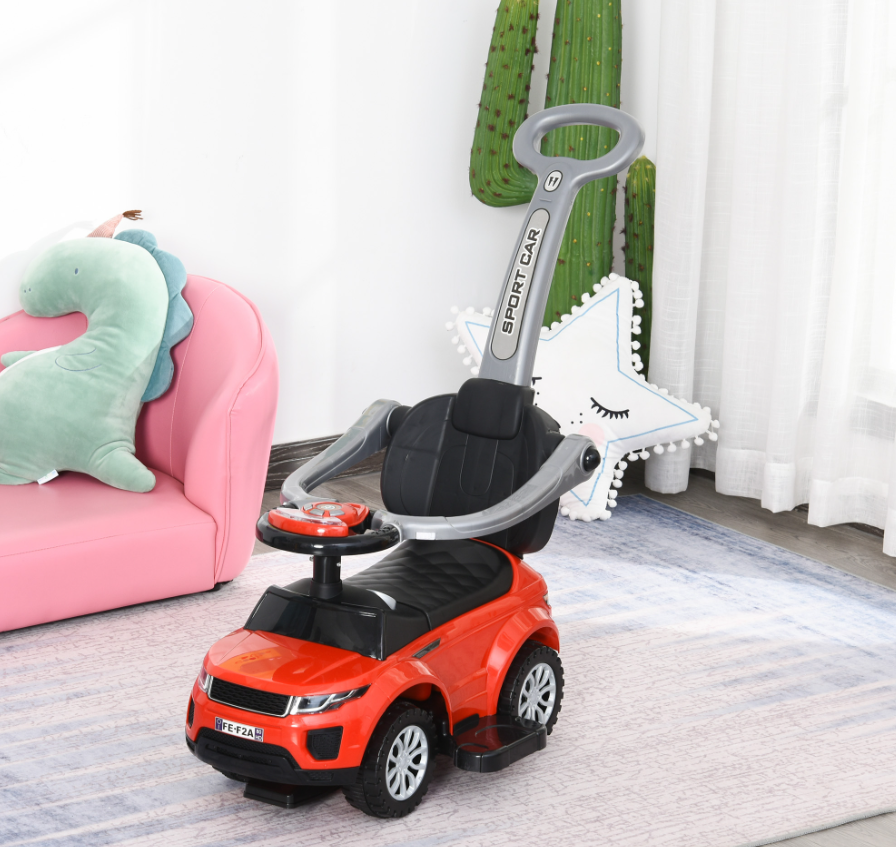

Photos from current listings. Actual item, color, and included accessories may vary.
Toy 1 Year Old Buying Guide
Toys for 1-year-olds are designed for a developmental stage defined by pulling to stand, cruising, and early walking, plus mouthing and dumping. The core trade-off is between open-ended, motor-skill-building simplicity (push walkers, stacking, cause-and-effect) and battery-driven novelty that can overstimulate or break. The decision rule: pick toys with stable bases, rounded edges, non-toxic finishes, and no small parts; skip anything that requires sitting still or has fragile electronics.


At a glance
- Category
- Baby Toys & Activity Gear
- Data updated
- Nov 15, 2026
Current offers
Highlights
- Push walkers need a wide wheelbase and adjustable friction or speed control so new walkers don't outrun their balance.
- Ride-on 3-in-1 strollers convert from parent-push to child-push to ride-on, extending usable life from ~12 to 36 months.
- Age labeling follows ASTM F963 and CPSC small-parts rules; '1+ years' means no choking hazards but still requires adult supervision.
- Sensory toys with lights and music should have volume control and an off switch; continuous loud play is a common parental complaint.
Best use cases
- Best for new walkers: a weighted push walker with adjustable wheel tension and a low center of gravity; skip tall, narrow walkers that tip when pulled up on.
- Best for active sitters and cruisers: a 3-in-1 ride-on/push car with a secure parent bar and removable footrest; skip if your child is already running and won't sit.
- Best for quiet floor time: stacking cups, shape sorters, and board books; skip electronic toys with screens for under-2s per pediatric guidance.
- Wrong fit: toys labeled 3+ (small parts, magnets) and plush with loose eyes or buttons—these are choking risks for a 1-year-old.
Buying tips
- Check wheel diameter: push walkers with wheels under 3 inches roll too fast on hardwood; look for rubberized tread or tension brakes.
- For ride-ons, confirm the seat height is 8–11 inches so a 1-year-old's feet reach the ground or footrest securely.
- Prefer ABS or BPA-free plastic with rounded, sanded edges; painted wood should be water-based and phthalate-free.
- Battery compartments must require a screwdriver to open—button cells are a severe hazard if swallowed.
Specs
| Toy Type | Push walker / Ride-on / Stacking / Sensory |
|---|---|
| Age Range | 12–24 months (1+ label, ASTM F963) |
| Safety Standard | ASTM F963 + CPSIA compliant |
| Material Grade | BPA-free ABS / water-based painted wood |
Related searches
What to check before buying
- Measure your floor space: push walkers need at least 4 feet of clear path; ride-ons need 6+ feet for turning.
- Check your child's weight and height against the toy's max load—many ride-ons top out at 44 lbs but are stable only under 30 lbs.
- Confirm assembly tools and whether the toy ships fully assembled; 3-in-1 units often need 20–30 minutes of setup.
- Verify replacement parts availability (wheels, handles) and that the toy meets ASTM F963 and CPSIA labeling.
FAQ
Data sources: eBay / Amazon listings and product attribute feeds Data updated Nov 15, 2026.
Some links on this page are affiliate links. If you buy after clicking one, we may earn a commission at no extra cost to you. This does not change which products appear here or their order. Affiliate disclosure.