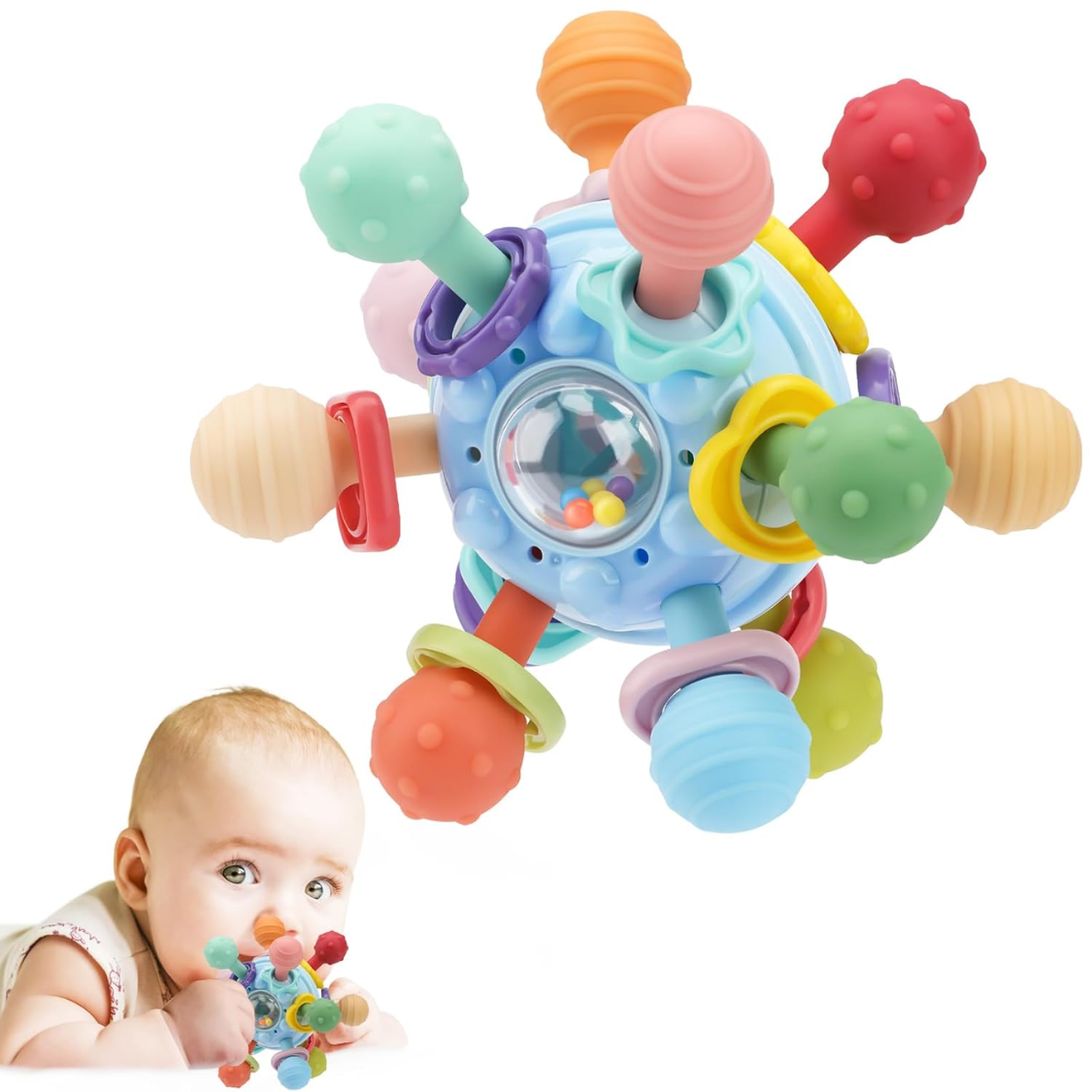

Photos from current listings. Actual item, color, and included accessories may vary.
Toy 12 18 Month Old Buying Guide
Toys for 12–18 month olds bridge the gap between infant sensory play and toddler problem-solving, so the core trade-off is between open-ended, developmentally durable construction and short-lived electronic novelty. The decisive rule: choose toys sized above the choke-hazard threshold with passive, cause-and-effect mechanics over battery-driven lights and sounds, which rarely hold attention past a few weeks.


At a glance
- Category
- Baby Toys & Activity Gear
- Data updated
- Nov 15, 2026
Current offers
Highlights
- Choke-hazard standard: any toy or detachable part must exceed 1.75 in (44 mm) in diameter and 2.25 in (57 mm) in length to pass the CPSC small-parts cylinder for under-3s.
- Montessori-aligned tiers favor solid wood (beech/maple) with water-based finishes and silicone teethers over painted MDF or plush with glued-on eyes that detach under pull force.
- Cause-and-effect toys (pop-up switches, posting boxes, stacking rings) target the 12–18 month schema; battery sound/light toys shift play from child-driven to toy-driven.
- Push-along walkers need weighted, wide-set bases and adjustable handle height (~18–22 in) to match a toddler's 30–36 in stature without tipping.
Best use cases
- Best fit: a 12–15 month old still mouthing everything — pick a silicone-and-wood teether plus a posting box; skip electronic learning tables until cause-and-effect grasp is solid.
- Best fit: a 15–18 month old pulling to stand — choose a weighted push walker with adjustable handle and rubberized wheels; skip wheeled ride-ons that lack a stable base.
- Best fit: shared play in a small apartment — select stackable, nestable wood toys that store compactly; skip large plastic activity centers that dominate floor space.
- Wrong fit: buying ahead for a 2-year-old's pretend play — 12–18 month olds need concrete sensory and motor input, not abstract role-play sets.
Buying tips
- Match toy size to the small-parts cylinder: nothing detachable under 1.75 in diameter belongs in a 12–18 month old's bin, even if labeled 'safe'.
- For walkers, confirm handle height adjusts across 18–22 in and the base is weighted or wide-set; unweighted frames tip forward on carpet.
- Choose solid hardwood (beech, maple, rubberwood) over MDF or plywood for stacking and posting toys — solid wood survives drop and chew testing.
- For teethers, specify platinum-cured food-grade silicone or untreated hardwood; avoid PVC, BPA, and painted surfaces that chip.
Specs
| Safety Standard | CPSC small-parts cylinder (under-3) |
|---|---|
| Primary Material | Solid hardwood / food-grade silicone |
| Play Pattern | Cause-and-effect / sensory-motor |
| Walker Handle Height | Adjustable 18–22 in |
Related searches
What to check before buying
- Measure the play area: push walkers need roughly 3 ft of clear run space and a non-slip floor; rugs should be low-pile or anchored.
- Check the toy bin or shelf height: 12–18 month olds access items at 12–24 in, so keep durable wood/silicone toys low and rotate electronics out.
- Verify materials against mouthing: confirm food-grade silicone, water-based or UNE-EN 71-3 compliant finishes, and no detachable small parts.
- Confirm companion parts: posting boxes need their shape pieces, stackers need all rings, and walkers need assembly hardware included.
FAQ
Data sources: eBay / Amazon listings and product attribute feeds Data updated Nov 15, 2026.
Some links on this page are affiliate links. If you buy after clicking one, we may earn a commission at no extra cost to you. This does not change which products appear here or their order. Affiliate disclosure.